Hey there, quick question—have you ever stared at a messy bundle of spiral cables (you know, those flexible, coiled workhorses we use for everything from industrial control panels to audio gear and even old-school truck wiring) and thought, “Wait, why are these wires color-coded like a highlighter set?” Yeah, me too. As someone who’s been in the spiral cable supply game for over a decade, I’ve fielded this question at least a hundred times from electricians, maintenance techs, and even folks building custom rigs. Today, let’s break this down like we’re grabbing a coffee after a long day on the job—no stuffy jargon, just real talk about what those colors actually mean. Spiral Cable

First off, let’s get one thing straight: spiral cables aren’t just random wire wrapped into a spring. They’re designed to stretch and retract, so their insulation has to hold up to constant flex, extreme temps, and exposure to oils, dust, and whatever else gets thrown at them. The color coding isn’t some corporate fluff—it’s a safety and sanity hack. Imagine if every time you fixed a conveyor belt or swapped out a portable audio snake, you had to test every single wire to figure out which is hot, neutral, or signal. That’s a recipe for mistakes, downtime, and even accidents. So the color code is like a universal cheat sheet, tailored to where the cable’s getting used.
Let’s start with the big two standards everyone should know: International Electrotechnical Commission (IEC) and North American (NEC) codes. These aren’t just suggestions—they’re the rules most of the world follows, and we make sure every spiral cable we ship is labeled correctly to match the standard our clients need, no exceptions.
First, IEC—this is the global go-to for most of Europe, Asia, Africa, and a bunch of other regions. For low-voltage power spiral cables, which are the ones you use for tools, small motors, and control circuits, IEC’s color code is straightforward: brown is live (L), blue is neutral (N), and green-yellow stripes are the protective earth (PE) wire. Wait, why green-yellow specifically? Oh right, that’s the universal color for ground everywhere, period. You’ll never see a plain green wire as ground—striped with yellow is non-negotiable. It’s like the “do not cross” sign of wiring. For multi-core signal or data spiral cables (the ones for things like MIDI gear or sensor connections), IEC uses a range of solid colors, usually red, black, white, gray, and yellow, each assigned to a specific signal channel. No mixing those up—we print small labels on the cable jacket itself too, just in case the insulation fades a bit after a few years of flexing.
Now, North America—NEC, or National Electrical Code, is what the US and Canada live by, and it’s a tiny bit different, which trips people up all the time. For single-phase low-voltage circuits, NEC says black is hot (L), white or gray is neutral (N), and green (or bare copper wire, which is basically uninsulated) is ground. For three-phase circuits—think larger motors, conveyor systems, that kind of thing—NEC uses black, red, and blue for the three hot legs, white or gray for neutral, and green for ground. I’ve seen so many electricians new to spiral cables in the US grab a brown IEC cable and accidentally wire it to neutral because they’re used to black being hot. That’s why we always make it a point to ask our clients which region they’re in, and which standard they need, before we even process an order. Saves everyone a headache later.
But wait—what about when you’re working with specialty spiral cables? Like industrial-grade ones for heavy machinery, or outdoor spiral cables for construction sites? Those have their own color coding too, usually based on the function of the cable, not just the voltage. For example, in industrial control spiral cables (the ones that hook up robotic arms or packaging lines), you’ll see colors like orange for emergency stop, yellow for forward motion, and blue for reverse. Oh, that’s a good one—emergency stop wires are almost always orange or red, because you want people to see them fast. I remember a client a few years back who had a conveyor system go down because they mixed up an orange E-stop wire with a gray signal wire. Cost them thousands in downtime. Now we pre-label all our industrial spiral cables with colored heat-shrink dots on both ends for that exact scenario—extra clarity, no mistakes.
Another thing that trips people up: vintage spiral cables. Old gear, like old audio equipment or 90s industrial tools, might use way different color coding. For example, some old US audio spiral cables used red and black for left and right channels, no white or gray. I once had a musician come to us looking for a replacement spiral cable for a 1995 guitar amp, and we had to dig into our old stock to find a multi-core cable with that exact color split. It’s not a standard anymore, but it’s good to note that if you’re working on older gear, don’t just rely on modern codes—test the wires first. But that’s a rare case; 99% of the spiral cables we sell are made to current standards, so we stick to IEC/NEC unless a client specifically asks for something different.
Now, let’s talk about why this color coding matters beyond just labeling. Safety first, obviously. A miswired spiral cable can lead to short circuits, fires, or electrocution—especially in industrial settings where there’s a lot of power running through those cables. Our techs do a final check on every spiral cable we ship to make sure the color of each core matches the schematic our client provided. We had a client last month who ordered 50 spiral cables for a new assembly line, and one of them had a blue live wire instead of brown (we make the IEC version too). We caught it before it left the warehouse, no cost to them, but that’s the kind of attention to detail that comes from knowing the ins and outs of spiral cable color coding.
Then there’s downtime. When a cable fails on a production line, you need to replace it fast, no guessing. If you know exactly which color is which, you can swap out the spiral cable in minutes, not hours. I’ve seen companies lose tens of thousands of dollars in a single day because their maintenance team had to trace every wire on a cable they couldn’t identify. That’s why our cables not only follow standard color coding but also have a legible print on the jacket that says “IEC 60227” or “NEC 400” or whatever standard it’s made for—so if you need to cross-reference, you’ve got the info right there.
Wait, let’s clear up a common myth I hear all the time: some people think the color coding is only for power cables. Nope—signal, data, even fiber spiral cables have color coding too. For fiber, which is super common in networking gear, the cores are color-coded to identify different fibers in a single cable. Like, orange is multimode, yellow is single-mode, and so on. We don’t just sell power spiral cables—we do signal, data, fiber, all of ’em—so we’ve got that color code down pat too.
Another point: different regions might have small variations. For example, in Australia, they follow IEC but sometimes use red for hot instead of brown in some low-voltage setups. In Japan, they use black for hot, white for neutral, and green for ground, similar to NEC but with a few tweaks. That’s why we don’t assume—we ask every single client for their specific requirements, and verify with our engineering team that the color coding matches what they need. It’s way better than guessing.
Now, if you’re someone who works with spiral cables—whether you’re an electrician, a maintenance tech, a DIYer building a custom tool, or someone who just wants to understand why their coiled wire is a certain color—here’s a quick cheat sheet to keep in your toolbox:
- Always check the region (IEC vs. NEC) first, that’s the biggest divide.
- Green-yellow stripes = ground, 99.9% of the time. Don’t touch that unless you know what you’re doing.
- Power cables: IEC = brown (L), blue (N), green-yellow (PE); NEC = black (L), white/gray (N), green (PE or bare copper).
- Industrial/control: Orange = E-stop, yellow = forward, blue = reverse, red = high-voltage signal.
- Fiber: Orange = multimode, yellow = single-mode, purple = APC single-mode (for telecom).
At the end of the day, spiral cable color coding is just a common language. It’s there to keep you safe, keep your gear running, and keep everyone from messing up when wiring or replacing a cable. As someone who’s been in the spiral cable supply game long enough to see a lot of wrong wiring calls and a lot of right ones, I can tell you this: sticking to the standard color codes saves everyone time, money, and a whole lot of stress.
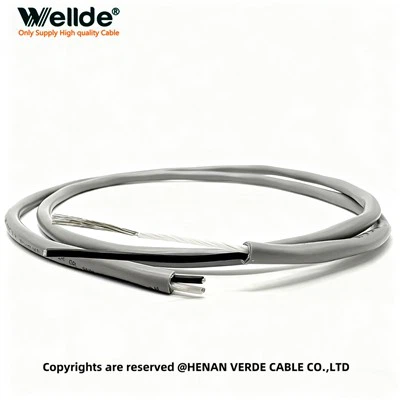
If you’re in need of spiral cables that follow the exact color coding you require—whether it’s for a factory, a construction site, audio gear, or whatever project you’re working on—we’ve got you covered. We stock a wide range of spiral cables, all tested for flex, durability, and correct color coding, so you don’t have to worry about mistakes. Hit us up to talk through your needs, get a quote, or just ask questions—we’re here to help.
FVN Wire References
IEC 60227: Polyvinyl chloride insulated cables of rated voltages up to and including 450/750 V
National Electrical Code (NEC) Article 400: Flexible Cords and Cables
ISO/IEC 11801: Information technology – Generic cabling for customer premises
NFPA 70: National Electrical Code
Henan Verde Cable Co., Ltd.
Henan Verde Cable Co., Ltd. is well-known as one of the leading spiral cable manufacturers and suppliers in China. Please feel free to wholesale high quality spiral cable in stock here from our factory. All products are with high quality and competitive price. Contact us for price list.
Address: Rm 1508, Kaixuanmen Building B#, No.238 Tongbai South Road, Zhengzhou City, Henan Province, China. 450006
E-mail: linda@welldecable.com
WebSite: https://www.welldecable.com/
