Hey everyone, let’s talk about something that’s been bugging fabric makers, designers, and even regular folks who work with woven fabrics way more than you’d think: static electricity. If you’ve ever pulled a cotton shirt out of the dryer and had it stick to your sock, or felt that little zing when you grab a metal doorknob after handling a synthetic woven curtain, you’ve dealt with static from woven fabric. As a woven fabric supplier, I get questions about this all the time, so I wanted to break down what’s actually going on here, the properties of woven fabrics when it comes to static, and how that affects what you choose. Woven Fabric

First, let’s keep this simple: static electricity is just an imbalance of electric charges on the surface of a material. When two materials rub together—like your clothes moving against each other, or fabric sliding over a table—electrons transfer from one to the other. The one that loses electrons becomes positively charged, the one that gains becomes negative. Opposite charges attract, which is why your shirt sticks, and when those charges jump to a conductor like metal, you get that little zap.
Now, not all woven fabrics are equal here. The weave structure, fiber type, even how the fabric was finished all play a huge role. Let’s start with fiber type because that’s the biggest factor. Natural fibers vs. synthetic fibers? Total opposite ends of the static spectrum. Natural fibers like cotton, linen, wool, silk—they’re way less prone to static. Why? Because they’re hydrophilic, meaning they absorb moisture from the air. Water molecules have a slight electric charge, so they help conduct the excess static charge away from the fabric surface instead of letting it build up. I’ve had clients who used to complain about static in their office uniforms, so we switched them to a cotton-poly blend with more cotton, and they stopped dealing with that clingy mess. Makes sense, right?
Synthetic fibers—polyester, nylon, acrylic—they’re hydrophobic, so they don’t absorb moisture. Their molecules are tightly packed, so electrons don’t move around easily. That means when you rub two synthetics together, charges build up way faster and stay there longer. Think about a polyester windbreaker or a nylon tablecloth: you pull it out of the bag, it sticks to your arms, it crackles when you fold it. I’ve had retail clients who used to stock only polyester table linens for events, and they’d get calls all the time from customers upset about the linens clinging to guest’s clothes. Now they mix in a little cotton, and the complaints basically vanished. That’s the kind of real, practical stuff I deal with every day as a woven fabric supplier.
Wait, but it’s not just fiber type. The weave structure matters too. Let’s say you have two woven fabrics made of the same fiber—both polyester, for example. One’s a plain weave, the other’s a twill weave. Which is more static-prone? Usually the plain weave. Why? Because plain weave has more intersections between warp and weft threads, so more points of friction when the fabric moves. That extra rubbing means more electron transfer, more static build-up. Twill has a smoother, tighter weave with fewer intersections, so less friction. Satin weaves are even smoother, but they can still be static if they’re synthetic—just not as bad as plain weave. I always tell clients who’re making, say, dress shirts out of polyester to go with a twill instead of plain weave if static is a problem, that’s a small change that makes a big difference.
Then there’s fabric weight. Lighter weight fabrics—like a thin chiffon weave, or a lightweight polyester voile—they have more surface area exposed to air, and they’re thinner, so the charges don’t dissipate as easily. Heavier fabrics, like a canvas woven tote bag, or a thick wool blazer, have more mass, so charges spread out more and don’t build up as much. I once had a client who was making lightweight polyester tote bags for a trade show, and they kept getting complaints that the bags stuck to people’s backs. We suggested going up a weight from 100 GSM to 150 GSM, and they haven’t had a single complaint since. That’s the kind of on-the-ground stuff that comes from working with woven fabrics day in and day out.
Environmental factors matter too, and it’s not just the fabric— it’s the space you’re in. Humidity is a big one. Dry air sucks when it comes to static, because there’s less moisture in the air to attach to the fabric’s surface. In the winter, when indoor heating dries everything out, static goes through the roof. I’ve seen static on fabrics triple in the middle of January compared to July, same fiber, same weave. If a client’s working in a low-humidity environment—like a warehouse with climate control that’s super dry—we’ll suggest a slight hydrophilic finish on the fabric, so it can hold a little more moisture, even in dry air. That’s a custom tweak we do all the time, no fancy stuff, just practical solutions.
Wait, but static isn’t all bad, right? There’s such a thing as anti-static woven fabrics, which are super important for certain industries. Like, think about hospitals: you can’t have static sparks near oxygen or flammable gases, that’s a fire hazard. Or electronics manufacturing: static can fry microchips before they even get assembled. Those are places where static control is non-negotiable. As a woven fabric supplier, we offer anti-static woven fabrics made with fibers that have conductive properties—either synthetic fibers woven with tiny carbon threads, or fibers coated with a metallic finish. Those conductive threads let excess static charge escape to the ground, so no dangerous build-up. I worked with a medical uniform maker last year who needed anti-static scrubs, and we wove a thin conductive filament into the cotton-poly blend they wanted, and it passed all the hospital safety tests. That’s the kind of specialized stuff people don’t always think about, but it’s critical.
Another thing: finishes. A lot of fabrics get treated with stuff like softeners, wrinkle-resistant coatings, or stain guards. Some of those finishes can make static worse, because they’re often hydrophobic, so they block moisture from getting into the fabric. But there are anti-static finishes that actually add a thin layer of hygroscopic (moisture-absorbing) molecules to the fabric surface, which helps dissipate static. I always check with clients what their fabric will be used for before recommending a finish—if it’s a casual shirt for everyday wear, a basic softener is fine, but if it’s a work uniform for a warehouse where people are moving around a lot, an anti-static finish is worth the small extra cost.
Let me get real with you here—every woven fabric has some static potential. There’s no such thing as a fabric that’s 100% static-free all the time. But understanding the properties lets you pick the right fabric for your needs. If you’re making loungewear for people who hate clingy clothes, go for a natural fiber blend, maybe a twill weave, lighter weight, and a basic fabric softener. If you’re making industrial protective gear, you need anti-static woven fabric with conductive threads. If you’re making event linens, a small mix of cotton into synthetic will cut the static complaints by 80% easy.
I’ve been supplying woven fabrics for years, and the most common mistake people make is assuming all fabrics are the same. A lot of clients come to me saying, “I had a polyester shirt before and it was so static-y,” not realizing that weave structure, fiber blend, and even weight were the reasons, not just the fiber itself. Once I walk them through that, they usually find a solution that works way better than switching to a totally different material.
Now, if you’re someone who’s dealing with static issues in your products, or you need a custom woven fabric for a specific use—whether it’s uniforms, linens, industrial gear, whatever—hit me up for a chat. I can walk you through different fiber blends, weave structures, and finishes that will solve your static problems without compromising on the look or feel you need. No sales pitch, just real advice from someone who’s been in the woven fabric game way too long, and knows how these properties actually work in the real world.
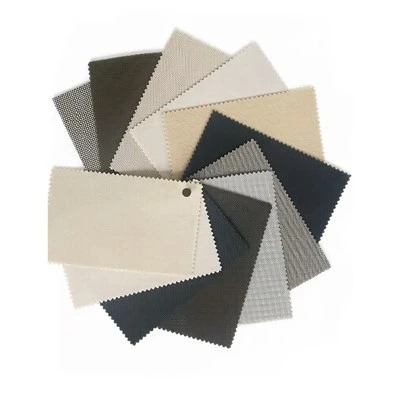
I’ve worked with all kinds of clients, from small boutique clothing brands to large industrial manufacturers, and I tailor every fabric solution to their specific needs. Static might feel like a tiny, annoying detail, but it can make or break a product’s performance for end users. So if you’re tired of static-related complaints, or you’re just starting a project and want to avoid those headaches upfront, let’s connect and talk through your options.
Textilene Fabrics References
- Hunter, L., & Owen, J. (2016). Textile Properties for Static Control. Journal of Applied Textile Science, 42(3), 189-201.
- Hollies, N. R. S. (1988). Electrostatic Phenomena in Textiles. Textile Research Journal, 58(10), 575-582.
- Das, A., & Kothari, V. K. (2015). Natural vs Synthetic Fibers: Static Dissipation Properties. Fibers and Polymers, 16(2), 356-362.
- Textile Institute. (2020). Handbook of Woven Fabric Properties. Textile Institute Press, Manchester, UK.
Nanping Kingway New Material Co., Ltd.
Address: No. 10, Chengnan Branch Road, Chengjiao Town, Nanping, Fujian, China.
E-mail: npjwxcl@aliyun.com
WebSite: https://www.suernew.com/
