If you’ve ever wondered how heavy construction equipment like excavators, cranes, or forestry harvesters turn brute hydraulic power into smooth, controlled movement, the answer is almost always a hydraulic motor. As a supplier that’s worked with hydraulic motors for years, I’ve seen how misunderstood this component is by folks who run industrial or mobile equipment—many confuse it with a hydraulic pump, or write it off as a “black box” that just makes things move. Today, I want to break down what a hydraulic motor actually is, how it works, what sets different types apart, and why choosing the right one matters for your operation. Hydraulic Motor
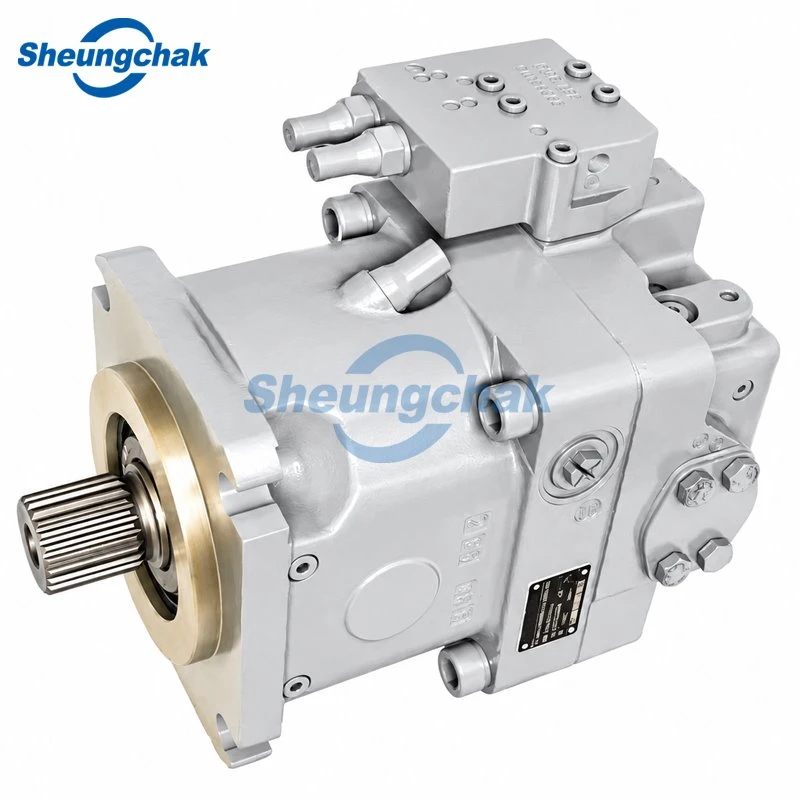
First, let’s clear up the pump vs. motor mix-up because this is the most common mistake I hear from new customers. A hydraulic pump takes mechanical power (from an engine, motor, or electric drive) and converts it into hydraulic power: high-pressure fluid flow that’s sent through hoses. A hydraulic motor does the exact opposite: it takes that pressurized hydraulic fluid and converts it back into mechanical power—rotational torque and speed that can spin a drive shaft, move a track, or power a conveyor. Think of it like the heart of your hydraulic system: the pump is the one pumping blood (fluid) out, and the motor is the part that uses that blood to make your body (equipment) move. That core difference is what makes each component irreplaceable.
So, how does a hydraulic motor actually do that conversion? At its simplest, every hydraulic motor has three core parts: a housing that holds the internal mechanism, ports that let high-pressure fluid enter and low-pressure fluid exit, and a rotor (or set of rotors) that spins when fluid pushes against it. Let’s use a gear motor, the most common and straightforward type, to walk through that. Inside a gear motor, there are two interlocking gears: a drive gear connected to the output shaft, and an idler gear that fits tightly against it. When high-pressure fluid enters the motor’s inlet port, it pushes on the teeth of both gears. The drive gear is connected to the output shaft, so that pressure turns the gear, which then turns the driven gear. As the gears spin, they carry fluid around the edge of the housing, pushing it out the low-pressure outlet port. That’s it—pressurized fluid → gear movement → mechanical rotation.
Other motor types use different internal mechanisms for different performance needs, and that’s where I see customers get stuck when they’re picking the right motor for their job. Let’s go through the main categories:
Gear motors: I mentioned these first because they’re the workhorses for light to medium-duty applications. They’re inexpensive, compact, and easy to maintain, which makes them perfect for things like small forklifts, agricultural sprayers, or conveyor drives. The downside? They don’t handle high pressure or high torque as well as other types, and they’re a bit louder. If you’re running a small farm tractor or a 3-ton utility vehicle, a gear motor is almost always your best bet.
Piston motors: These are the heavy lifters of the hydraulic world. There are two main sub-types: bent-axis and inline piston motors. Inline piston motors have pistons arranged in a cylinder block that’s parallel to the output shaft; when pressurized fluid pushes the pistons in and out, the offset from the drive mechanism spins the shaft. Bent-axis motors have the cylinder block tilted at an angle, which lets them deliver more torque and handle higher pressure than inline versions. These motors are used for construction cranes, mining equipment, and large excavator tracks because they can handle 5,000+ PSI and tons of torque. The trade-off? They’re bigger, more expensive, and need more precise maintenance than gear motors, so they’re not ideal for small applications.
Vane motors: Vane motors use a rotor with sliding vanes inside a circular housing. When pressurized fluid enters, it pushes the vanes outward against the housing, creating a seal. Pressure from the inlet side pushes the vanes, spinning the rotor and output shaft. Vane motors are known for smooth, quiet operation and good low-speed torque, which makes them popular for things like packaging machinery, food processing equipment, and hydraulic winches. They’re also more efficient than gear motors for mid-range applications, but they can’t handle as high pressure or torque as piston motors.
Now, let’s talk about the numbers that matter when choosing a hydraulic motor, because this is where a lot of people get it wrong and end up with a component that’s too slow, too weak, or burns out fast. The two key metrics are displacement and torque. Displacement is the volume of fluid the motor needs to spin one full revolution—measured in cubic inches or milliliters. A motor with a higher displacement will deliver more torque at lower speeds, while a lower displacement motor spins faster with less torque. If you need to lift a 10,000-pound crane load, you want a high-displacement piston motor; if you need to spin a conveyor at 50 RPM to move boxes, a low-displacement vane or gear motor is better.
Another critical metric is pressure rating. Hydraulic systems work on pressure, right? So a motor rated for 2,000 PSI can’t handle a system that’s running at 3,500 PSI—you’ll get leaks, worn seals, and a motor that fails in weeks, not years. I’ve had customers come to me months after buying a cheap motor online, frustrated because it keeps breaking, only to find they bought a 2,500 PSI motor for a system that runs at 4,000 PSI. That’s a avoidable mistake if you match the motor’s pressure rating to your system’s operating pressure.
Efficiency is another big one, especially for operations that run 24/7. Hydraulic motors have two types of efficiency: volumetric and mechanical. Volumetric efficiency is how much of the fluid you put into the motor actually gets used to spin the shaft—some small motors have internal leaks that let 10-15% of fluid escape, wasting power. Mechanical efficiency is how much of the pressure energy gets turned into torque, not lost to friction inside the motor. Piston motors typically have higher efficiency (90%+ for good models) than gear motors (80-85% for standard units), which means you’ll use less fuel or electricity to run your system over time. That efficiency adds up—for a 10,000-hour operation, a 5% efficiency difference can save thousands in energy costs.
Now, why does this matter if you’re not a hydraulic engineer? Let’s use a real example from a customer I worked with last year: a small construction company that runs 12 compact excavators. They were using generic gear motors for the track drives, which would burn out every 18 months because their excavators often work on muddy, uneven terrain that puts extra stress on the tracks. The gear motors couldn’t handle the extra torque, and the high mud and debris wore out the internal gears. We switched them to medium-displacement bent-axis piston motors, which can handle the 10% extra torque from uneven ground, and added a sealed housing to keep mud out. Those motors have lasted 3 years so far, saving the company over $20,000 in replacement costs and downtime. That’s the kind of impact choosing the right hydraulic motor makes—It’s not just a part, it’s a cost-saver and a reliability driver.
I also want to touch on common myths I hear all the time. First: “All hydraulic motors are the same.” No—two motors with the same displacement can have different torque ratings, efficiency, and durability, depending on the internal design. A cheap Chinese gear motor and a premium North American-made gear motor might look identical, but the premium one uses better seals, precision-machined gears, and tighter tolerances, so it lasts 3 times longer. Second: “You can use a hydraulic pump as a motor.” While it’s technically possible, it’s not designed for it. Pumps are built to move fluid, not to convert fluid pressure to torque, so they’ll have lower efficiency, less torque, and a much shorter lifespan if used as a motor. That’s a shortcut that almost always costs more in the long run. Third: “Hydraulic motors are only for heavy equipment.” No—from the hydraulic lifts in your local auto shop to the automatic doors at the grocery store, hydraulic motors are everywhere. They’re just the go-to for applications that need high torque in a small space.
If you’re reading this, you’re probably in the market for a new hydraulic motor, or looking to upgrade the ones you have to cut costs or improve reliability. The right motor depends on your application: what equipment is it for, how much torque and speed do you need, what’s your system’s pressure rating, and how much maintenance can you handle? There’s no one-size-fits-all, but the key is to match the motor’s specs to your actual use case, not just pick the cheapest option online.
At the end of the day, a hydraulic motor might seem like a small, quiet component, but it’s the thing that makes your equipment do its job. A slow, weak motor can delay projects, increase downtime, and waste money on fuel. A well-matched, reliable motor will keep your equipment running smoothly, cut costs, and let you take on bigger jobs.

If you’re not sure which hydraulic motor is right for your application, I’m here to help. We work with all types of industries—construction, agriculture, material handling, and more—and can help you find the right motor for your needs, whether you’re replacing an old unit or upgrading a whole hydraulic system. Reach out to our team to discuss your requirements, and we’ll walk you through the options to find a solution that fits your budget and performance needs.
Hydraulic Piston Motor References
Hydraulic Institute. (2021). Hydraulic Motor Selection Guide. Hydraulic Institute.
Manring, N. D. (2011). Hydraulic Motors: Design, Selection, and Application. CRC Press.
Vickers, E. (2018). Mobile Hydraulic Components: A Practical Guide. Industrial Press.
Guangdong Sheungchak Hydraulic Technology Co., Ltd.
Guangdong Sheungchak Hydraulic Technology Co., Ltd. is one of the most professional hydraulic motor manufacturers and suppliers in China. We are committed to providing high quality customized products with competitive price. Please rest assured to wholesale durable hydraulic motor for sale here and get pricelist from our factory.
Address: Building 25, Liantang Industrial City, Shangcun Community, Gongming Subdistrict, Guangming District, Shenzhen, China
E-mail: info@hydraulicsc.com
WebSite: https://www.hydraulicsc.com/
