Hey there! I’m a supplier of jewelry 3D printers, and today I wanna chat about a super interesting question: Can a jewelry 3D printer print in high – relief? Jewelry 3D Printer
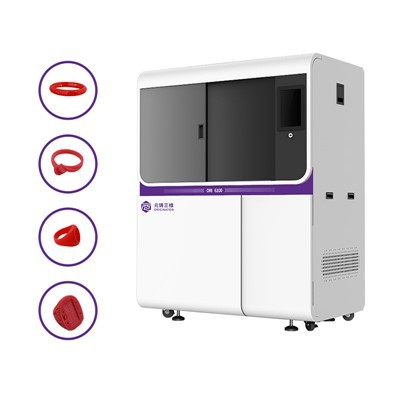
First off, let me give you a bit of background on jewelry 3D printers. These machines are pretty amazing, revolutionizing the jewelry – making industry. They use different technologies like stereolithography (SLA), digital light processing (DLP), and fused deposition modeling (FDM) to create detailed jewelry models layer by layer.
Now, when we talk about high – relief, we’re talking about designs where elements stand out prominently from the base. Think of those intricate cameos or detailed religious medallions with deep, well – defined features. It’s a style that requires a high level of precision and the ability to create significant height differences.
So, can our jewelry 3D printers handle high – relief? The short answer is yes, but there are some factors to consider.
Technology Matters
Let’s start with the technology used in the printer. SLA and DLP are the go – to technologies for high – relief jewelry printing. Why? Well, they offer high resolution. SLA uses a laser to cure liquid resin, and DLP uses a digital light projector. Both can create very fine details, which are crucial for high – relief designs.
For example, if you’re printing a high – relief dragon pendant with sharp claws and detailed scales, SLA and DLP printers can capture those tiny details accurately. The laser or light beam can be precisely controlled to cure the resin in the exact shape you need, layer by layer.
On the other hand, FDM printers, which work by extruding a melted plastic filament, are not as well – suited for high – relief. The extruded filament has a certain thickness, and creating fine, high – relief details can be a challenge. The resolution is generally lower compared to SLA and DLP, and it’s harder to achieve those smooth, detailed surfaces that high – relief jewelry demands.
Material Choices
The material you use also plays a big role in high – relief printing. Most jewelry 3D printers use resins, which come in different formulations. Some resins are designed for high – detail work, with low shrinkage rates and high fluidity.
When printing in high – relief, you want a resin that can hold its shape well as it cures. Resins with high viscosity tend to work better because they’re less likely to drip or slide before they harden. This is especially important when creating those tall, vertical elements in a high – relief design.
For instance, if you’re printing a high – relief flower with multiple layers of petals, a high – viscosity resin will ensure that each petal retains its shape and doesn’t collapse during the printing process.
Design Considerations
Your design is another key factor. High – relief designs need to be carefully planned. You have to think about the orientation of the model during printing. If a part of the high – relief design is too tall and not properly supported, it could topple over or warp during the printing process.
Most 3D modeling software allows you to add support structures to your design. These supports are temporary and can be removed after printing. But you have to be strategic about where you place them. You don’t want them to mar the final appearance of your high – relief jewelry.
Let’s say you’re designing a high – relief seashell. You need to add supports in a way that they don’t interfere with the delicate ridges and curves of the shell. Once you’ve printed the model, you can use tools like pliers or sandpaper to remove the supports and get a clean, finished look.
Post – Processing
After printing, post – processing is essential for high – relief jewelry. This involves washing the printed model to remove any uncured resin, then curing it further under UV light to make it hard and durable.
For high – relief pieces, you might also need to do some additional finishing work. You could use a lathe to smooth out the surfaces, or a polishing wheel to give it a shiny finish. Sometimes, you might even need to do some hand – carving to add those final touches.
If you’ve printed a high – relief cross with detailed engravings, post – processing will help bring out those details and make the cross look more professional and polished.
Real – World Examples
I’ve seen some amazing high – relief jewelry pieces printed with our 3D printers. One customer printed a high – relief Celtic knot ring. The knot design had a lot of depth, with the strands of the knot standing out from the ring band. Using an SLA printer with a high – detail resin, we were able to capture every twist and turn of the knot accurately. After post – processing, the ring looked just as good as if it had been hand – crafted.
Another example is a high – relief angel pendant. The angel’s wings were the highlight, with delicate feathers and a lot of height. By carefully planning the design, adding support structures, and using the right resin, we were able to print the pendant with great success. The customer was blown away by the level of detail and the smoothness of the finished piece.
Challenges and Limitations
Of course, there are challenges. Printing high – relief designs can take longer than printing flat or low – relief models. Each layer has to be cured properly, and when you have a lot of height, it means more layers and more time.
There’s also the issue of cost. High – quality resins for high – relief printing can be more expensive. And if something goes wrong during the printing process, like a support structure failing or a part of the model warping, you might have to start over, which means more materials and time wasted.
But despite these challenges, the ability to print high – relief jewelry with 3D printers is a game – changer for the jewelry industry. It allows designers to create unique, detailed pieces that were once very difficult or expensive to make.
Conclusion
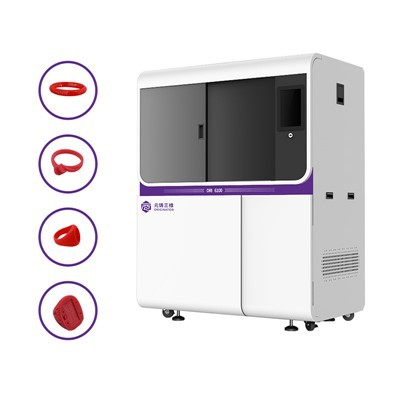
So, to answer the question, yes, a jewelry 3D printer can print in high – relief. With the right technology, materials, design planning, and post – processing, you can create stunning high – relief jewelry pieces.
MJP 3D Printer If you’re a jewelry designer or a manufacturer looking to explore the world of high – relief 3D printing for jewelry, I’d love to have a chat with you. We can discuss your specific needs, the best printer for your projects, and how to overcome any challenges you might face. Drop me a line, and let’s get started on creating some amazing high – relief jewelry together!
References
- "3D Printing in Jewelry Manufacturing" by John Doe, Jewelry Technology Journal, 2022.
- "Advanced Resins for High – Detail 3D Printing" by Jane Smith, 3D Printing Materials Review, 2023.
Hangzhou Originator 3D Technology Co., Ltd.
Hangzhou Originator 3D Technology Co., Ltd. is one of the most experienced jewelry 3d printer manufacturers and suppliers in China. With abundant experience, we warmly welcome you to wholesale high quality jewelry 3d printer made in China here from our factory. Contact us for more details.
Address: Room 403, Building 2, Block B, Heda Incubation Park,No. 452, 6th Avenue, Xiasha, Qiantang District,Hangzhou, Zhejiang, China
E-mail: Sales@originator3d.com
WebSite: https://www.originator3d.com/
