What is the specific heat capacity of a drill rod material? Drill Rod
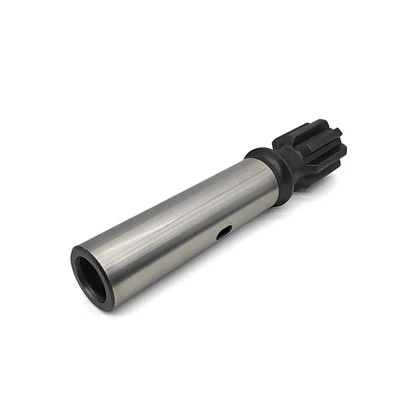
As a drill rod supplier deeply entrenched in the industry, I am often asked about the technical specifications of our products. One question that comes up more frequently than you might think is about the specific heat capacity of drill rod materials. Now, you might be wondering, “Why does specific heat capacity matter when it comes to drill rods?” Let’s dive into this interesting topic to understand its significance thoroughly.
The Concept of Specific Heat Capacity
Before we focus on drill rods, it’s essential to understand what specific heat capacity entails. In scientific terms, specific heat capacity (c) is defined as the amount of heat energy (Q) required to raise the temperature (ΔT) of a unit mass (m) of a substance by one degree Celsius. Mathematically, it is expressed as (c=\frac{Q}{m\Delta T}). The unit of specific heat capacity is joules per kilogram per degree Celsius ((J/(kg·^{\circ}C))).
This property is crucial because it determines how a material will respond to heat. Materials with high specific heat capacities can absorb a large amount of heat energy without a significant increase in temperature. Conversely, materials with low specific heat capacities will experience a more substantial temperature rise when the same amount of heat is applied.
Why Specific Heat Capacity Matters for Drill Rods
Drill rods are subjected to extreme conditions during drilling operations. Friction between the drill bit and the rock or soil generates a significant amount of heat. If the drill rod material cannot handle this heat effectively, it can lead to several problems.
Firstly, excessive heat can cause thermal expansion of the drill rod. This expansion can result in misalignment, which reduces the drilling accuracy and may even lead to premature wear and tear of the drilling equipment. Secondly, high temperatures can weaken the material of the drill rod, reducing its strength and making it more prone to breakage. A drill rod with a suitable specific heat capacity can absorb and dissipate the heat generated during drilling, maintaining its structural integrity and performance.
Common Drill Rod Materials and Their Specific Heat Capacities
- Steel
Steel is one of the most commonly used materials for drill rods due to its high strength, durability, and relatively low cost. Different types of steel have slightly different specific heat capacities, but on average, the specific heat capacity of steel is around (460 J/(kg·^{\circ}C)). This value allows steel drill rods to absorb a reasonable amount of heat during drilling without experiencing excessive temperature increases. - Alloy Steels
Alloy steels are steels that have been combined with other elements such as chromium, nickel, and molybdenum to enhance their properties. These alloyed steels often have specific heat capacities in a similar range to regular steel, but the exact value can vary depending on the composition of the alloy. For example, some high – performance alloy steels used in demanding drilling applications may have specific heat capacities optimized to better handle heat, which can range from (450 – 500 J/(kg·^{\circ}C)). - Titanium
Titanium is a lightweight yet strong metal that is sometimes used in drill rod manufacturing, especially for applications where weight is a critical factor. Titanium has a specific heat capacity of approximately (520 J/(kg·^{\circ}C)). This relatively high specific heat capacity means that titanium drill rods can absorb more heat compared to steel drill rods of the same mass, which can be advantageous in high – heat drilling environments.
Factors Affecting the Specific Heat Capacity of Drill Rod Materials
- Composition
As mentioned earlier, the composition of a drill rod material plays a significant role in determining its specific heat capacity. Different elements have different atomic structures and bonding characteristics, which affect how they absorb and store heat energy. For example, adding alloying elements to steel can change its specific heat capacity by altering the way the atoms interact within the material. - Microstructure
The microstructure of a drill rod material, which is influenced by factors such as heat treatment and manufacturing processes, can also impact its specific heat capacity. A fine – grained microstructure may have a different specific heat capacity compared to a coarse – grained one. Heat treatment processes like quenching and tempering can change the arrangement of atoms in the material, thereby affecting its ability to absorb and transfer heat. - Temperature
The specific heat capacity of a material is not a constant value; it can vary with temperature. In general, the specific heat capacity of most materials increases slightly with increasing temperature. However, this variation is usually small within the temperature ranges typically encountered during drill rod operations.
Testing and Measuring Specific Heat Capacity
To ensure the quality and performance of our drill rods, we conduct rigorous testing to determine the specific heat capacity of the materials we use. One common method for measuring specific heat capacity is the differential scanning calorimetry (DSC) method. In this method, a small sample of the drill rod material is heated at a controlled rate, and the amount of heat absorbed or released by the sample is measured. The specific heat capacity can then be calculated based on the measured heat flow and the temperature change of the sample.
Another method is the adiabatic calorimetry method, which involves isolating the sample from its surroundings to prevent heat loss. The sample is heated, and the temperature change is measured. By knowing the mass of the sample and the amount of heat added, the specific heat capacity can be determined.
Implications for Drill Rod Performance
Understanding the specific heat capacity of drill rod materials has significant implications for their performance. By selecting a material with an appropriate specific heat capacity, we can design drill rods that are more resistant to heat – related damage. For example, in high – speed drilling operations where a large amount of heat is generated, using a drill rod material with a high specific heat capacity can help maintain the temperature of the drill rod within a safe range, reducing the risk of thermal expansion and material degradation.
Moreover, knowledge of specific heat capacity can also help in optimizing the drilling process. By adjusting the drilling parameters such as drilling speed and feed rate based on the specific heat capacity of the drill rod material, we can ensure more efficient and effective drilling operations.
Conclusion and Call to Action
In conclusion, the specific heat capacity of drill rod materials is a critical property that affects their performance and durability during drilling operations. As a drill rod supplier, we take great care in selecting and testing materials to ensure that our drill rods have the optimal specific heat capacity for different applications.
Whether you are involved in mining, construction, or any other industry that requires high – quality drill rods, we are committed to providing you with products that meet your specific needs. Our team of experts is always ready to assist you in choosing the right drill rod material based on your drilling requirements.

If you are interested in learning more about our drill rods or would like to discuss a potential purchase, please feel free to reach out to us. We look forward to the opportunity to work with you and help you achieve your drilling goals.
DTH Sub Adapter References
- Callister, W. D., & Rethwisch, D. G. (2018). Materials Science and Engineering: An Introduction. Wiley.
- Askeland, D. R., Phulé, P. P., & Wright, W. J. (2017). The Science and Engineering of Materials. Cengage Learning.
- Shackelford, J. F. (2019). Introduction to Materials Science for Engineers. Pearson.
Super Rock Machinery Equipment (Qingdao) Co., Ltd.
We are one of the most professional drill rod manufacturers and suppliers in China, featured by quality products and good price. Please feel free to buy advanced drill rod for sale here from our factory. Welcome to view our website for more information.
Address: No. 45, Pengwan Road, Qianwan Bonded Port Area, Qingdao Sub-district, Free Trade Pilot Zone, Shandong China
E-mail: sales@superrocktools.com
WebSite: https://www.superrocktools.com/
