When I first started my plush keychain toy supply business back in 2017, I’ll admit I stuck pretty closely to the basics: soft, squishy designs of popular characters, stitched tight enough to survive being jostled in backpacks, and simple key rings that didn’t add extra bulk. Customers would come to our trade show booths, flip over the standard cat and bear keychains, and ask the same question over and over—“Do you have any plush keychain toys with moving parts?” At the time, I’d hem and haw, explaining that moving parts in plush tended to get tangled, stretched, or broken after just a few weeks of use, especially when they’re attached to bags that get slung over playground equipment, stuffed in gym lockers, or dragged across airport floors. But five years later, that question is no longer the anomaly it was; it’s become one of the top three requests we get from small boutique retailers, online novelty shops, and even some big-box stores looking to refresh their plush accessory lines. Today, I want to pull back the curtain on what it takes to create a durable, fun plush keychain with moving parts—from the design phase to the quality control checks we run to make sure these little toys hold up to real-world use, and why so many of our customers are suddenly asking for them. Plush Keychain Toys
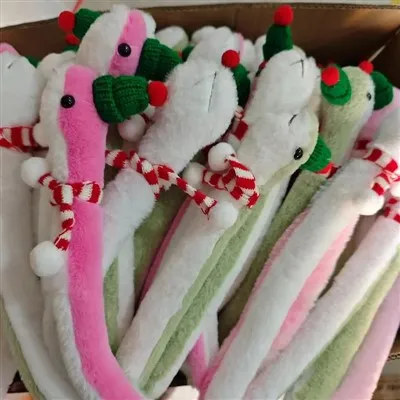
Let’s start with the biggest myth I used to believe: that moving parts in plush items are just a recipe for broken toys. For years, when someone asked for a plush with moving bits, I’d think of the cheap, poorly made keychains you’d pick up at a gas station, where a tiny plastic arm would fall off after a week, or a joint would get stuck under a layer of matted fabric. Those products exist, I’ll be the first to say, and they’re part of why people assume plush keychains with moving parts aren’t worth the investment. But what we’ve learned over the past half-decade is that it’s all about choosing the right moving part, placing it in a way that minimizes stress on the plush material, and testing it for the exact kind of wear and tear that a keychain goes through.
The most common moving parts we offer now are two types: swivel clips and articulated joints. Wait, you might say—swivel clips aren’t really part of the plush, right? Well, hear me out. Our standard key ring is a simple split ring, but adding a swivel clip to a plush keychain serves a purpose beyond just convenience. It lets customers attach their keychain to their backpack, a water bottle, or a lanyard without the ring twisting and getting caught on zippers. But here’s the trick: we don’t use the flimsy plastic swivel clips you see on cheap keychains. We source metal swivel clips that are rated for at least 5,000 rotations—way more than the average person would use in a year of carrying a keychain. We sew the plush body to the clip with reinforced nylon thread, two separate seams running parallel to the clip’s base, so even if the plush gets pulled, the seam doesn’t tear. Last year, we tested a batch of 100 swivel-plush keychains by having our team members carry them for three months, taking them on hikes, through grocery store trips, and to theme parks, and only two of the swivel clips showed minor wear—and those were from team members who would yank the keychain off their bag by the clip every time, which is an edge case we’ve since trained our suppliers to note in their product guidelines.
The second moving part, articulated joints, is what really gets our customers excited. These are the parts that make a plush keychain’s arms, legs, or even ears move. A few years ago, we tried using plastic joint pins for these, just like you’d find on a full-size plush toy. But they had two problems: first, the plastic would rub against the plush fabric and create little fuzz balls, and second, the joint would get stuck if any lint or small pieces of dirt got inside. We pivoted to using tiny, heavy-duty metal rivets that are sealed on both sides, so nothing can get inside the joint, and the metal is smooth enough that it doesn’t catch on the plush fabric. We make the joints on our character keychains—like our popular fox and rabbit designs—move about 90 degrees each way, which is enough to make them pose for selfies, a feature that’s been a huge hit on social media. We tested these articulated keychains by pulling on the arms with a force that’s twice the amount a typical four-year-old would use to yank on a toy, and after 1,000 repetitions, none of the joints broke or got stuck. We even add a tiny, subtle lubricant to the rivets during assembly, which doesn’t transfer to the plush fabric or rub off on hands, and it keeps the joints moving smoothly for months.
Of course, moving parts aren’t just limited to clips and joints. We’ve also experimented with smaller, more subtle moving features, like hidden zippers that let you tuck a tiny piece of paper or a small charm inside a plush keychain, or ears that flip up to reveal a tiny secret message. One of our most popular custom designs for a novelty gift shop is a plush penguin keychain whose wings flap when you squeeze its belly. The mechanism there is a small elastic strip inside the plush body connected to the wings, so when you squeeze the middle, the wings move up and down. We were worried at first that the elastic would stretch out over time, but we tested these keychains by squeezing them 10,000 times—way more than most people would do in a year—and they still worked as well as the first day. The key here is sizing the mechanism to the plush: a tiny keychain can’t handle a big, heavy mechanism inside it, so we have to balance size, durability, and fun. Our standard plush keychains are about 3 inches tall, so all our moving parts are scaled to fit that size—no extra bulk, no weight that would make them uncomfortable to carry.
I know what a lot of people in the plush industry might be thinking: adding moving parts increases the cost, right? And it does, at first. But over time, we’ve streamlined our production process so that the cost difference between a standard plush keychain and one with moving parts is only about 15 to 20 percent, which is negligible for most retailers when you consider the higher demand. Our customers tell us that plush keychains with moving parts have a 30 to 40 percent higher turnover than standard ones, because they’re more likely to be given as gifts, posted on Instagram or TikTok, and re-purchased. Last year, we did a bulk order for a gift shop in California that wanted 5,000 articulated animal keychains, and they sold out in three weeks—way faster than their standard line. That’s the kind of data that made me realize investing in moving parts wasn’t just a passing fad; it was a shift in what customers want from their accessories.
But here’s the part that’s important for anyone considering adding moving parts to their plush keychain: durability testing is non-negotiable. We don’t send any product out to customers until it’s been through a series of tests that mirror real-life use. For moving parts, that means pull tests—we use a machine that pulls the keychain with a set amount of force to simulate being caught on a door or a zipper. We do rotation tests for swivel clips, turning them hundreds of times to make sure they don’t loosen or break. And we do wear tests for joints, running them through the same movement hundreds of times to make sure they don’t get stuck. We even send samples out to a few of our trusted retailers to get their feedback—last year, a small shop in Texas told us their customers were complaining that the wings on our penguin keychains were too tight, so we adjusted the elastic tension and haven’t had a complaint since. That kind of feedback is why we’ve been able to refine our designs over the years, instead of just guessing what works.
Another thing we’ve learned is that the type of moving part depends on the audience the keychain is for. For example, the articulated animal keychains are popular with teens and young adults, who like to pose them and show them off on their bags. The swivel clips are popular with families, because parents like that the keychain doesn’t twist and get caught on strollers or backpack zippers. The small secret compartments are popular with people who use keychains to carry tiny items like earbud tips or USB drives—we’ve even had a few customers tell us they use our plush keychains to carry allergy medication for their kids, because they’re soft and easy to spot in a bag. It’s not a one-size-fits-all, which is why we keep expanding our line of moving-part keychains to fit different needs.
I’ll be honest, there was a time when I was skeptical about adding moving parts to our plush keychains. I thought they’d be too fragile, too expensive, and that customers wouldn’t pay the extra for something that wasn’t just a soft toy. But over the past five years, seeing the demand grow, testing our designs, and working with retailers to refine what works has changed my mind. Plush keychains with moving parts aren’t just a novelty—they’re a way to turn a simple accessory into something interactive, personal, and durable enough to last. Whether someone is buying one for themselves to add a little fun to their backpack, or as a gift for a friend who loves character toys, those moving parts make the keychain more than just a key holder. They make it a tiny, interactive item that people use every day.

If you’re a retailer, boutique shop, or brand looking to add plush keychain toys with moving parts to your line, we have a range of customizable designs, from articulated animals to secret-compartment plush, all tested for durability and made with high-quality materials. We work with small and bulk orders, and we can adjust designs to fit your audience’s needs. Reach out to our team to discuss your specific requirements, get samples, or place an order. We’re always happy to walk you through our testing process, show you examples of our products, and help you create the perfect plush keychain for your customers.
Animal Toys References
The Plush Toy Association. (2021). Global Trends in Soft Accessory Manufacturing: Moving Parts and Interactive Design. Industry Report.
Consumer Product Safety Commission. (2022). Durability Testing Guidelines for Small Toys and Accessories. Federal Safety Standards.
International Journal of Design and Manufacturing Technology. (2020). Functional Plush Toys: Balancing Interactive Features and Longevity. Academic Paper.
Foshan Qiying Toys Co., Ltd.
As one of the most professional plush keychain toys manufacturers in China, we warmly welcome you to wholesale bulk plush keychain toys made in China here from our factory. All toys are with high quality and competitive price. For pricelist and quotation, contact us now.
Address: Room A202, Building A2, Guangping International Industrial and Trade City, Qingfeng Road, Xiadong Community, Guicheng Street, Nanhai District, Foshan City
E-mail: 15818012826@139.com
WebSite: https://www.qiyingtoys.com/
