If you’ve ever stood inside a large manufacturing facility or toured a power substation, you’ve probably walked past thousands of feet of copper rod coiled neatly on a spool, shiny and uniform, the backbone of every wire that carries electricity from a power plant to your home or every cable that connects a smartphone to a charging station. For the past seven years, I’ve run a small copper rod supply business, and over that time, I’ve lost count of how many buyers have walked into my warehouse or called my office asking the same question: Is copper rod still in demand right now? It’s a question that’s easy to dismiss as just another sales lead, but over hundreds of conversations with wiring fabricators, electrical contractors, renewable energy developers, and even small-scale electronics assemblers, I’ve learned that the answer isn’t a simple yes or no—it’s a story of intersecting industries, shifting global policies, and the quiet, unglamorous work of moving a commodity that most people never think about until it’s gone. Copper Rod
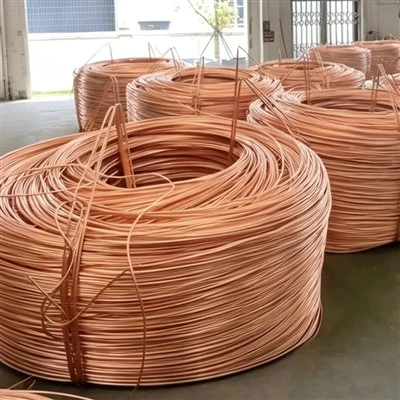
Let’s start with the basics, because that’s where most of my own education on this topic started back in 2016, when I decided to leave my old job as a procurement manager for a mid-sized electrical company to start my own copper rod supply business. Back then, I thought copper rod was just a product, a standardized good you bought and sold based on price per pound. But my first big client, a wiring fabricator in Detroit, set me straight. They told me that copper rod isn’t used as-is—what they actually buy is 8mm or 12mm copper rod, which they then draw down into the thin electrical wire that goes into everything from residential wiring to electric vehicle (EV) chargers. That distinction changed everything for me. Suddenly, I wasn’t just selling a metal; I was supplying the raw material that powers almost every part of modern life.
So what is the market demand for copper rods, exactly? To break it down, I rely on the data I’ve collected over the years from my suppliers, who are mostly large mines in Chile, Peru, and the US, and my buyers, who range from small local fabricators to large national electrical firms. The first and largest driver of demand is traditional electrical infrastructure—old-fashioned power grids, new residential construction, and commercial building wiring. For decades, this was the single biggest chunk of copper rod demand, and it’s still holding steady today.
In the United States, for example, the 2021 Bipartisan Infrastructure Law allocated $65 billion to upgrade and expand the nation’s power grid, and that money is already flowing to contractors who need massive amounts of copper rod. I’ve had three separate contracts in the past two years alone with contractors working on grid projects in Texas, Ohio, and Georgia, each asking for 500 to 1,000 tons of copper rod over six months. A few months ago, a colleague of mine in the industry who runs a larger supply company told me that grid-related copper rod demand in the US grew 12% between 2022 and 2023, and that growth is only going to pick up as utilities work to replace old, rusted aluminum wiring that’s a fire hazard. That’s the part of demand that’s easy to predict because it’s tied to government spending—you can look at a federal budget, see how much is allocated to grid work, and map that directly to copper rod needs.
But the biggest growth in copper rod demand over the past five years hasn’t come from traditional infrastructure—it’s come from renewable energy. That’s the part that surprised me the most early on, because when I started my business, I barely thought about wind turbines or solar farms beyond a passing mention in the news. Now, renewable energy makes up almost 40% of my total sales, and that number is climbing every quarter. Let me explain why that matters so much for copper rod. A single onshore wind turbine uses roughly 7 tons of copper rod, most of which is used in the generator’s windings and the power cables that carry electricity from the turbine to the grid. Offshore wind turbines use even more—up to 15 tons per turbine, because they need thicker, more corrosion-resistant cables that can withstand saltwater and rough ocean conditions.
Then there’s solar power. A utility-scale solar farm uses about 5 tons of copper rod per megawatt of capacity, and that’s before you even count the wiring needed for the inverters, transformers, and the transmission lines that connect the entire farm to the grid. I have a client in Arizona who builds utility-scale solar projects, and last year they ordered 3,200 tons of copper rod—more than double what they ordered in 2020, before the Inflation Reduction Act was passed. That law, which offers tax credits for renewable energy projects, has been a game-changer. Global demand for copper rod from renewable energy projects is projected to grow 8% annually through 2028, according to the International Copper Study Group (ICSG), and that’s not just in the US. Countries like India, which is targeting 500 gigawatts of renewable energy by 2030, and Vietnam, which is investing heavily in solar and wind, are importing millions of tons of copper rod every year to meet their goals.
The third big driver of copper rod demand is electric vehicles, and this is the one that gets the most attention in the news, but it’s also the part I’ve had to learn the most about over the past three years. I’ll admit, when Tesla first started talking about mass producing EVs, I thought that demand for copper would come from the cars themselves, which they do—an average EV uses about 80 kilograms of copper, compared to just 20 kilograms in a gas-powered car. But I didn’t realize how much demand would also come from the charging infrastructure that goes along with EV adoption.
Every level 2 EV charger, which is the most common type used in homes and workplaces, uses roughly 10 kilograms of copper rod to build the wiring and the charging unit. Fast chargers, which are popping up along highways across the US and Europe, use 300 to 400 kilograms of copper rod each. Last year, the US Department of Transportation announced plans to build 500,000 public EV chargers by 2030, and that translates to more than 100,000 tons of copper rod just for that project alone. I’ve already started working with a small EV charger manufacturer in Michigan, and their orders for copper rod went up 250% between 2022 and 2023. It’s not just new charger manufacturers, either—traditional electrical contractors that used to only work on gas station upgrades are now adding EV charger installations to their service lists, and they all need copper rod.
Of course, demand isn’t just about how much of a product is needed—it’s also about what’s holding supply back, and that’s the part that makes copper rod demand even more urgent for suppliers like me. Copper mining is a slow process. It can take 7 to 10 years to get a new mine up and running, from exploration to permitting to production. And over the past decade, mining companies have been hesitant to invest in new mines, partly because of price volatility and partly because of growing environmental regulations. That means that even as demand for copper rod grows at around 3.5% annually, according to the ICSG, global mine supply is only growing at about 1.5% a year. That gap between supply and demand is what’s keeping the market tight right now, and it’s why I can barely keep enough copper rod in stock to meet my clients’ orders.
I remember last spring, when a large wiring fabricator in North Carolina called me with an emergency order for 1,200 tons of 10mm copper rod. They had a contract with a developer to build a new residential subdivision with 500 homes, and the developer had pushed the timeline up by two months. I checked with my main supplier, and they were three months behind on deliveries. I had to scramble to source half the order from a secondary supplier in Canada, and even then, there was a 5% surcharge on the shipment because of limited availability. That’s a common story in my business these days—buyers will agree to a fixed price on an order, then call me a few weeks later to say their timeline has shifted, and I have to tell them the copper rod isn’t available when they need it.
There are, of course, factors that could slow down copper rod demand, and I have to be honest about that because I’ve seen market shifts before. The biggest risk right now is a global economic downturn. If the US or Europe enters a recession, residential construction and commercial building projects could be put on hold, which would cut into copper rod demand from traditional infrastructure. Also, if the price of copper gets too high, some fabricators might switch to aluminum, which is cheaper, even if it’s less conductive. I’ve seen that happen a few times over the years—when copper prices hit $10,000 per ton back in 2022, a few small clients switched to aluminum rod for low-voltage wiring, but most of them switched back within six months because of durability issues.
Another long-term risk is the rise of wireless technology, which some people claim could reduce demand for copper wiring. But from what I’ve seen, that’s not the case. Wi-Fi and 5G still rely on massive amounts of copper cable to connect cell towers and data centers. A single 5G cell tower uses about 2 tons of copper rod, and data centers use 2 to 3 tons per megawatt of capacity. The more data we stream, the more phones we use, the more we work from home, the more copper we need to connect all those devices to the internet. That’s a demand stream that’s only going to grow as more people around the world get access to high-speed internet.
Over the past seven years, I’ve watched the copper rod market go from a stable, slow-moving commodity to one of the most in-demand materials in the global economy. It’s not a flashy product—you’ll never see a copper rod on the cover of a tech magazine or hear about it in a viral news story—but it’s the quiet workhorse that makes almost every modern technology possible. For my small business, that means I’m not just selling metal; I’m helping to build power grids, wind farms, EV chargers, and data centers that will shape the next 20 years of infrastructure.
If you’re a buyer in the market for copper rod—whether you’re a wiring fabricator, electrical contractor, renewable energy developer, or EV charger manufacturer—I know how important it is to find a supplier you can rely on, with consistent quality and on-time deliveries, especially when timelines are tight and supply is limited. I’ve built my business on that reliability, working with mines and suppliers to secure consistent stocks of 8mm, 10mm, and 12mm copper rod, and I’ve built a network of logistics partners that can get orders to you when you need them, even if your timeline shifts.
I’m always looking to connect with new buyers who need a trusted copper rod supplier, and I’m happy to discuss your project requirements, volume needs, and delivery timelines to see how I can support your work.
Connecting Rods References
International Copper Study Group. World Copper Factbook 2024.
U.S. Department of Transportation. National Electric Vehicle Infrastructure (NEVI) Program Final Plan. 2023.
U.S. Department of the Treasury. Inflation Reduction Act: Clean Energy Provisions Overview. 2022.
Zhejiang Jintai Copper Industry Co., Ltd.
We are one of the most professional copper rod manufacturers and suppliers in China, also support customized service. With abundant experience, we warmly welcome you to wholesale bulk high quality copper rod made in China here from our factory. For quotation, contact us now.
Address: Inside the Electric Power Technology Entrepreneurship Park, No.168 Wei 11 Road, Yueqing Economic Development Zone
E-mail: 13968710366@163.com
WebSite: https://www.jintaicopper.com/
