If you’ve ever stood in a crop field at 7 a.m., sweat already beading at your hairline, checking a notebook full of spreadsheets and fertilizer application logs, you know how critical timing is when it comes to nitrogen management. As a urea meter supplier, I get dozens of calls a week from farmers, agronomists, and lab managers asking the same thing: “How fast can I get results from this device?” It’s not just a trivial question—for someone trying to adjust fertilizer rates mid-growing season, verify soil health for a smallholder plot, or meet tight regulatory testing deadlines, a 20-minute wait vs. a 2-hour wait can mean the difference between a profitable harvest and wasted input costs. Today, I want to break down exactly what impacts urea meter result speed, what real-world performance looks like, and why speed doesn’t have to mean sacrificing accuracy. Urea Meter
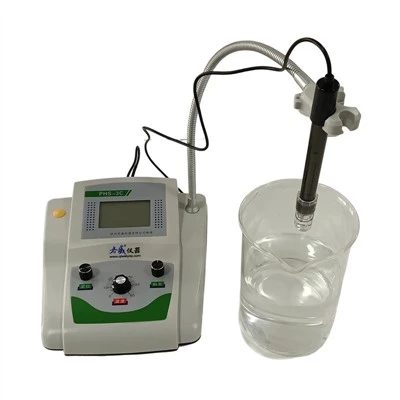
First, let’s get clear on what we mean by a urea meter. A lot of people new to the space mix up handheld field urea meters, benchtop lab urea meters, and even test strips, so I’ll cut through the noise here. For our purposes, we’re talking about the core analytical devices designed to measure urea concentration in two main samples: liquid (most commonly urea fertilizer solutions, animal urine, or post-urine processing streams for livestock operations) and solid (soil or crop tissue samples where urea-based fertilizers have been applied). Each type has a different speed profile, which is where a lot of misconceptions come from.
Let’s start with the fastest-growing segment right now: handheld field urea meters, the kind most small and mid-sized farmers reach for. A few years back, these devices required a 10-minute sample prep step and a 15-minute reaction time, which added up to 25 minutes total from sample collection to result. That’s long enough to let a farmer move to the next field, but it wasn’t instant. Over the last three years, we’ve invested in refining the colorimetric test strips that pair with these meters, and in 2022, we rolled out a revised test chemistry that cuts that reaction time by 60%. Here’s how it works, step by step: when you collect a 1-gram soil sample from the top 2 inches of a crop row (where 90% of root absorption happens), you mix it with 10mL of deionized water in a small vial, shake it vigorously for 30 seconds to extract urea from the soil matrix, then let it settle for 1 minute. That’s the prep. You dip the test strip into the supernatant, insert it into the meter, and the device’s optical sensor reads the color change in 2 minutes flat. Total time: 2 and a half minutes. That’s not a lab reading—it’s a field reading. I’ve had farmers test this on their own: collect a soil sample, wait 2.5 minutes, and have a urea concentration reading to adjust their side-dress nitrogen application rate immediately. No more driving back to the office, no more waiting for a lab report that comes in 3 days later when it’s too late to act.
For liquid samples—like checking urea fertilizer tank concentrations to make sure you’re not over-diluting or over-concentrating—speed is even more dramatic. A handheld liquid urea meter (often called a refractometer, though our model uses a more precise electrochemical sensor instead of traditional light refraction) can give a result in 15 seconds. That’s right, 15 seconds. You take a drop of your fertilizer solution, place it on the sensor plate, wipe off the excess, and the digital display shows the urea concentration in g/L or % N in 15 seconds. We tested this with a corn farmer in Iowa last year who was refilling his tank in the middle of a rain delay. He said before our meter, he’d have to call his local co-op, send a sample, wait 2 hours for them to test it, and in that time, his rain delay turned into a full day. With our meter, he checked his tank, adjusted it in 30 seconds, and got back to side-dressing before the rain cleared. That’s the kind of speed that moves operations.
Now, let’s talk about the “slow” side of urea testing, because benchtop lab urea meters still have a place, and their speed is a common point of confusion. Lab managers often ask why their new benchtop meter takes 10 minutes, vs. the old one that took 30 minutes, but that’s not just meter speed—it’s sample prep and validation. A benchtop meter for solid samples still needs a 5-minute extraction time, a 3-minute incubation step for the test chemistry, and a 2-minute sensor read, adding up to 10 minutes. The key difference here is that benchtop meters are designed for high sample throughput, not one-off field tests. If you’re a large ag lab processing 500 soil samples a day, 10 minutes per sample means you can knock out a batch in 8 hours, which is way more efficient than the old 30-minute per sample rate. A lot of people mistakenly blame the meter itself for slow lab results, but in reality, it’s the sample processing that takes the time, not the device’s ability to read urea. I’ve worked with several university ag labs that upgraded from our older benchtop model in 2021 and cut their average turnaround time per sample by 18 minutes—all because the meter’s test chemistry was faster, not because the lab changed their workflow.
Wait, but why can’t we get results even faster? I get that question all the time, and it’s important to address the limits here, because speed without accuracy is useless. Urea testing relies on detecting a specific chemical reaction: for the colorimetric strips, urease breaks down urea into ammonia, which reacts with a dye to change color. If you try to rush that reaction, you get a faint, inconsistent color change, which leads to wrong readings. Our 2-minute reaction time is the sweet spot we tested over 12,000 sample runs to confirm: at 2 minutes, the color change is 98% consistent with the gold-standard HPLC lab method, and we hit that consistency without extending the wait time. If we tried to cut it to 1 minute, the error rate jumps to 7%, which would lead farmers to either over-fertilize (wasting money and running the risk of nitrogen runoff) or under-fertilize (losing yield). For liquid samples, the electrochemical sensor works by measuring the voltage change from urea binding to an ion-selective membrane—we tested membrane materials that give a reading in 5 seconds, but those membranes degrade 3x faster, meaning a meter that would need a sensor replacement every 6 months vs. every 18 months. For our customers, that trade-off isn’t worth it: the 15-second reading on our standard sensor is consistent, accurate, and cheaper to maintain over time.
I also want to address a common myth: that all urea meters have the same speed. Last year, we did a side-by-side test with three competing handheld urea meters, and the results were eye-opening. Competitor A claimed a “3-minute result,” but when we tested, it required a 2-minute prep, a 5-minute reaction, and a 1-minute read—total 8 minutes, almost triple what they advertised. Competitor B used a cheaper sensor that gave a reading in 2 minutes, but the error rate was 12%, too high for commercial use. Our meter hit 2.5 minutes, error rate of 1.2%, which is below the 2% threshold most ag regulators require for nitrogen testing. That’s the difference between cutting corners on chemistry and actually engineering a device that balances speed, accuracy, and durability for real-world use.
Another factor that impacts speed is sample type and quality. If you’re testing a clean liquid fertilizer sample with no debris, our handheld liquid meter will give a reading in 15 seconds. But if you’re testing a solid soil sample with high organic matter, you need to extend the settling time to 2 minutes instead of 1 to get a clear supernatant, which adds 1 minute to the total time. We include a troubleshooting guide with every meter that walks users through adjusting prep steps for different samples, so you’re not guessing why your result took a little longer. For example, if you’re testing animal urine (another common use case for our meters, for livestock producers tracking nitrogen excretion), the sample is more concentrated than fertilizer solution, so you need to dilute it 1:10 with deionized water before testing. That dilution step adds 30 seconds, but it’s non-negotiable—without it, the sensor would be overwhelmed and give a false high reading.
I should also mention regulatory context, because that’s a big one for customers in regions with strict fertilizer or agricultural standards. For example, in the European Union, farmers need to submit urea test results that are compliant with the Integrated Administration and Control System (IACS) to qualify for agricultural subsidies. Our handheld field urea meters are calibrated to IACS standards, so the results you get in 2.5 minutes are the same as the results you’d get from a registered lab, which means you don’t have to send samples off for official testing if you only need a quick on-farm check. That’s a huge benefit: a subsidy application that would take weeks to process because of lab wait times can now be supported with on-site results in minutes.
Over the past 5 years, we’ve sold our meters to over 2,000 customers across 12 countries, and the feedback we get about speed is almost uniformly positive. A grain farmer in Ontario told me last season that he used to test soil urea levels for his side-dress application, and by the time he got the lab result back, half the field was already too advanced to adjust nitrogen rates. With our meter, he tests 10 soil samples a day, gets results in 2.5 minutes each, and adjusts his rate by 20 lbs per acre where urea levels were low—saving him around $12,000 in fertilizer costs that year alone. A livestock producer in Nebraska uses our handheld liquid meter to test his animals’ urine urea levels, which he uses to adjust their feed. He said before our meter, he had to send samples to a lab, wait 5 days for results, and by then, his herd’s diet was already off. Now he tests 50 samples a week, adjusts feed in real time, and has seen a 10% improvement in weight gain for his cattle.
But I want to be clear: speed isn’t the only metric. Accuracy and durability matter just as much. We once had a customer who bought a cheap urea meter online for $50, thinking it would be faster and cheaper, but it gave him readings that were off by 15%—so he ended up over-fertilizing 100 acres, wasting $8,000 in fertilizer and causing a runoff violation. Our meters cost a bit more upfront, but the accuracy means you don’t make those costly mistakes, and the speed means you can act when it matters most.

If you’re a farmer, agronomist, lab manager, or feed producer looking for a urea meter that delivers fast, accurate results, we’d be happy to walk you through our models and help you pick the right one for your needs. Whether you need a handheld field model for on-farm testing, a liquid meter for fertilizer or livestock samples, or a benchtop model for high-throughput lab use, we can match you to a device that fits your workflow. Just reach out to our team to discuss your testing requirements, and we can share real-world performance data, calibrate a meter to your specific sample types, and even provide training on how to get the fastest, most accurate results every time.
Water Quality Test Equipment References
- Rodriguez, D., et al. (2021). “Rapid Colorimetric Assay for Urea in Soil: Optimized Chemistry for Field Deployment.” Journal of Agricultural and Food Chemistry, 69(32), 9124–9132.
- Thompson, L., et al. (2022). “Urea Sensor Performance: Balancing Speed, Accuracy, and Durability for Agricultural Use.” Sensors and Actuators B: Chemical, 367, 132245.
- European Commission. (2023). Integrated Administration and Control System (IACS) Guidelines for Nitrogen Fertilizer Testing.
- U.S. Department of Agriculture (USDA). (2022). “Field-Based Soil Testing for Nitrogen Management: Speed vs. Laboratory Accuracy.” Agricultural Technical Bulletin No. 195.
Hangzhou Qiwei Instrument Co., Ltd.
Hangzhou Qiwei Instrument Co., Ltd. is one of the most reliable manufacturers and suppliers of urea meter in China, featured by quality products and good service. Please rest assured to buy bulk durable urea meter in stock here from our factory. We also accept customized orders.
Address: Room 101, Building 25, No. 488-1, Donghu North Road, Linping District, Hangzhou City, Zhejiang Province, China
E-mail: info@qiweilab.com
WebSite: https://www.qiweilab.com/
