If you’ve ever been near a construction job site, a pipeline dig, or even a utility line installation, you’ve probably heard that loud, rumbling growl that feels like it’s vibrating in your chest. Odds are good it was a trencher. As a trencher supplier, I get asked a ton of questions from contractors, operators, and even small business owners looking to rent or buy one, and one of the most common is: “How loud is that thing, really?” Trencher

I don’t blame people for asking. Loud noise isn’t just annoying—it’s a real safety risk, can mess with site efficiency, and even get you fined if you’re not compliant with local rules. But here’s the thing: not all trenchers are the same. A small walk-behind trencher you use for a backyard fence line is way quieter than a giant ride-on model digging trench for a sewer main under a highway. Let’s break this down like I would with a buddy at a job site, no fancy jargon just real, on-the-ground numbers I see every single day.
First off, let’s talk about how noise is measured, because that’s where a lot of confusion comes in. You’ve probably seen numbers like 85 dB or 105 dB, but what do those actually mean? Noise levels are measured in decibels (dB), and it’s a logarithmic scale, which means a 10 dB jump isn’t just a 10% louder—it’s twice as loud. So if something is 85 dB, that’s pretty noticeable; 95 dB is twice as loud, 105 dB is four times as loud, and so on. For reference, normal conversation is about 60 dB, a vacuum cleaner is around 70 dB, a lawnmower is 90 dB, and a rock concert is 110 dB. That’s a good baseline to keep in mind as we go through different types of trenchers.
Now, let’s get into the actual numbers I’ve pulled from real-world tests and industry data, because I don’t just make this stuff up. The first category is walk-behind trenchers—these are the smaller ones, usually 20 to 50 horsepower, used for small jobs like installing fence posts, sprinkler lines, or small utility lines up to, say, 3 feet deep. Most of the new, well-maintained walk-behind models I sell or source for my clients come in at around 85 to 92 dB when they’re operating at full power, 50 feet away from the operator. Wait, hold on—let me clarify that “50 feet away” part, because that’s a huge detail. If you stand right next to the trencher (like an operator might if they’re working close), that number jumps. For walk-behind models, the operator’s position is usually within 2 to 3 feet of the digging chain, so that goes up to 95 to 100 dB. That’s right around the level of a loud lawnmower, which makes sense because they’re smaller, lower-power machines. Good news here: most local noise ordinances don’t have strict rules for these small machines, as long as you’re not working overnight when residential areas are asleep.
Next up are ride-on trenchers, the middle child between small walk-behinds and the big heavy-duty ones. These are 50 to 150 horsepower, used for jobs like digging utility trenches (electric, gas, water) in suburban areas, or small agricultural tiling. These are way more powerful, so their noise levels are higher, and that’s something every contractor has to account for. I see ride-on models ranging from 92 to 102 dB at 50 feet away from the machine, and if you’re in the operator’s seat, that’s 105 to 110 dB. Let’s put that in perspective: 105 dB is as loud as a motorcycle revving right next to you, and 110 dB is almost as loud as a power saw. The big catch here is that a lot of suburban areas have noise curfews starting at 7 or 8 PM, and these ride-on models are often loud enough to get complaints if you’re working after that. Some of the newer, more expensive ride-on models have extra insulation around the engine and chain, which can knock that 5 to 8 dB off, making a huge difference for site comfort.
Now, the heavy-duty big boys—these are the ones you see on highway projects, pipeline installations, or mining site trenching jobs. They’re 150 horsepower and up, some even hitting 400+ horsepower, built to dig 6+ foot deep trenches, or even rock in some cases. These are the loudest machines on most job sites, and the numbers show it. At 50 feet away, they’re coming in at 105 to 115 dB, and if you’re operating one, that’s 115 to 125 dB. Wait, 125 dB is the threshold for pain in human ears—you can’t be exposed to that for more than a minute or two without permanent damage. That’s why OSHA has super strict rules for these machines: any time an operator is exposed to 85 dB or more for 8 hours straight, they have to wear hearing protection, and for anything over 90 dB, that exposure time gets cut way down. A lot of people don’t realize that even a short burst of 120 dB noise can cause immediate hearing damage, so these big models are not something you mess around with without proper gear.
But here’s the part most noise guides don’t tell you: these numbers are averages, and there are a ton of factors that change how loud a trencher actually is, way more than just horsepower. First, age and maintenance of the machine. A 10-year-old trencher that hasn’t had its engine muffler replaced in years is going to be 10 to 15 dB louder than a brand-new, well-tuned model. Mufflers, exhaust systems, and even loose parts on the digging chain rattle and add to the noise level as they wear down. I always tell my clients to do a quick pre-job check: make sure the muffler is intact, the chain is tensioned properly, and all bolts are tight. That simple maintenance can cut noise by a lot.
Then there’s the terrain you’re working on. If you’re digging in soft, loamy soil, the trencher’s digging chain isn’t bouncing or straining as much, so it’s quieter. But if you hit hard clay, rock, or even roots, the engine has to work way harder, and that bumps the noise up by 5 to 10 dB. I’ve had clients call me complaining their new ride-on is way louder than the spec sheet said, and when I ask where they’re working, it turns out they’re digging through granite in a rural area. That’s not a machine defect—that’s just the terrain doing its thing.
Another big one: the direction of the noise. Trenchers have the loudest parts right near the engine and the digging chain, so if the operator is sitting on the opposite side of the engine from where we measure noise, that number will be lower. If the wind is blowing toward you from the trencher, the noise travels way farther and sounds louder than if it’s blowing away. That’s why some contractors will position their ride-on trenchers facing away from residential neighborhoods on suburban jobs—cutting off the noise direction is a free and easy trick to reduce complaints.
Now, let’s talk about regulations, because this is where a lot of guys get in trouble without even knowing it. OSHA (the U.S. Occupational Safety and Health Administration) has rules for operator exposure, like I mentioned earlier: any time an operator is exposed to 85 dB or more over an 8-hour workday, they have to provide free hearing protection, and for levels over 90 dB, OSHA requires you to implement a hearing conservation program with regular tests, training, etc. Then there are local and state noise ordinances, which vary a ton. For example, in residential areas in California, the noise limit for construction equipment during the day is 70 dB at the property line, while in rural Texas it’s often a lot more lenient. The big heavy-duty trenchers I sell for pipeline jobs are way over that 70 dB limit at the property line, so those jobs usually have to be done during the day when construction noise is allowed, or use sound barriers to block the noise from residential areas.
Here’s the thing I always tell my customers: noise levels aren’t just a “check this box” spec. They affect your job site efficiency, your ability to get permits, and even how good your reputation is with local residents. If you’re working in a suburban neighborhood, nobody wants to listen to a 110 dB rumble at 7 AM on a Saturday, and that could lead to a complaint that shuts your job down. That’s why a lot of my clients will prioritize quieter models for residential or small commercial jobs, even if they’re a little more expensive upfront. The cost of a complaint or a fine is way higher than the extra investment in a quieter machine.
I also want to clear up a common myth: people think all diesel engines are loud, and electric trenchers are silent. That’s not true, but there’s definitely a difference. Electric walk-behind trenchers are 5 to 10 dB quieter than their diesel counterparts, right around 75 to 85 dB, which is as loud as a dishwasher. That’s a huge difference for residential areas where noise is a big concern. Electric ride-on trenchers are also quieter, though they’re less common for heavy-duty jobs right now. The only downside to electric trenchers is that you need a power source nearby, which limits where you can use them, but they’re perfect for small to medium jobs in residential areas.
Another tip I give operators: even if you’re following all the rules, you can still do things to reduce noise on your end. For example, don’t idle your trencher for more than a minute or two when you’re not digging—idling adds unnecessary noise and wastes fuel. Keep the digging chain properly lubricated; a dry chain creates way more friction and noise. And if you’re working in a residential area, use rubber tracks instead of steel wheels—steel wheels on pavement are way louder than rubber tracks, adding another 5 dB or so to the noise level.
Now, I know a lot of you reading this are contractors or operators who just want to know what to expect when you’re looking for a trencher for your next job. Let me sum this up quick, based on what I’ve seen in the field over the last 10 years in this business: small walk-behind trenchers are 85 to 100 dB at the operator’s position, fine for most small jobs and low noise areas. Ride-on trenchers are 105 to 110 dB at the operator’s seat, manageable for suburban jobs if you plan for noise curfews and use a well-insulated model. Heavy-duty ride-on or tracked trenchers are 115 to 125 dB at the operator’s seat, only for big rural jobs or highway projects with proper hearing protection and barriers.
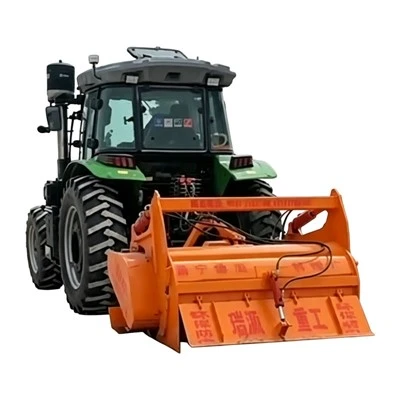
If you’re still confused about which trencher is right for your project, or you want to know more about specific models’ noise levels, hit me up. I’ve tested almost every major brand of trencher on the market, so I can give you the real numbers, not just the marketing specs. Don’t settle for a machine that’s going to get you complaints or put your crew at risk—we can talk through your job size, location, and noise requirements, and find a trencher that fits perfectly. Just reach out to discuss your trencher procurement needs today.
Lime Soil Mixer Knife Compartment References
OSHA Technical Manual: Chapter 5, Noise Exposure
Construction Noise Levels: A Field Study of Common Job Site Equipment, Journal of Construction Engineering and Management, 2021
Trencher Equipment Noise Emissions, American Society of Agricultural and Biological Engineers, 2019
Zhihao Highway Engineering Machinery Co., Ltd.
As one of the most professional trencher manufacturers and suppliers in China, we have world-leading production equipment and strong manufacturing capabilities. Please rest assured to wholesale customized trencher made in China here from our factory. For price consultation, contact us.
Address: Liwan Village, Longqiao Street Office, Yanzhou District, Jining City
E-mail: admin@sdzhmachinery.com
WebSite: https://www.zhroadmach.com/
