If you’ve ever dealt with Babbitt journal bearings, you know the tiny, make-or-break relationship between the soft, tin or lead-based liner and whatever oil, grease, or synthetic lube you throw at it. Mess that up, and you’re looking at pitting, corrosion, or worse—bearing failure mid-shift, which for factories, mining operations, or big rigs means thousands in downtime, not to mention lost revenue. I’ve been selling Babbitt journal bearings for 12 years, and let me tell you: 90% of the avoidable bearing problems I see trace back to a mismatch between the Babbitt material and the lubricant. Today, I’m breaking down exactly how to lock in that chemical stability, no stuffy engineering jargon, just real-world stuff we’ve tested and proven out in the field. Babbitt Journal Bearings
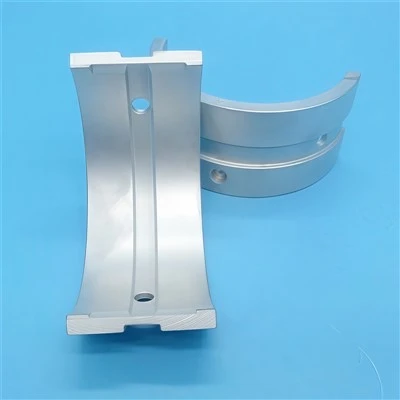
First, let’s cut through the confusion about what Babbitt actually is, because you can’t pair it right if you mix up the types. There are two main flavors: tin-based and lead-based. Most of our industrial customers go with tin these days because it’s more corrosion-resistant, but lead-based still has a spot for super high-load, low-speed applications—like old mining ore crushers, for example. The thing is, lead-based Babbitt reacts way easier with certain lubricant additives, and that’s where a lot of new installers slip up. I’ve seen a guy last year throw in lead Babbitt bearings with a standard industrial gear oil, and three months later the bearing surface was blotchy, corroded, and the whole machine had to be pulled offline. Turned out, the gear oil had extreme pressure (EP) additives that ate through the lead liner’s protective layer. That’s the kind of mistake we help customers avoid before they even buy anything.
The first big step to ensuring chemical stability is picking the right lubricant for your specific Babbitt type. This isn’t a “one-size-fits-all” situation, and I’ve had so many people ask me why they can’t just grab whatever lube’s cheapest from the supply closet. Let’s get specific here. For tin-based Babbitt—our most popular line right now—you want to steer clear of lubricants with high levels of sulfur or chlorine-based additives. Those are common in heavy-duty hydraulic oils, some gear lubes, and even certain synthetic blends. Sulfur and tin react to form tin sulfide, which is brittle and breaks off as tiny particles. Those particles act like sandpaper in the bearing gap, scraping the shaft and wearing the Babbitt liner faster than you can imagine. For lead-based Babbitt, the enemy is different: high-acid lubricants. Over time, acid in lube eats through the lead’s surface, leading to what’s called “leaching,” where tiny bits of lead dissolve into the lube and circulate through your system. That’s not just bad for your bearing—it can contaminate other parts, like pumps or seals. I always tell customers to check the lubricant’s acid number (TAN, Total Acid Number) when pairing with lead Babbitt: keep that TAN below 2.0 mg KOH/g, tops. For tin, stick to lubes with a TAN under 1.5 to play it safe.
Next up, you can’t skip the pre-use compatibility test, no matter how rushed your project is. I know, when you’re on a tight deadline, it’s tempting to just mount the bearings and fire up the machine—but that’s where you’ll regret it. Here’s how we do it at our shop, and we’ve never had a failed bearing from compatibility testing since we started this routine 8 years ago. Take a small sample of your Babbitt (we can send you a free chip if you’re a customer, no questions asked) and a sample of the lubricant you plan to use. Mix them in a small, clean glass jar, and leave it in a warm area—around 140°F is standard, which is roughly the operating temp most journal bearings see. Wait 72 hours, then check three things: does the lubricant look cloudier than when you started? Is there any discoloration on the Babbitt chip (dull gray, black spots, or a chalky film are all red flags)? Did any tiny flaky material separate from the chip? If any of those are true, swap the lubricant for something else. Last year, a customer from a steel mill tried to skip this test because they were afraid of delaying a repair, and within two weeks, their Babbitt bearings had severe sulfidation. They ended up paying more for rush replacements than they would have if they’d just done the test. That’s a simple cost they can’t afford, and it’s 100% preventable.
Another thing most people miss is managing the lubricant’s condition over time. Chemical stability isn’t just a one-time check when you first pair the Babbitt and lube—it’s ongoing. Lubricants break down as they run: heat, contamination from dirt or metal shavings, and oxidation all change their chemical makeup, which can trigger reactions with Babbitt. The big culprits here are water contamination and oxidation. Water in lube is a killer for both Babbitt types: it speeds up corrosion, especially in lead-based Babbitt, and can wash away any protective surface layers. We always tell customers to install water detectors in their lubrication systems—cheap, easy to use, and they alert you before water levels get high enough to cause damage. For oxidation, use lubricants with oxidation inhibitors, and stick to regular oil analysis every 3-6 months. This test will tell you if the TAN is rising, if there’s any metal contamination from the Babbitt, or if the lube’s additives are breaking down. I had a paper mill customer a few years ago who only did oil analysis once a year, and by the time they caught the problem, their Babbitt bearings had 2mm of pitting—enough to scrap the whole bearing. If they’d done quarterly checks, they could’ve swapped out the lube and avoided $15k in replacement costs.
Wait, let’s talk about surface preparation too—this is a make-or-break step that’s often overlooked, and it directly ties to chemical stability. When you install new Babbitt bearings, you can’t just throw them on the shaft. The bearing surface has to be scrupulously clean, free of machining oils, dust, or any residual contaminants from the manufacturing process. If there’s leftover machining oil on the Babbitt surface, it can react with the lubricant you add, creating a thin layer that prevents proper lubrication and traps moisture. We always recommend degreasing the bearing with a parts-wash solvent, then rinsing with isopropyl alcohol and letting it air dry completely before applying lubricant. I once saw a mechanic skip this step on a farm tractor’s Babbitt bearing, and after a month, the lube was mixed with leftover machining oil, leading to varnish buildup that caused the bearing to seize. It was a $200 bearing, but the downtime cost the farmer $2,000 in lost crop harvesting. Small steps, big impact.
Oh, and don’t forget about operating conditions—they affect chemistry too. If your journal bearing runs at super high temperatures (over 250°F), standard lubricants will break down faster, right? So you need a high-temperature lube with extra additives that won’t react with Babbitt at those heat levels. For low-speed, high-load applications, like crane bearings, you might need a grease instead of oil, and not just any grease— lithium or calcium-sulfonate greases are best for Babbitt because they form a stable layer without reacting. I always ask customers about their bearing’s operating load, speed, and temperature when we recommend a lube, because a bearing running at 100 RPM vs 10,000 RPM has totally different chemical needs. You can’t use the same lube for a tiny pump bearing as you would for a massive mining shovel bearing, and pairing the wrong one leads to the chemical reactions we’re talking about.
Let me also address a common myth: some people think adding more lubricant is better, but that’s not true. Too much lube can cause foaming, which introduces air and moisture into the system, accelerating oxidation and corrosion. We tell customers to follow the fill level guidelines for their bearing housing—usually, you want the lube level to cover the lower half of the journal bearing, no more. Foam is a quick red flag: if you see foam coming out of the bearing’s vent, that means air is mixing into the lube, and you need to adjust the fill level or add an anti-foam agent that’s compatible with your Babbitt. I’ve seen customers add more lube to fix a small leak, only to end up with foaming that corroded their Babbitt. It’s a cycle you don’t want to get stuck in.
Now, let’s wrap this up with what it all means for you, the guy who relies on Babbitt journal bearings to keep your operations running. The biggest takeaway is that chemical stability between Babbitt and lubricant isn’t rocket science—it’s about matching the right materials, testing before you install, monitoring your lube’s condition, prepping surfaces correctly, and accounting for your specific operating conditions. I’ve worked with hundreds of customers over the years, and the ones who follow these steps almost never have avoidable bearing failures. The ones who skip the small checks? They end up with extra costs, downtime, and headaches.
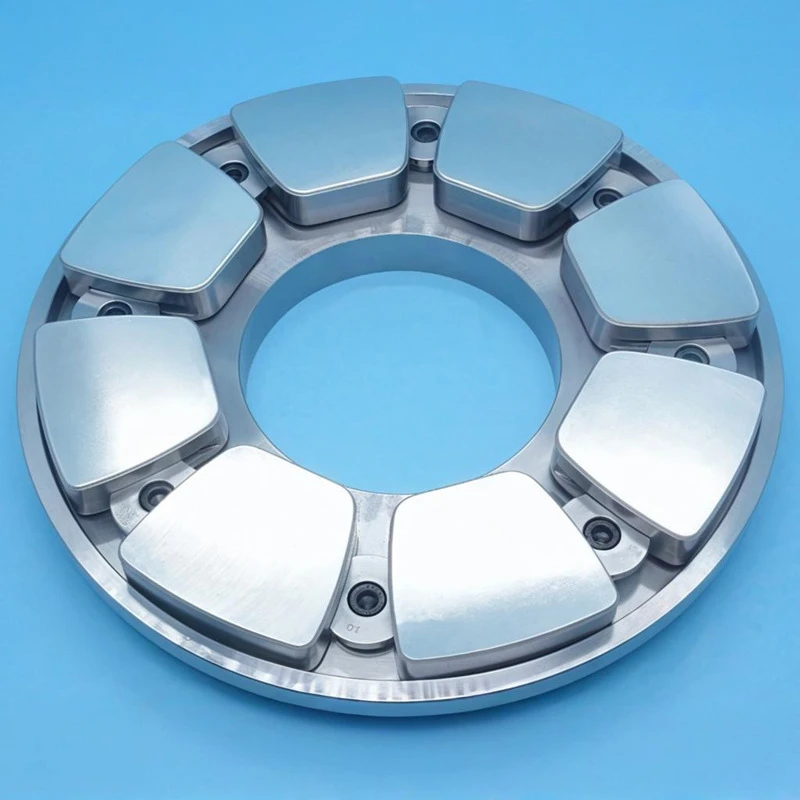
If you’re not sure what lubricant to pair with your existing Babbitt bearings, or you’re buying new bearings and want to make sure you get the right combo, reach out to us. We’ve got a team that can walk you through all the steps, send you free sample chips for testing, or even help you set up a regular maintenance schedule for your lubrication system. No pushy sales tactics, no confusing jargon—just real advice based on 12 years of working with Babbitt journal bearings every single day.
Babbitt Journal Bearings References:
- Stachowiak, G.W., & Batchelor, A.W. (2014). Engineering Tribology. Butterworth-Heinemann.
- Penn, G.S. (2008). Babbitt Bearings: Materials, Design, and Applications. Industrial Press.
- Rudnick, L.R. (2004). Lubricant Additives: Chemistry and Applications. CRC Press.
- ASME B106.1M-1985 (R2018). Measurement of Vibration of Machine Elements, Including Bearings and Shafts. American Society of Mechanical Engineers.
Wenzhou Zhengbang Bearing Co., Ltd.
We are one of the most professional babbitt journal bearings manufacturers and suppliers in China. With abundant experience, we warmly welcome you to buy customized babbitt journal bearings at competitive price from our factory. If you have any enquiry about free sample, please feel free to email us.
Address: Units 1-1 and 3-1, Building 12, Yongxing Nanyuan Small and Micro Enterprise Startup Park, Binhai 2nd Road, Yongxing Subdistrict, Longwan District, Wenzhou City, Zhejiang Province.
E-mail: zbbearing@zbbearing.com
WebSite: https://www.zb-bearings.com/
