If you’ve ever stood next to a forklift loading a stack of pallets at a warehouse, shipping yard, or construction site, you’ve probably seen the operator check their load chart before moving – and that check almost always revolves around one key number: the load center. For anyone who’s new to forklift operation, or even for business owners looking to buy their first lift, this term can feel like a random, confusing specification that’s easy to overlook. But as a forklift supplier who’s spent the last 12 years helping companies of all sizes avoid costly accidents, damaged goods, and unnecessary equipment downtime, I can tell you this: understanding the load center is not just a technical detail – it’s the single most important rule for safe, efficient forklift work. Let’s break it down, in plain terms, with real examples that matter to your operation. Forklift

First, let’s start with the basics of how forklifts work. A forklift is essentially a seesaw – or a lever, if you want to get technical. The front wheels act as the fulcrum (the point that pivots), the load you carry sits out in front of the fulcrum, and the counterweight at the back of the truck keeps the whole thing from tipping forward when you lift something heavy. The load center is the distance from that front fulcrum point to the center of gravity of the load you’re carrying. If that distance is too long, or the load is too heavy for that distance, the counterweight can’t balance it – and you get a tip-over. That’s not a hypothetical; OSHA data shows that improper load center use is a leading cause of forklift-related fatalities, responsible for around 25% of all lift truck deaths each year. I’ve seen it firsthand: a small business owner I worked with a few years back rented a used forklift to move 8-foot-long steel beams, and he ignored the load center. The operator stacked the beams all the way out on the forks, and the next thing we knew, the lift tipped forward, crushing a pallet jack and narrowly missing the driver. All because he didn’t understand that an 8-foot beam isn’t the same as a 4-foot pallet of boxes when it comes to load centers.
Let’s make this concrete with numbers, because that’s how forklift manufacturers spell out load limits on their load charts. Every forklift has a rated load center, which is the distance the manufacturer designs the truck to safely carry a load at its maximum rated capacity. For most standard, counterbalance forklifts – the kind you see in most warehouses – that rated load center is 24 inches. That means if your load is a standard 48-inch by 40-inch pallet (the most common pallet size in North America), the center of that pallet is 20 inches from the edge of the pallet where the forks sit. Wait, that’s less than 24 inches – so does that mean you’re good to go? Not so fast, and that’s where a lot of people make their first mistake. The forks of a forklift are not a single point; they’re two tines that slide under the pallet, and the load’s center of gravity has to be centered over the forks, not just the pallet. If you stack extra heavy items on the back edge of a standard pallet, so their center of gravity is closer to the edge of the pallet, that pushes the load’s center of gravity out past 24 inches – even though the pallet is still within the forks. Suddenly, a load that’s supposed to be 5,000 pounds can only safely be 3,500 pounds, just because you shifted the weight forward a few extra inches.
I get it – for a lot of operations, this feels like busywork. Why does it matter so much if I’m just moving boxes across a warehouse floor? Let’s talk about what happens when you get it wrong, beyond a tip-over that could hurt someone or destroy equipment. First, you damage your inventory. If you’re lifting a load that’s too far out for its weight, the forks will bend. We see this all the time at our repair shop: customers come in with forklifts that have twisted forks, broken hydraulic lines, or damaged mast components, all because they pushed the load beyond the rated load center. Replacing a set of forks costs a few thousand dollars, but the bigger cost is downtime: if your forklift is out of service for a week waiting for parts, you can’t move inventory, which means missed shipments and lost revenue. Then there’s the risk to your team. Forklift operators are trained to check load centers, but if the load is clearly too far out and the operator ignores it to save a minute of time, that’s a recipe for disaster. We had another customer last year who operated a small distribution center with two forklifts. A part-time operator was moving a pallet of 50-gallon plastic drums, stacked so the center of gravity was 30 inches out on the forks. The load tipped, the drums burst, and they had to shut down a bay of the warehouse for three days to clean up the spill. That’s not just a safety incident – that’s a financial hit that could have been completely avoided with a basic understanding of load centers.
Now, let’s talk about how to actually measure your load’s center, because guessing doesn’t work. The first rule is: always measure the center of the load, not just the pallet. For a standard pallet of boxes, that’s easy – place a ruler from the edge of the pallet where the forks enter, find the midpoint of the pallet, and that’s your center. For irregular loads, though, it gets trickier. If you’re carrying a long piece of lumber, a coil of steel, a machine part, or any load that’s not a uniform square or rectangle, you have to calculate the center of gravity by balancing it on a flat surface. For example, if you have a 10-foot 2×4, the center is 5 feet from each end. If you stack that 2×4 all the way out on the forks, so only the last 6 inches of the forks hold the wood, the center of gravity is 5 feet from the end of the wood, which is 5 feet minus the length of the pallet’s overhang minus the length of the forks’ base – way past the 24-inch rated load center of a standard forklift. That’s why a lot of people use specialized forklift attachments when dealing with long loads: load stabilizers, side shifters, or extended forks that move the rated load center to match the length of the load. Extended forks are a common fix for lumber yards, construction sites, and fabric shops that regularly carry long materials, because they let you move the load’s center of gravity closer to the forklift’s fulcrum point.
Another common misconception: the load center only matters when you’re lifting a load. That’s not true, either. When you’re driving a forklift with a load, you have to account for the load’s center of gravity as it moves forward, back, or even tilting the mast. Most operators know to tilt the mast back slightly when lifting a load to keep it stable, but if you tilt it too far forward while moving, that shifts the load’s center of gravity even further out, reducing your safe capacity even more. The same goes for turning: when you turn a forklift, the load shifts to the outside, moving its center of gravity away from the fulcrum. That’s why OSHA requires operators to slow down when turning with a load, and never turn sharply on an incline – the combination of a shifted load center and uneven ground is a recipe for a tip-over.
Now, as a forklift supplier, I want to be clear: we don’t just sell machines and walk away. We’ve seen too many companies buy a forklift without understanding load centers, only to have it sit unused because it can’t safely handle their loads. That’s why when we work with a new customer, the first thing we do is assess their specific needs, not just sell them the biggest, strongest forklift we have. For example, if a customer is moving 4-foot pallets of canned goods around a tight warehouse, a standard 5,000-pound counterbalance forklift with a 24-inch load center is perfect – it’s affordable, maneuverable, and fits their needs. But if that same customer later adds a line of large, 8-foot pallets of building materials, we’ll tell them they don’t need a bigger forklift – they just need extended forks that adjust the load center to safely carry that longer pallet. We also work with customers to train their operators on load center basics, because even the best forklift won’t be safe if the people operating it don’t understand the core rules. A lot of people think forklift training is just a one-day class, but the reality is that load center rules change depending on the load, the attachment, and the operating environment, so regular refreshers are key.
Let’s also talk about load charts, because every forklift comes with one, and it’s the ultimate guide for load center and capacity. Most operators ignore them, but they’re actually pretty simple to read once you understand load centers. The load chart will show two sets of numbers: the load center distance (measured in inches, usually) on the horizontal axis, and the maximum load capacity (measured in pounds) on the vertical axis. For a standard forklift with a 24-inch rated load center, the chart will show that at 24 inches, the truck can carry, say, 5,000 pounds. If you go out to 30 inches, that capacity drops to 3,500 pounds, and at 36 inches, it’s only 2,500 pounds. That means even if your forklift is rated to lift 5,000 pounds, if that load is sitting 30 inches out on the forks, you can only lift 3,500 pounds – no exceptions. We have customers who come to us thinking they can just push their forklift to its maximum capacity, but they forget that the capacity is tied directly to the load center. Misuse a load chart, and you’re not just breaking a rule – you’re putting lives and business assets at risk.
I want to address one more thing that’s come up a lot lately as more companies switch to electric forklifts for sustainability. The load center rule is the same for electric and internal combustion forklifts – it’s a function of the counterweight, not the power source. A lot of new electric forklift buyers ask us if their truck’s load center is different, and the answer is almost always no, as long as they’re buying a model designed for their specific loads. In fact, many modern electric forklifts have more advanced load sensing technology that alerts operators if they’re approaching the maximum load center, which is a huge safety bonus. But even with that technology, it’s still up to the operator to understand how their load is positioned, because the sensors can’t tell if you shifted a heavy box to the end of the pallet to reach for it.
At the end of the day, the load center is about balance – not just for your forklift, but for your whole operation. When you take the time to calculate your load’s center, choose the right attachments, and train your team to follow the load chart, you eliminate unnecessary risk, reduce equipment damage, and keep your warehouse running smoothly. For too many businesses, the load center is an afterthought – a technical detail they only worry about after something goes wrong. But at our company, we make it the starting point of every conversation we have with customers, because we’ve seen firsthand how a little knowledge can prevent a lot of problems.
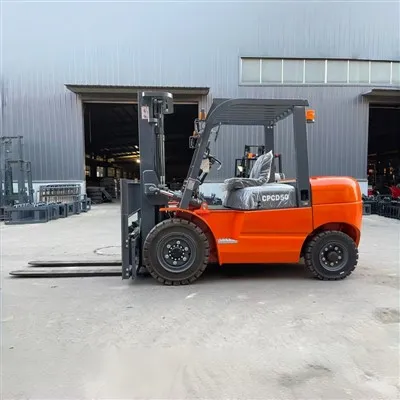
If you’re in the market for a new forklift, or you’re having trouble with load limits in your current operation, we’re here to help. We don’t just sell equipment – we work with you to assess your specific needs, explain load center rules in terms that make sense for your team, and find a solution that keeps your operations safe and efficient. Don’t wait until a tip-over or damaged inventory costs you time and money – reach out to our team today to discuss your requirements and get personalized guidance for your forklift needs.
Off-road Forklift References
Occupational Safety and Health Administration. Forklift Safety Standard: Load Capacity and Stability. 29 CFR 1910.178, 2024.
Material Handling Industry Association. Forklift Load Center Best Practices. MHIA Technical Report, 2023.
National Institute for Occupational Safety and Health. Forklift-Related Fatalities and Injuries: A Review of Common Causes. NIOSH Publication, 2022.
Caterpillar Lift Trucks. Counterbalance Forklift Load Chart Fundamentals. 2024 Operator Training Manual.
Jining Sunsail Machinery Co., Ltd.
With abundant experience, we are one of the most professional forklift manufacturers and suppliers in China. We warmly welcome you to buy high-grade forklift made in China here from our factory. For price consultation, contact us.
Address: Room 410, Digital Industry Building, Rencheng District, Jining City, Shandong Province,China
E-mail: Sunsail_machinery@163.com
WebSite: https://www.sunsailmachine.com/
