If you’ve ever hit the road with a trailer and noticed your taillights flickering, turn signals not working, or brakes lagging mid-drive, you know how stressful trailer wiring issues can get. As a trailer parts supplier who’s spent 12 years troubleshooting these exact headaches for customers, I’m here to walk you through the most common, fixable wiring problems—no fancy electrician degree required. Most issues are super simple to spot, and you don’t have to waste time or money guessing at replacement parts, either. Let’s break this down step by step, like we’re chatting in my warehouse back office over a cold soda. Trailer Parts

First, let’s get one thing straight: trailer wiring runs on a basic circuit system, same as your tow vehicle. Every light (taillight, brake, turn) needs three things to work: a power source, a ground, and a complete path between the two. If one of those is missing, that’s your problem. I see this all the time with first-time trailer owners who just hook it up and go—they skip the simple pre-trip check, and end up stuck on the side of the highway. I’ll start with the easiest, most common checks first, then move to trickier stuff, so you can tackle it in order without overcomplicating things.
Start With The Tow Vehicle Connection—90% Of Problems Start Here
I can’t tell you how many times a customer calls saying “my trailer lights are dead” and it turns out the issue is just the connector on their truck. The seven-pin (round) or four-pin (flat) connector between your tow vehicle and trailer is the #1 culprit. These get dirty, corroded, or even partially pulled apart if you back the trailer in wrong. Let’s do this check first, no tools needed.
First, unplug the connector. Wiggle each pin gently—if any feel loose, that’s your red flag. Now, look inside the female ends (the ones on the truck) and the male ends (the ones on the trailer) for gunk: road grime, mud, rainwater residue, even bug splatters. I keep a cheap toothbrush and some rubbing alcohol in my supplier truck for this exact thing. Scrub inside both connectors gently, let them dry for 30 seconds, then plug them back in firmly. Give each wire a little tug after plugging in to make sure it’s not loose. If that works, great—you fixed it for free. If not, move to the next step.
Another super common issue here: a broken pin in the tow vehicle’s connector. Sometimes, when you force the connector together, a little metal pin bends or snaps off inside the female port. I’ve seen guys jam a paperclip in there to “fix” it, but that rarely works. A quick trick: get a multimeter (they’re $15 at any auto parts store, worth every penny) set to DC voltage. Turn your truck on, turn on your taillights, then touch the multimeter’s red probe to each pin in the tow vehicle connector, and the black probe to the truck’s frame (that’s your ground). A working pin will read 12V, give or take a tiny bit. If a pin reads 0V, that’s your broken or bad pin. Sometimes you can pull a small pin back into place with a tiny flathead screwdriver, but if it’s snapped, you’ll need to replace the connector. And for what it’s worth—my supplier shop keeps replacement four and seven-pin connectors in stock for every make and model, so you can grab one same-day if needed.
Next: Check The Trailer Ground—The Silent Problem
If the tow vehicle connection works, but the trailer’s lights still won’t turn on, the next stop is the trailer’s ground. This is the #2 most common issue, and it’s so easy to fix I feel bad for all the people who pay mechanics $100 to do it. The ground wire is what completes the circuit between the trailer and the metal frame of the trailer itself. If that ground is loose, corroded, or not attached to bare metal, none of your lights will work, no matter how good the rest of the wiring is.
First, find the ground wire on your trailer—usually it’s a white wire, and it’s attached to the trailer frame with a bolt. Grab that bolt and tighten it a quarter turn. If it was loose, that’s it, done. If not, undo the bolt, pull the wire off, and look at where it was attached. If there’s paint, rust, or grime on the frame there, you’re not getting a good ground. Scrape that spot with a screwdriver until you see shiny bare metal. Then, put the wire back on, add a lock washer (super important, vibration will loosen it again), and tighten the bolt all the way. For extra measure, I always add a dab of dielectric grease on top of the connection to keep moisture out.
If that still doesn’t work, test the ground with your multimeter. Set it to continuity (the beep setting), touch one probe to the ground wire, and the other to a metal part of the trailer frame. If it beeps, your ground is good. If not, you need a new ground wire—easy to run, and my shop sells pre-cut ground wires with terminals already on them, so no crimping fancy stuff.
Fixing Individual Lights: Turn Signals, Brakes, And Taillights
Okay, so if the whole trailer doesn’t have lights, you’ve checked the connector and the ground—now it’s time to look at individual lights, because more often than not, it’s just one bad bulb. Let’s break this down by light type, since each has its own circuit.
First, turn signals and brakes: these are separate circuits from taillights, so if taillights work but turn signals don’t, that’s a separate problem. Start with the bulb. Trailer light bulbs are usually either double-filament (for brake and turn) or single-filament (for taillights). Pop the light cover off (most just twist or snap, no tools needed), pull the bulb out, and check the filament. If the thin wire inside is broken, that’s your bad bulb. I keep a box of these in my shop trailer, because they burn out all the time—especially if you’re driving on bumpy back roads.
Wait, if the bulb looks fine, test the socket. Again, multimeter time. For turn signals, have someone hit the left turn signal while you touch the multimeter’s red probe to the socket’s turn pin, and black to the trailer frame. If you get 12V, the socket is good—if not, the wire leading to the socket is broken. For brakes, same thing: have someone hit the brake, test the brake pin on the socket. If you get no voltage, the wire between the connector and the light is probably frayed or broken.
If you’re dealing with LED lights (super popular now, way more durable than old incandescents), the same rules apply but they’re a little finicky. LED lights need a clean ground, way more so than incandescents. If your LED lights are flickering, that’s almost always a bad ground connection—go back and check that spot on the trailer frame, because even a tiny bit of rust can kill an LED. Also, LED lights draw less power, so sometimes they’ll work on a weak ground that incandescents would still run on. A quick pro tip from my shop: if you’re swapping old incandescents for LEDs, make sure you get the right wattage adapter (we sell those too, easy to install) to prevent any weird voltage issues.
Tricky Stuff: Frayed Wires And Short Circuits
Okay, now we’re getting to the stuff that’s a little more hands-on, but still doable. Wires under the trailer get beat up by road debris, salt in the winter, and constant vibration. They can fray, break, or get pinched between the trailer frame and a bracket. If you’ve checked the connector, ground, and bulbs, but one light still isn’t working, this is probably the issue.
First, trace the wire from the connector back to the light, running your hand along it to feel for stiff spots (that’s where the wire is broken inside). Or, if you have the multimeter, set it to continuity and run the probes along the wire—if the beep cuts out, that’s your break. If the wire is frayed, you can cut out the bad section, strip the ends, and use a butt connector to splice it back together. Pro tip: always use heat-shrink butt connectors, not cheap plastic ones. I’ve seen plastic ones fall apart on a 2-hour drive, and then you’re stuck at a truck stop at midnight. Heat-shrink is waterproof and holds up way better.
Short circuits are another thing—this is when a wire touches the trailer frame (which is ground) and blows a fuse. If your trailer’s fuse keeps blowing as soon as you plug in, that’s a short. To find it, unplug all the lights one by one, and see if the fuse stops blowing. When you unplug the light that stops the fuse from blowing, that’s where the short is. Then trace that wire from the light back to find where it’s touching the frame—usually it’s a spot where the insulation wore down from vibration. Wrap that spot with electrical tape or a split loom tubing (we sell split loom too, super easy to slide over wires) to protect it.
Common Mistakes To Avoid (I See These All The Time)
Let me wrap this up with the mistakes that waste customers’ time and money, just so you don’t make ’em. First, don’t skip the dielectric grease. A lot of people think it’s just extra stuff, but it keeps moisture out of the connector, which is the #1 cause of corrosion. I put it on every connector I sell, and it saves me so many follow-up calls. Second, don’t use regular electrical tape on wire splices. Regular tape gets gummy in the heat, falls apart in rain, and doesn’t protect the splice like heat-shrink. Third, don’t overload your circuit. If you’re adding extra lights (like work lights for your trailer), make sure you don’t add more than the circuit can handle—7-pin connectors usually max out at 7 wires, and adding too many lights will blow fuses or damage the connector.
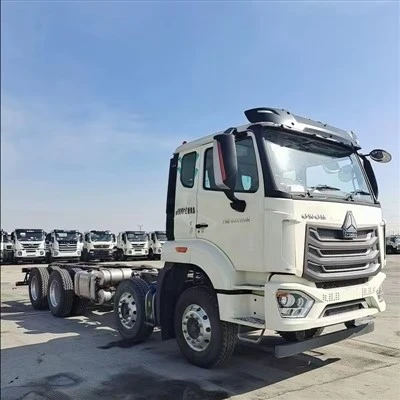
Tractor Truck At the end of the day, trailer wiring troubleshooting is just about methodical checks, not guessing. Start with the connector, then the ground, then the bulbs, then the wires. And if you run into something you can’t figure out—whether it’s a weird short you can’t find, or you need a replacement connector, bulbs, or parts—hit us up to discuss your needs. No matter your trailer make or model, we’ve got the parts you need to get it fixed, and we’re here to walk you through it if you need a hand.
References
- National Highway Traffic Safety Administration (NHTSA) Trailer Lighting and Wiring Safety Standards, 2022
- Trailer Parts Industry Association (TPIA) Common Wiring Troubleshooting Guide, 2021
- Automotive Wiring Repair Manual, 8th Edition, Haynes Publishing, 2020
Jining Dafu Machinery Sales Co., Ltd.
As one of the most professional trailer parts suppliers in China, we’re featured by quality products and low price. Please rest assured to wholesale bulk cheap trailer parts from our factory. We also accept customized orders.
Address: Room 1-115, Building 7, Luxinan Auto Parts City, Qiantongdian Village, Quanpu Town, Liangshan County, Jining City, Shandong Province
E-mail: jiningdafu@163.com
WebSite: https://www.dafumachinery.com/
