If you’re running a manufacturing operation that deals with plastic pellets, resin, or regrind material, you’ve probably got at least one plastic storage hopper on your plant floor. And if you’re wondering, “Do these things even need regular inspections?” — let me cut to the chase: yeah, they do. I’m a guy who’s been supplying these hoppers for almost 12 years, and I’ve seen way too many avoidable breakdowns, material waste, and safety issues that all could’ve been prevented with simple, routine checks. This isn’t some corporate fluff I’m regurgitating — it’s the stuff I’ve learned from clients panicking at 2 a.m. because their hopper cracked mid-production, costing them thousands in downtime. Plastic Material Storage Hopper

A lot of folks brush off hopper checks because they look like “just a big plastic bin.” But modern plastic storage hoppers aren’t your grandma’s rigid plastic bucket. Most of the ones we sell are made from FDA-approved linear low-density polyethylene (LLDPE) or cross-linked polyethylene (XLPE) — materials built to resist impact, UV rays, and the constant friction of plastic pellets sliding up and down. But even the toughest plastics don’t last forever when exposed to real-world factory conditions. Let’s break down why regular inspections aren’t just a “nice to have” — they’re non-negotiable.
First, wear and tear. Think about what a hopper goes through every single day: it’s holding 1,000 pounds of plastic resin or more, which exerts constant pressure on the walls. Then you’ve got the material being dumped in from a loader, slamming against the sides, and the pellets flowing out the bottom into extruders or injection molding machines. Over months, that repetitive motion creates micro-cracks you can’t see with a quick glance. I had a client a couple years back who skipped inspections for 18 months — their hopper had a tiny crack at the bottom seam that only showed up when they tried to unload 2,000 pounds of regrind. Half the material leaked out onto the floor, got contaminated with oil from a nearby conveyor, and they had to shut down for 10 hours to replace the hopper and sort the ruined resin. That was a $12,000 loss, all because they didn’t check once a quarter.
UV exposure is another big one, especially for outdoor storage hoppers. Even if your hopper’s marked “UV-stabilized,” that protection wears off over time. The sun’s harsh rays break down the plastic’s molecular structure, making it brittle. A hopper outside that’s only 3 years old might shatter in a mild storm if it’s been skipped on checks. I once had a farm supply company client who kept their hopper outside for 2 years, no inspections — a week of unseasonably hot, sunny weather made the top rim crack, and a strong wind knocked the whole thing over. They lost $15,000 worth of agricultural plastic pellets and had to rush-order a replacement from us at a 20% premium because standard lead times were 2 weeks. Had they just checked the rim for brittleness every 3 months, they could’ve replaced a $200 seal strip instead of a $5,000 hopper.
Then there’s contamination and structural integrity, which tie together. If your hopper has any gaps or cracks, moisture, dust, or even rodents can get inside — that’s a huge problem for plastic manufacturing. Resin absorbs moisture, which causes defects in final products like plastic bottles or automotive parts. A client in the packaging industry told me that 10% of their product was failing quality control for “white spots” — turns out their hopper had a small crack near the top, and dust and lint from their production line were getting in, sticking to the resin. They only fixed it when we pointed out during a routine pre-purchase check for a new hopper that the old one’s walls were thinning. If they’d been inspecting regularly, they could’ve caught the crack early and avoided 3 months of bad product that cost them $40,000 in rejections and lost client contracts.
Wait, but what about smaller, less obvious issues? Things like loose bolts on the access panel, or clogged vent holes. Most hoppers have vent holes to prevent air pressure buildup when material flows out — if those get clogged with dust, the resin can get stuck in the hopper’s cone shape, causing “bridging” (where material forms a solid arch that won’t flow). That stops production dead, and clearing a bridged hopper is a messy, time-consuming job. I’ve seen teams spend 4 hours trying to chisel out resin from a hopper, all because they never checked the vents. Loose access panel bolts are another safety risk — if the panel falls off while someone’s cleaning the hopper, it can cause serious injury.
Now, let’s talk about how often you should actually do these inspections. It’s not a one-size-fits-all answer, but here’s the rule of thumb I give every client: if your hopper is for indoor use with light-duty material (like small plastic pellets), check it once every 6 months. If it’s outdoor, holds heavy material (over 1,500 lbs), or handles regrind (which is more abrasive than raw resin), check it every 3 months. And if you’re in a dusty, humid, or high-traffic factory environment? Do a quick visual check every month, and a deeper inspection twice a year.
What exactly do you check during an inspection? I break it down into 5 quick steps, no fancy tools needed: first, look for any visible cracks, dents, or thinning plastic around the seams, bottom, and rim — those are the weak spots. Second, run your hand along the walls (when the hopper’s empty and safe, obviously) to feel for brittleness or soft spots, which mean the plastic is breaking down. Third, check the vent holes and make sure they’re clear of dust or debris, so air can flow. Fourth, tighten any loose bolts on access panels, legs, or mounting brackets. Fifth, if your hopper has a liner (some use them to protect the inner walls from abrasive material), check if the liner’s torn or sliding out of place. That’s it — takes 20 minutes, max.
A common question I get: “Can’t I just replace the hopper every 5 years and skip inspections?” Yeah, you could — but that’s way more expensive than routine checks. A new hopper from us is a few thousand dollars, but the downtime and material loss from a preventable issue can be 10x that. I’ve had clients who saved $1,000 a year on inspection costs, and that same year, avoided a $15,000 shutdown. Math doesn’t lie here.
Another thing: inspections aren’t just for old hoppers. Even a brand new hopper can have defects from manufacturing or shipping. I once delivered a hopper to a client, and during the first inspection (we include a free initial check for all our clients), we found a small crack in the bottom that the factory missed. If the client had skipped the first check, they would’ve installed the hopper, filled it with material, and had a leak within a week — which would’ve been a mess to fix. So inspections matter from day one, not just when your hopper is “aging.”
Let me be clear, I’m not here to guilt-trip you. I get it — factory managers have a million things on their plate, and hopper checks are easy to push to the bottom of the to-do list. But think of it like changing the oil in your truck: you don’t skip it because it’s a hassle, you do it because it saves you from a engine breakdown that costs way more. That’s exactly what hopper inspections are.
If you’re not sure how to do an inspection, or you’ve got an older hopper that you’re worried about, reach out. I don’t do full inspections for every random person, but I’ll send over a free quick guide, or even pop by your plant for a 15-minute check if you’re local (I cover most of the Southeast, just shoot me a message). If you’re in the market for a new hopper, we build ours to stand up to wear and tear, with reinforced seams and UV-stabilized plastic, so you’ll have fewer issues to check for down the line. We also sell replacement parts like liners, vent filters, and access panels, so if you do find a small issue during inspection, you don’t have to buy an entirely new hopper.
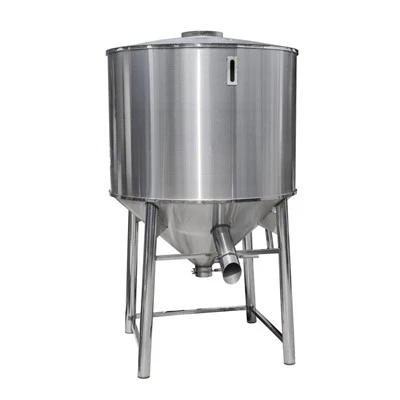
At the end of the day, plastic storage hoppers are workhorses for your operation. They hold your most important material, keep production moving, and protect your bottom line. Skipping regular inspections might seem like a small shortcut, but it’s almost always a costly mistake. Don’t wait until you’re staring at a pile of ruined resin on your factory floor to realize you should’ve checked. If you’re ready to chat about hopper maintenance, replacement, or even just get that free inspection guide, feel free to reach out anytime.
Color Mixing Machine References
- Plastics Industry Association. (2022). Best Practices for Storage and Handling of Industrial Plastics.
- American Society of Mechanical Engineers (ASME). (2021). Standard for the Safe Design and Operation of Process Storage Hoppers.
- Journal of Manufacturing Processes. (2020). "Wear and Degradation Patterns in Polyethylene Storage Hoppers for Plastic Resins."
- Occupational Safety and Health Administration (OSHA). (2019). Safety Guidelines for Industrial Storage Equipment.
- Modern Plastics Magazine. (2023). "Cost-Benefit Analysis of Routine Inspections for Industrial Storage Tanks and Hoppers."
Wenzhou Shimeina Machinery Automation Technology Co., Ltd.
As one of the most experienced plastic material storage hopper manufacturers and suppliers in China, we warmly welcome you to buy durable plastic material storage hopper for sale here from our factory. All customized machines are with high quality and low price.
Address: No.56, Xingsheng Road, Centou Village, Tangxia Town, Ruian City, Wenzhou, Zhejiang Province
E-mail: info@shimeina.com
WebSite: https://www.shimeina.com/
