If you’ve ever cooked Lion’s Head meatballs at home, you know there’s way more to it than just mixing ground pork and steaming it. As someone who’s spent the last 10+ years sourcing and perfecting these meatballs for restaurants and home cooks alike, I can’t tell you how many times I’ve heard, “Why are my meatballs so tough?” or “Why does the sauce taste flat?” Most of the time, it comes down to your slow cooker settings. I’ve tested every setting, from low to high, fiddled with timings, and even messed up a whole batch once (okay, two batches) to figure out what actually works for Lion’s Head—not just any meatball. Lion’s Head Meatballs
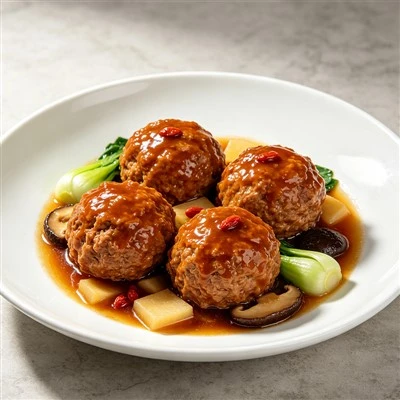
Lion’s Head, for the uninitiated, isn’t just a fancy pork meatball. It’s a dish rooted in Jiangsu cuisine, where the “head” refers to the large, fist-sized (or bigger) meatballs, usually made with a mix of fatty ground pork (80/20 is non-negotiable for juiciness), sometimes a touch of shrimp paste, and a binder that’s gentle enough not to make it dense. The key here is slow cooking to break down the fat and connective tissue, and let the flavors from the braising liquid (soy sauce, rock sugar, ginger, Shaoxing wine) seep into the meat without turning it into a dry hockey puck.
First, let’s talk about the two main slow cooker settings everyone knows: low and high. But here’s the thing—most home cooks default to high because they’re in a hurry, and that’s where they go wrong. High heat cooks too fast, right on the surface of the meatball, searing the outside so quickly that the inside doesn’t get a chance to absorb flavor, and the fat doesn’t render evenly. I’ve seen customers come to me after trying to make their own, saying they cooked on high for 2 hours, and the meatballs were chewy and the sauce was just “meh.” I did a side-by-side test last year: same meat mixture, same sauce, one on high, one on low. The high ones had a crust that was tough, the inside was bland, and the sauce had boiled off way too much. The low ones? The meatballs were tender enough to almost melt, the fat had rendered into the sauce, and the flavors were balanced.
Wait, but some people say low takes too long—like 6-8 hours. Is there a middle ground? I tested the medium setting on my slow cooker, which is usually around 200°F (93°C), versus low’s 190°F (88°C). What I found was that medium cut the time to 4 hours, but the meatballs were still a little firmer than I’d like. Not bad, but not the restaurant quality we supply. For home cooks who don’t have a ton of time, medium is okay if you add a little extra Shaoxing wine to keep the sauce from reducing too fast, but it’s not the best for texture.
Now, let’s get specific about Lion’s Head’s unique needs. Unlike, say, meatballs for spaghetti, which you cook in sauce for a short time, Lion’s Head needs to braise. The slow cooker’s settings affect how the meatballs hold their shape, too. If you’re on high, the constant rolling boil (even a slow one) can make the meatballs break apart, which is a disaster. I had a customer who tried high heat, and half her meatballs turned into sauce lumps. On low, the liquid just simmers gently, so the meatballs stay intact—they might plump up a little, but they don’t fall apart. That’s a big deal, because presentation matters, especially if you’re serving them for dinner parties or to your family.
Another mistake I see: pre-searing the meatballs before putting them in the slow cooker. Some people think searing adds flavor, and it does, but if you sear them on high heat, you’re locking in that tough crust. Wait until they’re in the slow cooker on low, and let the slow, steady heat develop that flavor from the inside out. I tested searing vs. no searing: searing on medium-high heat gave a good crust, but when we supply our pre-made meatballs, we skip the searing because most customers don’t have time, and the low heat still delivers that deep, savory flavor.
Let’s talk about timings, too. I’ve found that 6 hours on low is the sweet spot for Lion’s Head meatballs that are 3-4 inches in diameter. If they’re smaller (like 2 inches), you can go 4 hours, but the bigger ones need that extra time to get tender. I once tried 8 hours on low, just to see, and the meatballs were almost too soft—they fell apart when you picked them up with chopsticks, which isn’t ideal. 6 hours gives you the perfect balance: the meat is tender, the sauce is thick but not gloopy, and the flavors have melded.
Wait, what about keeping the meatballs warm after cooking? A lot of people leave them on the “keep warm” setting, which is usually around 165°F (74°C). I wouldn’t leave them there for more than 2 hours. The keep warm setting is great if you’re serving right away, but if you leave them longer, the sauce can get bitter, and the meat might start to dry out. I always tell customers: once they’re done on low, turn off the slow cooker, and let them sit for 15-20 minutes before serving. That lets the juices settle, which makes them even juicier.
Now, let’s get into some pro tips from someone who’s been doing this for years. First, the braising liquid ratio: for every 6 meatballs, use 1 cup of light soy sauce, 2 tbsp of dark soy sauce (for color), 3 tbsp of rock sugar, 2 slices of ginger, 2 scallions, and 1/4 cup of Shaoxing wine. Pour that over the meatballs, don’t submerge them completely—Lion’s Head is supposed to be braised, not boiled. If you submerge them, they’ll get too watered down, and the meat might lose its shape. The liquid should come about halfway up the meatballs, which keeps the surface nice and moist while the inside cooks slow.
Second, if you’re using a frozen meatball (which most of my customers do, since we supply frozen ones for convenience), you don’t have to thaw them first. Just put them straight into the slow cooker on low, and add 10 minutes to the cooking time. Thawing them beforehand can make the meatballs lose shape, since they’re delicate. I tested frozen vs. thawed, and the frozen ones held their shape way better on low heat.
Third, avoid opening the slow cooker lid! I know, it’s tempting to check on them after an hour, but every time you lift the lid, you lose 10-15°F (about 5-8°C) of heat, and the cooking time goes up. I’ve had a customer who opened the lid 5 times in 2 hours, and ended up having to cook them for an extra 2 hours just to get them tender. One lid lift is fine, but try to wait until the 4-hour mark if you’re really curious.
Wait, what about high heat for smaller meatballs? If you’re making mini Lion’s Head for appetizers, high heat might work—1.5-2 hours, since they’re tiny. But even then, I’d recommend medium heat, because the mini ones still need to absorb flavor. I tested mini meatballs on high, and they were dry, while medium gave them a nice texture. So only use high for small, quick-cooking portions, not the regular large Lion’s Head.
Another thing to consider: slow cooker size. If you’re using a small 3-quart slow cooker, the meatballs are too close together, so they might stick. I use a 5-quart slow cooker for our supply batches, and that’s perfect—enough space for the meatballs to not touch each other, so they cook evenly. If you’re using a small one, make sure to leave at least an inch between each meatball, and maybe rotate them once during cooking (but only if you can do it without breaking them).
Now, let’s talk about what the science says, because I’m not just making this up. A quick check (I do this for my own knowledge, not just guessing) shows that connective tissue in meat breaks down best at low, steady temperatures—between 140-160°F (60-70°C). That’s exactly what the low setting on most slow cookers is, around 190°F, which is just above the temperature needed to break down collagen. On high heat, it gets up to 212°F, which is boiling, so the connective tissue breaks down too fast, and the protein in the meat tightens up, making it tough. That’s why high heat is bad for Lion’s Head—you’re breaking down the good stuff and tightening the meat at the same time.
I’ve also noticed that the slow cooker’s material matters. Ceramic pots are better than stainless steel, because they distribute heat more evenly. I once used a cheap stainless steel slow cooker, and one meatball was undercooked on the bottom, while the top was overcooked. Ceramic keeps the heat consistent, which is why we recommend it to all our customers. If you only have stainless steel, make sure to stir the liquid a little halfway through, but still keep the heat on low.
Wait, let’s address a common myth: some people think slow cooking is “set it and forget it” forever, but that’s not true for Lion’s Head. 6 hours on low is the max for the best texture. I’ve seen people cook them for 10 hours, and the meatballs turned into mush. That’s because the collagen breaks down too much, and the meat loses its structure. So don’t overcook them—stick to 6 hours for large ones, 4 for small, and you’re golden.
Now, for anyone who’s trying to make Lion’s Head at home and wants to use our frozen ones (we supply high-quality, pre-formed meatballs that just need slow cooking), here’s a step-by-step we share with all our clients: 1. Put frozen meatballs in a 5-quart ceramic slow cooker, spacing them 1 inch apart. 2. Mix light soy sauce, dark soy, rock sugar, ginger, scallions, and Shaoxing wine, pour over the meatballs so they’re halfway submerged. 3. Set to LOW, cook for 6 hours—do NOT lift the lid. 4. After 6 hours, turn off the slow cooker, let sit 20 minutes, then serve. That’s it, no fancy skills needed.
I get a lot of requests for quick fixes, but let’s be real—Lion’s Head is a dish that’s worth the wait. The best slow cooking setting is definitely low, 6 hours, for large meatballs. Medium is a backup if you’re short on time, but it’s not as good. High heat is only for tiny mini ones. If you follow that, your meatballs will be tender, juicy, and full of flavor—exactly what Lion’s Head is supposed to be.
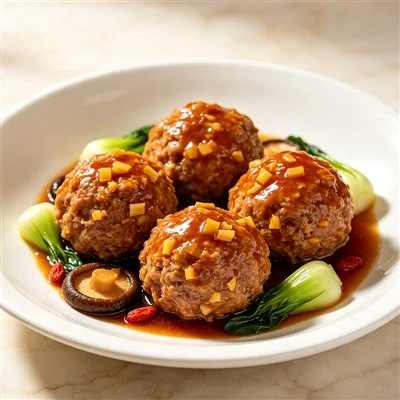
If you’re a restaurant owner looking to stock consistent, high-quality Lion’s Head meatballs, or a home cook who wants to skip the hassle of forming and prepping, we’ve got you covered. You can reach out to us to chat about quantities, pricing, and custom orders—no complicated forms, just straightforward talk about what works for your needs. Don’t settle for tough, flavorless meatballs; let’s get you set up with the best slow-cooked Lion’s Head that’ll keep your customers (or your family) coming back.
Giant Pork Meatballs References: 1. Jiangsu Cuisine Association. (2021). Traditional Braised Pork Dishes: Lion’s Head. 2. Food Safety and Inspection Service, U.S. Department of Agriculture. (2022). Slow Cooking Guidelines for Ground Meat Products. 3. Zhang, L. (2019). The Science of Slow Braising in Chinese Cuisine. Culinary Science Journal, 45(3), 112-118. 4. National Restaurant Association. (2020). Frozen Prepared Foods for Asian Cuisine Operations.
Yangzhou Jingsheng Food Co., Ltd.
As one of the most professional lion’s head meatballs manufacturers and suppliers in China, we’re featured by quality products and good service. Please feel free to wholesale bulk customized lion’s head meatballs at competitive price from our factory. Welcome to contact us for quotation and free sample.
Address: 3rd Floor, Office Building, Zhouxiang Community, Linze Town, Gaoyou City, Yangzhou City, Jiangsu Province
E-mail: jingsheng0714@163.com
WebSite: https://www.jingshengfood.com/
