Hey everyone, Metal Forgings
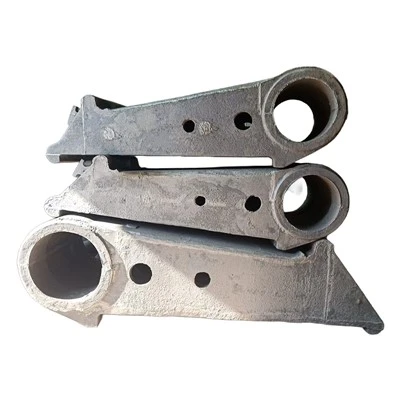
If you’ve ever needed strong, durable parts for machinery, construction, or even automotive stuff, odds are you’ve run into metal forgings. But like, what actually goes into turning a plain hunk of metal into that tough, reliable part? As a metal forgings supplier, I’ve walked this process a thousand times—so let me break it down for you, no boring engineering jargon that makes your eyes cross.
First off, before we even touch a hammer or a press, we’ve gotta figure out what kind of metal we’re working with, and what the part’s actually for. That’s the pre-forging prep, and it’s way more important than it sounds. Let’s be real—you don’t forge a part for a construction crane out of the same stuff you’d use for a tiny bike bolt, right? So first step: material selection. We work with all kinds of metals—carbon steel, alloy steel, stainless steel, even aluminum and copper, depending on what the customer needs. If someone wants a part that can take super high heat (like for a jet engine) or super heavy loads (like for a truck axle), we pick a metal that can handle that. If they need something rust-resistant for a food processing machine, we go with stainless. Simple as that.
Next, we have to cut that big metal stock (usually a bar or a billet—think of it as a solid metal log) down to the exact size we need. No sense forging a 10-pound hunk of steel when the part only needs 2 pounds. We use things like saws, shears, or even laser cutters for precision jobs. Wait, and then there’s surface prep. Sometimes that metal has scale or rust on it from sitting in storage, so we blast it with sand or shot to get a clean surface—otherwise, those imperfections would mess up the forging.
Now we get to the part everyone pictures when they hear “forging”: heating the metal up so it’s malleable enough to shape. This isn’t just sticking it in a fire and whacking it with a big hammer, though—we have specialized furnaces for this. Different metals need different temps. Steel, for example, usually gets heated to around 2,200°F, which is way hotter than a home oven. But we can’t just heat it willy-nilly—we use temperature sensors to make sure it’s perfect. If it’s too cold, it’ll be brittle and crack when we hammer it. Too hot, and it’ll get grainy and weak, like overcooked pasta that falls apart. This is where our experience matters—we know exactly how long to heat each batch, no guesswork.
Once the metal’s at the right temp, it’s time to shape it. This is the forging itself, and there are a couple main methods we use, depending on the part. The two big ones are drop forging and press forging. Drop forging is the classic one—we put the hot metal into a die (a custom-made tool that’s the exact shape of the part we want) and then drop a heavy hammer (like, thousands of pounds heavy) onto it over and over. Each blow squishes the metal into the die, filling in every detail. It’s super precise and great for parts that need a lot of strength. Press forging is a bit different—instead of hammering, we use a slow, steady amount of pressure to shape the metal. That’s better for bigger parts, or parts that need more even shaping without the shock of hammer blows.
Wait, and another thing that makes forging so strong: the grain structure of the metal. When you forge it, you’re not just cutting or melting it like machining—you’re shaping the metal’s grain to follow the part’s contour. Like, imagine a tree’s rings—they’re strong along the length, weak across. Forging aligns those grains so they match how the part will be stressed. That’s why forged parts are way tougher than ones made by casting (pouring melted metal into a mold) or machining (cutting a shape out of a solid block). Casting can have bubbles or weak spots, machining wastes a ton of metal and leaves sharp grain edges—forging avoids all that.
After we shape the hot metal, we do what’s called “finishing.” First, we have to trim off the excess metal that squished out around the die (that’s called flash, and it’s like the extra dough when you cut a cookie shape). We do that with a trim press, which snips it off cleanly. Then, we have to cool the part properly. That’s where heat treatment comes in—wait, hold on, is heat treatment part of forging? A lot of folks group it with post-forging, and yeah, it’s super important. After forging, the metal is still a bit stressed from being shaped, so we heat it again (but not as hot as forging) to relieve that stress. Sometimes we do quenching—dropping it into oil or water to cool it fast, which makes it harder—then tempering, which is heating it a bit to take the edge off that hardness so it doesn’t crack.
Then there’s cleaning. Even after trimming, there might be scale left on the part, so we use things like pickling (a mild acid bath that eats away the scale) or shot blasting again. We might also do any additional machining if the part needs super tight tolerances—like if it has holes or grooves that the forging die can’t get. No part is perfect right out of the die, so a little light machining is normal.
Quality control is non-negotiable for us, by the way. We check every single part to make sure it meets the customer’s specs. We do things like dimensional checks with calipers or micrometers, magnetic particle testing to find tiny cracks, even ultrasonic testing to check for internal flaws that you can’t see on the surface. If a part doesn’t pass, it’s scrap—no cutting corners here. We can’t send out something that’s gonna fail when someone’s relying on it.
And here’s the thing I love most about this job: forging isn’t just a process, it’s making something that lasts. When a customer uses a forged part for a bulldozer blade or a wind turbine component, they know it won’t let them down when they need it most. That’s why we take every step seriously—from picking the right metal to that final quality check.
If you’ve got a project that needs strong, reliable metal parts—whether it’s for construction, automotive, aerospace, whatever—we’re here to help. We work with all kinds of clients, from small businesses to big manufacturers, and we can tailor the process to fit your exact needs. No one-size-fits-all here.
If you’re looking to chat about your needs, get a quote, or just learn more about how we can help, hit us up. We’re ready to partner with you to make parts that work as hard as you do.
Metal Forgings References
- American Society for Metals (ASM International). (2019). Forging: Fundamentals and Applications. ASM International.
- The Fabricator. (2021). “A Beginner’s Guide to Forging Processes.” The Fabricator Media Group.
- National Institute of Standards and Technology (NIST). (2020). “Quality Control in Metal Forging.” U.S. Department of Commerce.
Sanming Hongfeng Machinery Manufacturing Co., Ltd.
As one of the most professional metal forgings manufacturers and suppliers in China, we’re featured by quality products and good service. Please rest assured to wholesale customized metal forgings made in China here from our factory. Welcome to contact us for quotation.
Address: No.2 Gaoyuan Industrial Zone, Chenda Town, Sanyuan District, Sanming City, Fujian Province, China
E-mail: smhfjxzsq@163.com
WebSite: https://www.smhfmachinery.com/
