If you’ve ever walked through a manufacturing plant that runs 24/7, operated a conveyor system that never stalls, or watched a water treatment facility adjust pump speeds automatically during peak demand, you’ve interacted with a Motor Control Center (MCC) — even if you didn’t know it. For 12 years, I’ve been part of the team designing, building, and upgrading these systems as a supplier, and I still get questions every week from plant managers, electricians, and even other engineers who see an MCC in a facility and think it’s just a big metal box full of wires. Let’s break down how they actually work, from the smallest component to the whole system, and why they’re non-negotiable for reliable industrial operations. Motor Control Center
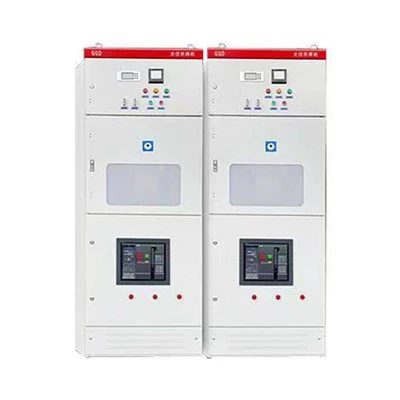
First, let’s get the basics out of the way. An MCC is a centralized, assembly-line structure that houses, protects, and controls multiple electric motors for industrial use. Motors are the workhorses of almost every facility: they power conveyors, pumps, compressors, fans, and material handling equipment. Without a way to start, stop, adjust, and protect these motors, a plant grinds to a halt. If you tried to wire each motor individually from a separate control panel, you’d end up with a mess of cables, inconsistent wiring practices, and a nightmare for maintenance — not to mention the safety risk of exposed high-voltage parts. That’s where the MCC solves its first big problem: centralization. Instead of five separate control panels for five pumps, you’ve got one neat, lockable enclosure that takes up far less floor space, and all the controls are laid out so a technician can access them without crawling through equipment.
Let’s start with the core components that make up each “bucket” — the individual units that hold each motor’s controls and protection. Every MCC bucket has three main parts: the breaker, the starter, and the overload relay. First, the main circuit breaker: this is the first line of defense, connecting the MCC to the plant’s main power supply and providing overcurrent protection for the entire bucket. If a spike in power hits, the breaker trips instantly, cutting power to the motor before it can be damaged. Next, the motor starter. For small to medium motors (anything up to around 500 horsepower), most use a magnetic starter, which is basically an electromagnet that closes a set of contacts to send power to the motor. You don’t have to flip a physical switch directly at the motor — you can trigger the starter remotely via a control panel or automated system. For larger motors, we use variable frequency drives (VFDs) instead of standard starters, which I’ll explain in a minute. The third key part is the overload relay. Even if a breaker trips for a big spike, an overload relay monitors the motor’s running current constantly. If the motor is pulling too much current because it’s overloaded (like a conveyor jammed with extra material or a pump trying to push water through a blocked pipe), the relay trips after a short delay — long enough to avoid false trips from normal power fluctuations, but fast enough to prevent overheating that would burn out the motor’s windings. That’s a huge deal: a single motor burn can cost a plant thousands in downtime, plus parts and labor to replace it. Overload relays catch those issues before they get serious.
Now, how does the whole MCC tie into the plant’s broader system? It’s not just a set of separate buckets sitting next to each other. The control side is what makes it work as a coordinated system. Most modern MCCs have a low-voltage control circuit (usually 120V or 24V, which is safe for technicians to work with) that runs through all the buckets. That control circuit is wired to a main control panel, which can be a simple push-button station by the conveyor or a full PLC (programmable logic controller) network for larger facilities. Let’s walk through a common example to make this concrete. Say you’re at a food processing plant, and you’ve got a line of conveyors moving jars down a filling line. The MCC for this line has buckets for five conveyor motors, a pump motor for filling, and a fan motor for drying jars. When an operator presses the “start” button on the main control panel, a signal travels through the control circuit to each starter’s electromagnet. Each starter closes, sending three-phase power (standard for industrial motors) to each motor. The overload relays for each motor start monitoring current in real time. If one conveyor jams, its motor’s current spikes. The overload relay for that conveyor trips its starter, cutting power to that motor while leaving the rest of the line running. That way, you don’t have to shut down the whole line for one small jam — a fix that would take 10 minutes instead of an hour.
VFDs are a big part of modern MCCs, and they’ve completely changed how we control motors. A decade ago, almost all motor starters were across-the-line, meaning they ran at full speed all the time, whether the equipment needed it or not. That’s inefficient: a pump running full speed when it only needs to move half the volume of water wastes energy, wears out parts faster, and can cause water hammer (sudden pressure spikes that damage pipes). VFDs solve that by adjusting the frequency of the power sent to the motor, which changes its speed. The MCC bucket for a VFD includes the circuit breaker, the VFD itself, and the same overload protection. Now, when a plant needs the pump to run slower, the control panel sends a signal to the VFD, which lowers the power frequency. I worked on a water treatment upgrade two years ago where we replaced 12 across-the-line starters with VFDs in the MCC; the plant saw a 28% drop in their monthly energy bill, plus less wear on pumps and pipes. It’s one of the most impactful upgrades we do, and it all starts with integrating the right VFD into the MCC’s structure.
Safety is non-negotiable for MCCs, and that’s a big part of how they work. Industrial power is no joke — most MCCs run on 480V or higher, which can kill if someone accidentally touches a live part. That’s why MCCs are built with interlocks: you can’t open a bucket door to work on the controls unless the power is disconnected and locked out. We also arc flash protection as a standard now, which is a key feature I don’t think enough people talk about. An arc flash is a sudden explosion of energy that happens when electricity jumps through air or dust, and it’s one of the biggest safety risks in industrial electrical systems. Modern MCCs are designed with barriers between each bucket, so if an arc flash happens in one bucket, it doesn’t spread to the others. We also use ventilation systems to keep dust and heat from building up inside, which reduces the chance of a short circuit. When we design an MCC for a client, we don’t just build it to fit their motors — we build it to meet OSHA and NEC (National Electrical Code) standards, because safety isn’t an afterthought, it’s part of how the system works every day.
Maintenance is another area where the MCC’s centralized design pays off, and it’s something we emphasize a lot as a supplier. If every motor had a separate control panel, an electrician would have to track down 10 different panels scattered across the plant to test each motor’s controls. With an MCC, all the starters, circuit breakers, and overload relays are on the same vertical row of buckets. We label every bucket clearly, add test points so a technician can check voltage or current without disconnecting power unnecessarily, and even add remote monitoring ports for newer MCCs. Last year, we supplied an MCC to a mining operation where the maintenance team used our remote access tools to troubleshoot a conveyor motor issue from the main office, instead of sending a technician out to the remote mine site. That cut downtime from 4 hours to 20 minutes. The MCC doesn’t just control motors — it makes maintenance faster and less disruptive, which is a huge win for plant productivity.
I’ve heard people ask before, “Can’t we just skip the MCC and use a computer to control all motors?” And the answer is, not for most industrial operations. While modern MCCs do integrate with SCADA (supervisory control and data acquisition) systems and cloud-based monitoring tools, they still need that physical, reliable hardware right at the motor. A computer can send a signal to start a motor, but if there’s a power spike, a loose wire, or a jam that makes the motor pull too much current, you need the circuit breaker, starter, and overload relay to act instantly — in milliseconds — before the motor or wiring gets damaged. Software can alert you to a problem, but it can’t react faster than a physical breaker. The best systems are a combination: the MCC handles the immediate, physical control and protection, and the plant’s higher-level systems handle scheduling, monitoring, and long-term performance.
Over the years, I’ve seen MCCs evolve a lot. When I started in this business, most MCCs were built with open wiring, manual starters, and no digital monitoring. Today, we use pre-wired bus bars inside the MCC (those are the metal rails that carry power between buckets, instead of individual cables) which reduce installation time by 30% and cut the chance of wiring errors. We add digital overload relays that track motor temperature, run time, and current history, so a plant can schedule maintenance before a motor fails — not after. We also build MCCs for every industry, too: food and beverage MCCs have stainless steel exteriors and sealed buckets to meet hygiene standards, oil and gas MCCs are explosion-proof for hazardous areas, and pharmaceutical MCCs meet strict cleanliness and compliance rules.
If you’re a plant manager or maintenance lead reading this, you might be thinking about your current MCC. Is it time for an upgrade? Are you dealing with frequent motor failures because your old overload relays don’t monitor current correctly? Are you wasting energy on inefficient across-the-line starters? The good news is that an MCC doesn’t have to be replaced entirely — we can add new buckets, upgrade starters to VFDs, or integrate remote monitoring into your existing system. We’ve worked with facilities with MCCs that are 30 years old, and we can refresh them to run like new, without the cost of a full replacement.

At the end of the day, an MCC is way more than a metal box with wires. It’s a system that turns individual motors into a coordinated, reliable network that keeps industrial operations running. It balances power, control, safety, and maintenance, all in one centralized structure. If you have questions about upgrading your existing MCC, designing a new one for a new facility, or troubleshooting an issue with your current system, our team is here to help. We’ll work with your team to understand your specific needs, build a solution that fits your budget, and support you every step of the way, from design to installation and beyond. Contact us today to discuss your motor control center needs and find the right solution for your operation.
Low-Voltage Switchgear References
- International Electrotechnical Commission (IEC) 60439-1: Low-voltage switchgear and controlgear assemblies.
- Occupational Safety and Health Administration (OSHA) 29 CFR 1910: Electrical standards for industrial facilities.
- National Electrical Manufacturers Association (NEMA) ICS 2: Control Center Assemblies for Industrial Applications.
- Freris, L. L., & Dixon, R. (2008). Electrical Drives for Renewable Energy Applications. John Wiley & Sons.
- Institute of Electrical and Electronics Engineers (IEEE) 1584: Guide for Performing Arc Flash Hazard Calculations.
Jiangxi Yihong Electric Power Technology Co., Ltd.
Address: Chating Industrial Park, Guangxin District, Shangrao City, Jiangxi Province
E-mail: 15779933057@163.com
WebSite: https://www.yihcn.com/
