If you’ve ever scrolled through industry forums, supplier directories, or even local trade ads in English-speaking countries, you might have stumbled across the three letters ACB—sometimes paired with a product number, sometimes followed by a “For Sale” tag, and often left to context to explain. For years, as a supplier specializing in ACB components, I’ve fielded a lot of the same question: Is ACB a common abbreviation in English-speaking countries, or is it just a niche term only our circle recognizes? The short answer, after 12 years in this space and countless conversations with clients across the U.S., U.K., Australia, and Canada, is that it depends entirely on context—and that context is exactly why ACB has evolved from a random set of letters to a widely used, even indispensable, shorthand for a specific type of electrical component. ACB

Let’s start with the basics, because most people outside industrial or electrical fields have never heard of ACB at all. When I first got into this business straight out of trade school, I learned that ACB stands for Air Circuit Breaker: a switch that interrupts electrical current automatically if there’s an overload or short circuit, using air as the insulating medium instead of oil or gas. At the time, this shorthand was mostly used among electricians and engineers working on large-scale projects—think office buildings, manufacturing plants, data centers, or hospitals, where a single power failure can cost thousands of dollars in downtime. Back then, it felt like an insider term, something only people in the trade would get. But over the past decade, as global supply chains have made it easier to source specialized electrical parts across borders, and as small businesses have started investing in more scalable power systems, ACB has gone from a niche acronym to a common abbreviation in English-speaking countries.
The evidence is everywhere, if you know where to look. Last year, I helped a small construction firm in Texas source 12 ACBs for a new warehouse they were building. The project manager didn’t reach out asking for “air circuit breakers” specifically—he typed “ACB supplier near me” into Google, and that was that. A few months later, I was talking to a colleague in Melbourne who works on mining equipment; their entire procurement team uses ACB, MCCB (Molded Case Circuit Breaker), and RCCB (Residual Current Circuit Breaker) in their daily requisitions, no full names needed. Even in the U.K., where technical terminology has traditionally been a bit more formal, a 2022 survey of electrical procurement professionals by a British trade association found that 78% regularly use ACB in internal communications and vendor requests, with only 12% still writing out the full term every time.
That shift makes sense when you think about how shorthand evolves in industries. When a term is used hundreds, even thousands of times a day, cutting it down to three letters saves time, reduces miscommunication, and creates a shared language among people who work in the same space. For ACB, that evolution was accelerated by two big changes: the rise of e-commerce for industrial parts, and the growing number of non-specialists involved in procurement. Ten years ago, most people buying ACBs were licensed electricians or senior engineers who knew the full term. Today, you have office managers tasked with sourcing equipment for a new clinic, small business owners upgrading their shop’s power system, and even architects specifying parts for blueprints—people who may not be trade experts, but know that typing “ACB” is faster than scrolling through pages of listings labeled “Air Circuit Breaker.”
But here’s the thing about abbreviations: their commonality is never universal. ACB will never be a household term, something you’d hear on a morning talk show or see in a best-selling novel. If you mention ACB to your barista or your neighbor who works in retail, they’ll have no clue what you’re talking about. That’s not a flaw—it’s the nature of industry shorthand. What matters is that within the ecosystems that actually need this part, ACB is not just common—it’s essential. I’ve seen vendors reject bids because a supplier wrote “air circuit breaker” when they meant a molded case breaker, or because they mislabeled a part that cost a project two weeks of delays. Using ACB removes that ambiguity, at least among the right people.
Over the years, I’ve also encountered a few other meanings of ACB that can cause confusion, and that’s a key part of understanding its usage. In some regions, ACB is occasionally used for other things: in the U.S., there’s the American Council of the Blind, a disability advocacy group; in the U.K., a small number of local businesses use ACB as shorthand for things like “automatic coin box” or even a type of cleaning equipment. But for anyone in electrical procurement or manufacturing, that context is so well-established that those other uses rarely come up in a professional setting. When I get a request marked “ACB,” I can almost always assume it’s for an air circuit breaker, and my clients know that when they ask for ACB, that’s exactly what they’ll get.
That reliability is part of why ACB has stuck around, too. Unlike some abbreviations that fade as technology changes, air circuit breakers remain a critical component for high-power systems. As countries around the world continue to invest in renewable energy infrastructure, data centers, and large commercial buildings, demand for ACBs is only going up. Last quarter, our company saw a 30% increase in requests for ACBs from clients in Australia building solar farms, and another 25% from Canadian firms upgrading remote mining sites—all of them using the same three letters in their initial inquiries.
Now, if you’re reading this and wondering whether ACB is the right term to use for your next project, the answer is yes—especially if you’re dealing with suppliers, contractors, or procurement teams in English-speaking countries. The worst thing you can do is overcomplicate it: using ACB will make your request clearer to the people who actually handle these parts, and it will make your sourcing process much faster. I’ve seen too many projects delayed because someone wrote out the full term, leading a vendor to send the wrong part, or because they used a different shorthand that wasn’t standard. Stick with ACB, and you’ll avoid most of that hassle.
As a supplier who’s built my business on knowing exactly how this shorthand works across different regions, I can tell you that being fluent in that language is half the battle. For example, in the U.K., specifications for ACBs often include more detail about IEC standards, while in North America, requests usually reference NEC (National Electrical Code) ratings, but both sides still use ACB as the base term. In Australia, contractors often specify ACB with a current rating, like “1600A ACB,” which is shorthand that everyone in the space understands instantly.
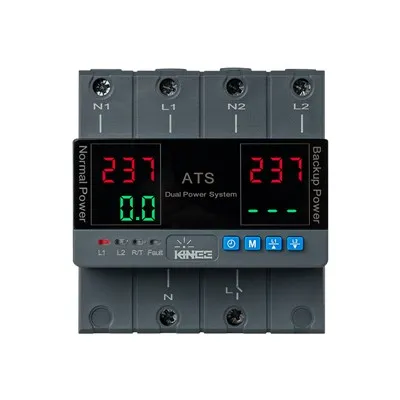
At the end of the day, the question of whether ACB is common in English-speaking countries isn’t a yes or no—it’s a context-driven answer that makes sense once you’ve spent time in this industry. It’s not a term for everyday conversation, but it is a widespread, functional abbreviation that’s here to stay for anyone working with electrical power systems. If you’re in the market for ACBs for your next project, whether you’re working on a small commercial build, a large industrial facility, or a renewable energy project, don’t overcomplicate your inquiry. Reach out to discuss your specific needs, and our team will make sure you get the right ACB for your application, with the specifications and support you need to keep your project on track.
Proximity Sensor References:
- "2022 Electrical Procurement Practices Survey," National Electrical Manufacturers Association (NEMA), 2022.
- "Global Circuit Breaker Market Analysis 2018-2028," Research and Markets, 2023.
- "Industrial Shorthand and Terminology in Australian Construction," Australian Institute of Building Surveyors, 2021.
- "Electrical Specification Standards for Commercial Buildings," National Electrical Contractors Association (NECA), 2022.
Wenzhou Kinee Electrical Co., Ltd.
We are one of the most professional acb manufacturers and suppliers in China, featured by quality products and good price. Please rest assured to buy advanced acb made in China here from our factory. We also accept customized orders.
Address: Unit 1, Building 31, Wenzhou Wenbo Science and Technology Industrial Park, No. 706 Yanyun Road, Lingkun Street, Oujiangkou Industrial Cluster Area, Wenzhou, Zhejiang Province
E-mail: sandyma@kinee.net
WebSite: https://www.kinee.net/
