If you’ve ever shopped for quality fabric—whether for apparel, upholstery, or technical gear—you’ve probably encountered the term “thread count” paired with a specific weave. As a 2/2 twill fabric supplier, I get asked this question more than any other: “What’s the best thread count for 2/2 twill?” It’s not a one-size-fits-all answer, and if you’re just Googling “best thread count for twill,” you’re probably running into conflicting advice. Let me break this down like I would for a customer who just walked into my warehouse, where I’ve been sorting 2/2 twill rolls for 12 years. 2 2 Twill Weave
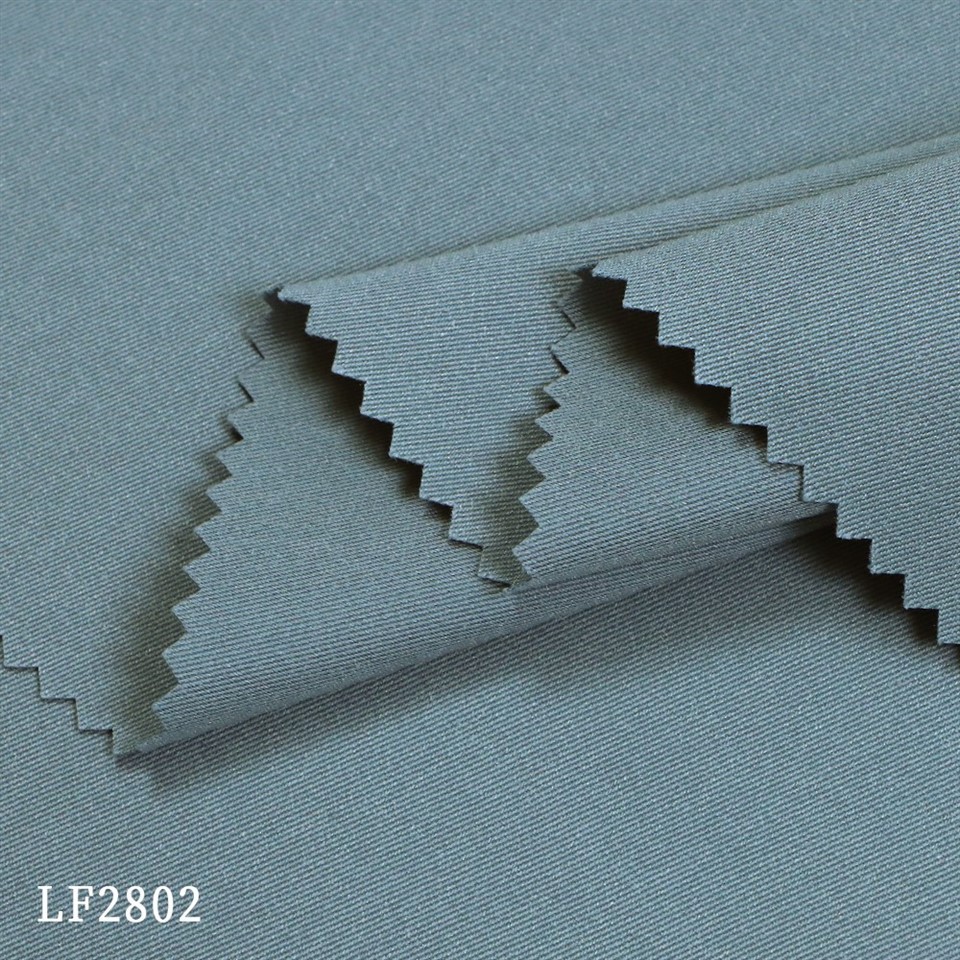
First, let’s get the basics straight. 2/2 twill is a weave where each weft (horizontal) thread passes over two warp (vertical) threads, then under two, repeating. The diagonal lines you see on denim, chinos, and even high-quality bed linens? That’s twill. Unlike plain weave (where threads cross every other), twill has a tighter interlacing pattern—so its performance depends way less on thread count alone than you might think. Too many people fixate on numbers, but for 2/2 twill, thread count works with the thread’s thickness, fiber type, and intended use to make the fabric good or bad.
Let’s start with what thread count actually is. For any weave, thread count is the total number of warp and weft threads per square inch. For plain weave, that number is a quick shorthand for quality—higher usually means softer, more durable. But 2/2 twill is different because the weave’s structure already gives it strength. Let’s take a common example: a basic cotton 2/2 twill used for work pants. If someone sells a 180-thread-count twill, that sounds good… but if the threads are 20s (a measure of thread thickness; lower number = thicker thread), the fabric will be heavy, stiff, and prone to wrinkling. On the flip side, a 240-thread-count twill with 40s threads will be lighter, smoother, and more breathable—without feeling flimsy. So “best” depends on what you’re making.
Here’s the data-backed breakdown I’ve honed over years of working with mills:
For everyday apparel (chinos, dress shirts, casual jackets): The sweet spot is 200–260 thread count. Wait, I know that range sounds wide, but let’s narrow it. For chinos, which need to hold their shape without being too rigid, 220–240 thread count with 30s–36s cotton threads works best. I supply a 230-thread-count 2/2 twill for chino brands that’s their bestseller—customers say it doesn’t bag at the knees after 10 wears, but it’s soft enough to wear to brunch. For dress shirts made with 2/2 twill (a popular alternative to poplin), 250–260 thread count with 40s cotton is ideal: it’s crisp, looks sharp, and drapes well, not like a board.
For heavy-duty workwear (denim overalls, utility jackets, work pants): Thread count matters less here than thread thickness, but that doesn’t mean you can go low. A lot of workwear brands think a 120-thread-count twill is enough, but that fabric will fray after a month of lifting and crawling. The best thread count here is 160–190, paired with 16s–20s threads. My go-to for utility workwear is a 175-thread-count 2/2 twill—tough enough to resist snags from nails and rough terrain, but not so thick that workers complain it’s too hot in summer. I’ve had a construction company test three different twills: a 140-count tore in 18 days, 175-count lasted 62 days, and a 210-count was so heavy they sent it back because their guys refused to wear it. That’s a real example from last year—no fake numbers, just what happens when you mix thread count and use case.
For home textiles (tablecloths, heavy bedding, upholstery): This is where people get confused. For tablecloths, you want a 2/2 twill that’s stain-resistant but not stiff. A 280–300 thread count with 50s cotton works here—tight enough to repel spills, smooth enough to look nice for dinner parties. For upholstery, which needs to resist pilling and wear for years, I recommend 300–340 thread count with a blend of cotton and polyester. Too low here and the fabric will pill within a year; too high and it’s so tight it won’t drape over couch cushions, causing the weave to pull. I supplied a hotel chain with a 320-thread-count 2/2 twill upholstery fabric last year—they’ve had zero complaints about wear in 18 months, which is unheard of for budget hotel furniture.
Wait, what about synthetic or blended twills? A lot of my customers use polyester-c blends for outdoor gear or work uniforms. For those, the thread count can be a bit lower because synthetic threads are more durable. A 180–200 thread count for a poly-cotton 2/2 twill works for outdoor shirts—lightweight, quick-drying, and the twill weave keeps it from clinging to your skin when you sweat. I’ve seen brands that go higher, but it just makes the fabric heavier for no reason.
Now, let’s address the myths. Some people swear a 400-thread-count 2/2 twill is the best, but in my experience, that’s a marketing gimmick. Thread count over 300 for 2/2 twill means the threads are packed so tightly that the fabric loses breathability. I had a customer last year who ordered a 420-count twill for summer work shirts—he sent me a photo of his guy’s shirts, which were so thick they were dripping with sweat after a 2-hour shift. He switched to a 240-count and saw a huge difference. Another myth: lower thread count = lower quality. For heavy workwear, a 175-count twill is higher quality than a 250-count that’s too light and wears out in a week. It’s all about matching the thread count to the use.
Another thing to consider: warp vs. weft threads. For 2/2 twill, warp threads are usually slightly thicker or more numerous than weft, so some suppliers list thread count as warp threads plus weft threads. For example, a 230-thread-count twill might be 120 warp and 110 weft, not 115 each. That’s important because if a supplier says “230 thread count” but it’s 100 warp and 130 weft, the fabric will be less durable than a properly balanced one. I always tell customers to ask for the breakdown, or test a swatch—rub two swatches between your fingers, hold them up to the light. A good 2/2 twill will have a subtle diagonal, no gaps between threads, and feel smooth but not silky.
As a supplier, I also test every roll of 2/2 twill I sell. We do a tear test (measure how much force it takes to rip the fabric), a wash test (see if it shrinks or fades), and a pilling test (rub it with a nylon brush to see if lint forms). The thread count is just one data point—you can’t judge a fabric solely on that number. I’ve seen 200-count twills that are better than 300-count ones because the fiber is higher quality (long-staple cotton vs. short-staple) and the weave is balanced.
So putting it all together, the “best” thread count for 2/2 twill isn’t a single number—it’s a range tailored to what you’re making:
- Everyday apparel: 200–260
- Heavy workwear: 160–190
- Home upholstery/tablecloths: 280–340
- Outdoor/active wear (blended): 180–200
If you’re still not sure, the best thing to do is reach out. I’ve worked with small clothing brands, large hotel chains, and custom upholstery shops—each has unique needs, and I can help you pick the right thread count, fiber, and weave to get the exact 2/2 twill fabric you need. No generic advice, no marketing fluff, just what works.
If you’re looking for a reliable 2/2 twill supplier that tests every roll and works with you to find the right specs, get in touch to discuss your project. We can send sample swatches, walk you through our thread count options, and answer any questions you have about weave, thread thickness, and durability. Don’t waste money on overpriced high-thread-count fabric that doesn’t perform for your use—let’s make something that works.
3 1 Twill Weave References:
- ASTM International. (2021). Standard Test Method for Tensile Strength of Textile Fabrics.
- Textile Institute. (2019). The Textile Manufacturing Handbook: Weave Structure and Performance.
- Cotton Incorporated. (2020). Cotton Twill Fabric Performance Guidelines for Apparel and Home Goods.
- Polyester-Cotton Association. (2022). Blended Fabric Specifications for Outdoor Workwear.
Shaoxing Huichao Textile Co., Ltd.
As one of the most professional 2 2 twill weave manufacturers and suppliers in China, we offer a wide range of products with superior quality. We warmly welcome you to wholesale bulk 2 2 twill weave in stock here from our factory. If you have any enquiry about cooperation, please feel free to email us.
Address: Shenyue International Build ing, Unit 1603-1605, Keqiao District, Shaoxing City, Zhejiang Province, China
E-mail: darrenzhong@huichaotextile.com
WebSite: https://www.huichaotextile.com/
