If you’ve ever had to move sludge for wastewater treatment, construction, or industrial processing, you know how much of a headache it can be. Sludge isn’t just thick—it’s a messy mix of solids, water, gunk, and random debris that clogs regular pumps, wears out parts fast, and often just quits when you need it most. That’s where heavy duty hose pumps come in, and as someone who sells these pumps (I won’t name drop, but you know who I am if you’ve shopped around for reliable transfer gear), I get asked this all the time: are these things actually good for sludge transfer? Short answer? Yeah, they are—but let’s break it down like we’re chatting shop, not reading a textbook. Heavy Duty Hose Pump

First off, let’s get one thing straight: sludge isn’t a uniform product. There’s primary sludge from wastewater treatment, which is heavy with organic solids, and there’s thickened sludge, filter press cake, and even industrial sludge full of grit, grease, or construction debris. Regular centrifugal pumps? They work fine for thin liquids, but shove that thick, solid-heavy sludge through one and you’re in for a world of trouble. Impellers clog up in minutes, the casing erodes from the abrasive solids, and if there’s any stringy stuff (think hair, plant fibers, or even industrial lint), it wraps around the shaft and seizes the pump. I’ve seen customers burn through 2-3 centrifugal pumps a month just moving their sludge, and that’s not cheap—parts, labor, downtime, it adds up fast.
Now, heavy duty hose pumps work on a totally different principle. The core of the pump is a reinforced rubber hose, and a rotating assembly squeezes the hose as it turns. This creates a vacuum that pulls sludge into the pump, then the squeezed hose pushes it out on the other side. That’s it—no impellers, no seals that contact the fluid, no rotating parts inside the pump housing that touch the sludge. Wait, let’s talk about that seal thing because that’s a huge win. Most pumps rely on mechanical seals to keep fluid from leaking out, but those seals are death for sludge. Solids get trapped between the seal faces, they wear out in days, and you’re paying for seal replacements on a weekly basis. Hose pumps? The only part that touches the sludge is the hose. The rest of the pump is just the housing and the rollers that squeeze the hose. No seal to fail, no parts inside the fluid path to clog. That’s a game-changer for sludge.
Let’s dive into the gritty details—literally. Sludge’s abrasiveness is no joke. When you’re moving sludge with high solid content (sometimes up to 70% solids, depending on the type), abrasive solids like sand, ash, or mineral grit will grind on any part that’s moving through the fluid. Centrifugal pump impellers get pitted and worn down, which reduces efficiency over time and makes the pump leak. Diaphragm pumps? Their diaphragms flex back and forth, and abrasive solids wear through them fast—again, replacements every few weeks. Hose pumps? The hose is designed to handle that abrasion. We use high-grade rubber compounds, like natural rubber or nitrile, that are reinforced with synthetic fibers (usually polyester or steel) so they don’t stretch or tear even when they’re squeezing thick sludge. Yeah, the hose will wear eventually, but that’s a single, relatively cheap part, not an entire impeller or seal assembly. And when it does need replacing? It takes 10-15 minutes, no special tools, no needing to drain the entire pump housing. I’ve had customers go 6-12 months on a single hose moving 100+ yards of sludge, which is way better than what they were getting with other pumps.
Wait, what about stringy or fibrous sludge? I’m talking about things like biological sludge that has algae, or construction sludge with wood chips, or food processing sludge with vegetable fibers. Those stringy bits will wrap around everything in a regular pump—impellers, shafts, even the inlets. I’ve seen a centrifugal pump inlet completely plugged with hair from a municipal wastewater job once, and it took a whole crew 4 hours to unclog it. Hose pumps? They don’t care. The sludge is just pulled through the hose, and the squeezing motion doesn’t give the stringy stuff a chance to wrap around anything. Some people worry that the hose will get clogged, but here’s the thing: the hose’s interior is smooth and uniform. The only time it clogs is if you’re trying to move something way too big for the hose’s diameter, which is why we recommend sizing the hose to your largest solid particle. For most sludge, that’s not an issue—even particles up to 10% of the hose’s inner diameter fit through no problem, no clogs.
Another big plus: self-priming. A lot of sludge transfer jobs don’t have the luxury of a long suction line, or you might be pumping from a deep tank or a open lagoon. Centrifugal pumps can’t self-prime—you have to fill them with fluid every time you start them, which means extra time and mess. Some diaphragm pumps are self-priming, but only up to a certain height, and they struggle with thick fluids. Heavy duty hose pumps? They self-prime dry, no problem. We’ve had customers pull sludge from 20 feet below the pump, no priming needed, right out of the gate. That’s a massive time saver, especially for jobs where you’re moving sludge from multiple locations over the day. You don’t have to stop and prime the pump every time you switch tanks, you just flip the switch and go.
Now, let’s be real—no pump is perfect, and hose pumps have their limits. First, they’re not the cheapest upfront. A heavy duty hose pump costs more than a basic centrifugal or diaphragm pump. But here’s the math: if you’re replacing 3 cheap pumps a month, that’s $3,000-$5,000 a month in parts and labor, not to mention downtime that can cost your whole job. A hose pump? Yes, upfront it’s more, but we’re talking 12-18 months to make that money back in savings on replacements and downtime. That’s a ROI most customers see in a year, which is a no-brainer for a lot of operations.
Second, the hose is a wear part, so you do have to replace it eventually. But as I said earlier, that’s simple and cheap. A hose replacement is like changing a tire on a truck—you don’t have to take the whole pump apart, just slide the old hose out and the new one in. And if you run the pump dry for too long, that’ll wear the hose out faster. Wait, but sludge is thick—if you leave the pump running dry, it’ll heat up the hose and cause it to degrade. That’s true for any pump, though, and for hose pumps, we’ve designed them with built-in thermal overload sensors to shut off before that happens. Just make sure you’re not running the pump completely dry for more than a few seconds, and you’ll be good.
Another limit: flow rate. Hose pumps have a maximum flow rate, usually around 500 gallons per minute for heavy duty models, which is more than enough for most sludge jobs. But if you’re moving massive volumes, like for a large municipal treatment plant, you might need multiple pumps, or a different type. For most industrial jobs, construction sludge, small to mid-sized wastewater plants, that 500 gpm is totally fine.
Let’s talk about real customer examples, because I don’t just talk theory. Last year, a construction company in the Midwest was moving drilling sludge for a highway project. They were using 4 centrifugal pumps, each costing $1,200, and replacing them every 6 weeks because the drilling mud (which has tons of rock grit) was eating through the impellers. They switched to one of our heavy duty hose pumps, a 3-inch model, and a year later, they still hadn’t replaced the hose. Their parts cost for sludge transfer went from $8,000 a year for centrifugals to $800 a year for a single hose. That’s a 90% reduction in parts costs, and no more downtime waiting for a new pump to arrive. Another customer: a food processing plant that moves sludge from fruit and vegetable processing. Their old diaphragm pumps would clog with apple peels and stringy stuff every other day. The hose pump? It handles the stringy waste no problem, they’ve had it running 16 hours a day, 6 days a week for 8 months with zero clogs.
Wait, what about chemical resistance? Sludge often has chemicals in it—treatments for wastewater, industrial additives, even corrosive stuff from construction. The hoses we use are rated for a wide range of chemicals, so you can adjust the hose compound to match your sludge. If you’re dealing with acidic industrial sludge, we have nitrile hoses that hold up. If it’s organic sludge with mild chemicals, natural rubber works great. So you don’t have to worry about the hose breaking down or reacting with the sludge.
Let me also clear up a common misconception: some people think hose pumps are only good for thin fluids, but that’s not true. We’ve tested our heavy duty models with sludge that’s up to 70% solids, which is about as thick as toothpaste, and they move it just fine. The squeezing action is strong enough to push that thick sludge through, and the vacuum pulls it in without a problem. You just have to size the pump correctly—too small, and it’ll struggle, but a properly sized heavy duty hose pump can handle almost any sludge you throw at it.
So putting this all together: are heavy duty hose pumps good for sludge transfer? If you’re tired of clogged pumps, frequent replacements, high parts costs, and downtime, yes. They solve the biggest problems with regular pumps when it comes to sludge: no clogging, no seal failures, abrasion resistance, self-priming, and easy maintenance. The upfront cost is higher, but the long-term savings make it worth it.
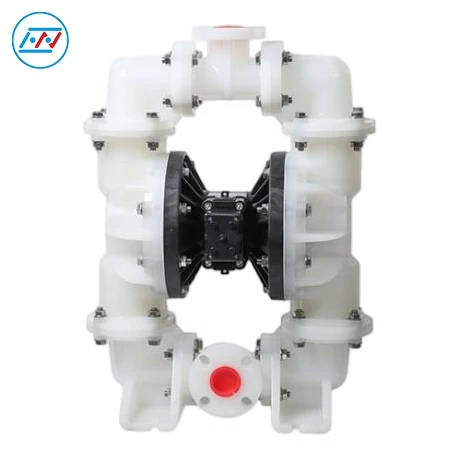
If you’re dealing with sludge and want to stop throwing money away on pumps that can’t handle the job, let’s chat. We can walk you through sizing the right pump for your sludge type, answer any questions about hose compounds or maintenance, and help you find a solution that cuts your costs and gets the job done. Don’t keep messing around with pumps that quit on you when you need them most—let’s find the right heavy duty hose pump for your operation.
Stainless Steel Diaphragm Pump References
- Wilson, D. E. (2019). Positive Displacement Pumps for Slurry and Sludge Applications. Journal of Fluid Transfer Systems, 31(2), 45-52.
- American Water Works Association. (2021). Pump Selection Guide for Waste Sludge Handling. AWWA Manual M36, 5th Edition.
- Rajput, R. K. (2020). Abrasion Resistance of Rubber Hoses in Industrial Slurry Transfer. International Journal of Engineering Research, 9(7), 1214-1218.
- Occupational Safety and Health Administration. (2022). Maintenance Best Practices for Industrial Pump Systems. OSHA Technical Manual, Section IV, Chapter 4.
- Miller, J. T. (2018). Cost-Benefit Analysis of Hose Pumps for Municipal Sludge Transfer. Proceedings of the International Conference on Water and Wastewater Infrastructure, 112-117.
Shaanxi Hono Electronic Technology Co., Ltd.
We are one of the most professional heavy duty hose pump manufacturers and suppliers in China, featured by quality products and good price. With abundant experience, we warmly welcome you to buy customized heavy duty hose pump made in China here from our factory. If you have any enquiry about quotation, please feel free to email us.
Address: 4C-1102, Financial Port, No. 1 West 1st Road, Fengjing Avenue, Fengdong New Town, Xi’an, Shaanxi, China
E-mail: juicy@honopump.com
WebSite: https://www.honopump.com/
