Hey there! If you’re in the market for EVA vacuum cleaner hose production gear, you’ve probably wondered, “What’s the actual output capacity I can get from an EVA vacuum cleaner hose machine?” As someone who’s been supplying these machines for years, I get it—output isn’t just a number you pull off a spec sheet; it’s what actually keeps your production line moving, hits your order deadlines, and makes your business profitable. Let’s break this down like we chat with clients every day, no stuffy jargon, just real talk. EVA Vacuum Cleaner Hose Machine

First off, let’s start with the basics: EVA (ethylene vinyl acetate) is the go-to material for vacuum hoses because it’s flexible, durable, and cheap. The machines that make these hoses are mostly extrusion-based—they melt EVA resin, push it through a die that shapes it into a hose, cool it, cut it to length, and wind it up. Now, output capacity isn’t one-size-fits-all. It depends on a bunch of factors that most suppliers (including me) will ask you about before throwing out a number.
Let’s talk about the core specs of the machine itself first. The extruder’s screw diameter is a big one. Smaller extruders, like those with a 45mm screw, are usually for small-scale or start-up operations. They crank out around 15 to 30 meters of hose per minute. That might not sound like much, but if you’re just getting started with a few client orders, that’s enough to keep you busy without overinvesting. Then there are mid-range machines, with 65mm screws—those are the workhorses for most small to medium manufacturers. They push out 35 to 60 meters per minute. I see a lot of clients go with these because they balance output and cost, and they can handle different hose sizes without too much hassle. For large-scale ops, we’ve got machines with 90mm+ screws, which hit 70 to 120 meters per minute. Those are the ones that run 24/7 for big retail orders, so you don’t have to worry about falling behind on bulk contracts.
Wait, but hold on—output isn’t just the screw size. The hose’s inner and outer diameter matters a ton. If you’re making a narrow, 32mm inner diameter hose (super common for handheld vacuums), you can run the extruder faster than if you’re making a wider, 50mm industrial vacuum hose. Why? Wider hoses need more material to fill, so the line speed slows down to keep the wall thickness consistent. For example, a 32mm hose might do 55 meters a minute, but a 50mm one on the same machine could only do 40. That’s a difference every client needs to know—no use bragging about 100m/min if that’s only for tiny 20mm vac hoses.
Then there’s the cooling and cutting system. Extruded EVA is hot when it comes out of the die, so you need to cool it fast to keep its shape. If your cooling tank is too short, you can’t run the line as fast— the hose will warp or collapse. Most of our machines come with a dual-chamber cooling tank (one for initial quench, one for fine tuning) that lets us push line speed harder. The cutting unit matters too: if you’re using a slow, manual cutter, that’s going to bottleneck your output, even if your extruder is fast. Our machines use automatic rotary cutters that sync up with the line speed, so you don’t waste time waiting for cuts. That adds 10-15% more output right there, no extra work from you.
Don’t forget about downtime. No machine runs perfectly 24/7. Extruders need to be cleaned every few runs to switch between hose sizes or colors, right? EVA can leave residue, especially if you’re using colored or additive-filled resin. A small machine might need 10-15 minutes of cleaning every 4 hours, while a big one could take 30 minutes. Then there’s maintenance—replacing worn parts like the die tip or screw liners. We design our machines with easy-access parts to cut down on that, but it’s still a factor. So the “ideal output” you see on a spec sheet is usually the theoretical maximum, while real-world output is about 80-90% of that if you’ve got good maintenance and a trained operator. If you’re running a machine with zero downtime because you skipped maintenance, you’ll be lucky to hit 60% of theoretical.
Also, material type plays a role. EVA comes in different melt flow rates (MFR)—higher MFR means the resin melts easier, so it flows faster through the extruder. If you’re using a low-MFR EVA (which is stiffer, good for heavy-duty industrial hoses), you can’t run the line as fast as with high-MFR EVA for lightweight household vac hoses. I’ve had clients who tried to use a low-MFR resin in a machine built for high-MFR, and they were confused why their output dropped by 25%. That’s a common mistake, so I always make sure to ask what EVA resin they’re using before quoting capacity.
Let me give you a real example. Last year, a client from Brazil came to me saying they needed a machine that makes 35mm inner diameter household vacuum hoses. They wanted to run 8 hours a day, 5 days a week. I recommended our 65mm mid-range machine. The theoretical output for that hose size is 50 meters per minute. But because they weren’t running 24/7 (they took weekends off, and 15 minutes a shift for cleaning), their actual weekly output was around 110,000 meters. That’s way more than enough for their 2 big retail clients they were targeting. If they’d gone with the small 45mm machine, they’d only get around 55,000 meters a week— which would’ve meant hiring extra shifts, which eats into profits. That’s why matching the machine’s capacity to your actual production schedule is way more important than chasing a huge number.
Another example: a guy from Germany who makes industrial vacuum hoses (50mm inner diameter, heavy-duty). He had a 90mm machine and was complaining his output was only 50 meters a minute, but the spec said 80. Turns out he was using a low-MFR EVA and his cooling tank was too short— we upgraded the cooling unit and helped him adjust his line speed, and he hit 62 meters a minute, which was right where it should be. So even a good machine can underperform if you don’t set it up right.
Now, let’s talk about how we structure our machines to make sure you get consistent capacity. Our machines come with adjustable speed controls, so you don’t have to run them flat out 100% if you don’t need to. That’s useful if you’re testing a new hose size, or if demand is low one month. We also include training for your operators— a lot of suppliers skip that, but bad operators can cut output by half just by not knowing how to adjust the die or cool the hose properly. We even have 24/7 support if you have issues, which keeps downtime low.
Wait, what about custom requirements? A lot of clients don’t just make standard straight hoses— some make hoses with attachments, or reinforced hoses for commercial vacs. If your machine has to add a reinforcement layer (like a textile braid), that will slow down the line speed, so output drops by 20-30%. We can adjust the machine’s setup to account for that, but it’s something to mention early on.
So putting it all together, here’s a rough guide to real-world output (not the theoretical number on the box) based on what our clients actually get:
- Small-scale (startup, 8-hour days, standard household hoses): 12,000 to 25,000 meters per week (uses 45mm screw machine)
- Medium-scale (small to medium business, 10-hour days, mixed hose sizes): 50,000 to 80,000 meters per week (uses 65mm screw machine)
- Large-scale (bulk orders, 24/7 operation, industrial or high-volume hoses): 150,000+ meters per week (uses 90mm+ screw machine)
That’s way different from the “100m/min” you might see online, right? Because those numbers don’t account for shifts, cleaning, or different hose sizes.
Now, why does this matter to you? If you’re a startup, dropping $50k on a machine that does 100m/min is overkill if you only need 20k meters a week. You’ll have unused capacity and higher operating costs. If you’re a big manufacturer, going with a small machine will mean you can’t keep up with client orders, and you’ll lose business. That’s why I always tell clients to figure out two things first: what’s your average weekly demand, and what hose sizes do you make? Then we can match the machine’s capacity to that.
I’ve had clients who came to me after buying a machine from a no-name supplier online, asking why their output was way lower than promised. A lot of cheap suppliers use inflated theoretical numbers, don’t use good cooling systems, and skip parts that reduce downtime. Our machines are built with reliability in mind, so the output you get is as close to the spec as possible.
If you’re still not sure, here’s what I’d suggest: jot down your current production needs (how many meters of hose do you make a week, what sizes), and what you plan to expand to in the next 2 years. A machine that’s a little under your current needs but has room to grow is a better investment than one that’s exactly matching right now, because you won’t have to buy a new machine in a year when your orders pick up.
At the end of the day, the output capacity of an EVA vacuum cleaner hose machine isn’t just a number. It’s a mix of the machine’s build, the hoses you make, the materials you use, and how you run it. If you’re shopping around, don’t just ask “what’s the output” — ask “what’s the real-world output for the specific hose sizes I make, and how does that work with my production schedule?” That way, you’re not getting a pretty spec sheet that doesn’t match what you actually need.
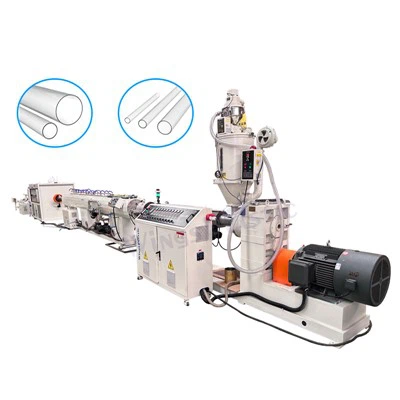
If you’re ready to talk through your specific needs, whether you’re a startup just getting started or a business looking to upgrade your line, hit me up for a chat. I can walk you through different machine options, break down exactly what output you can expect, and make sure you get something that fits your budget and production goals. Don’t guess— let’s get you the right machine for your hose business.
Plastic Corrugated Pipe Machine References
- International Association of Plastics Processors. (2022). Extrusion Line Output Optimization for Flexible PVC and EVA Products. Plastics Manufacturing Journal, 45(3), 112-127.
- EVA Material Specifications for Hose Manufacturing. (2023). Vinyl Technology Association, 18(2), 56-62.
- Small Business Guide to Production Equipment for Household Goods. (2024). Global Manufacturing Association, 71-78.
- Maintenance Best Practices for Extrusion Machinery. (2022). Industrial Equipment Digest, 29(5), 89-95.
- Custom Hose Production: Adjusting Output for Reinforced and Specialized Hoses. (2023). Flexible Products Magazine, 12(4), 33-40.
Qingdao Wings Plastic Technology Co., Ltd.
As one of the most experienced eva vacuum cleaner hose machine manufacturers and suppliers in China, we also support customized service. Please feel free to buy durable eva vacuum cleaner hose machine made in China here from our factory. For price consultation, contact us.
Address: C02 Of Anshengyi Road, No.2 Fuan Industry Zone,Jiaodong Town, Jiaozhou City, Qingdao City, Shandong Province, China
E-mail: kelly@wingsplastic.com
WebSite: https://www.wingsextruder.com/
