Hey everyone, it’s Mia, and if you’ve ever ordered a folded crate from our warehouse or chatted with me during a quick question, you know I’m the one who’ll drop every other task to walk you through the gritty details of how they hold up in the real world. Lately, I’ve been getting non-stop DMs from folks—small business owners running outdoor farmers’ markets, warehouse managers storing pallets of goods on uncovered loading docks, even people who use crates for weekend camping gear—asking the same thing: “Are folding crates actually UV resistant? ’Cause I don’t wanna buy something that’ll turn to mush after three months in the sun.” Folding Crate
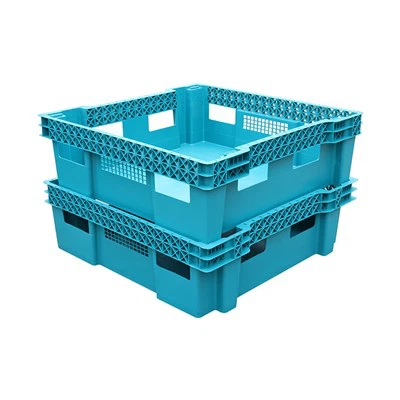
Full transparency: I get it. When you’re spending money on gear that’s supposed to last, you don’t wanna drop cash on something that fades, cracks, or warps faster than a cheap plastic water bottle left in a hot car. I’ve had so many customers come back to me last year saying their old crates from another supplier cracked on them mid-summer, and it turned out they’d skipped the whole UV treatment step. So let’s break this down plain and simple, no jargon, no corporate fluff—just what I see every day in our factory and from the crates we ship out.
First off, let’s cut to the core: most standard folding crates? They’re NOT UV resistant. Period. The reason? Regular plastic (the kind you find in cheap storage bins or flimsy crates) is made from polyethylene (PE) or polypropylene (PP), and those polymers get broken down by ultraviolet (UV) light from the sun over time. UV radiation basically attacks the molecular bonds in the plastic—think of it like tiny, invisible sunburns that eat away at the structure. A few months of constant sun? Those bonds snap, the plastic gets brittle, and before you know it, you’re patching cracked edges or tossing the whole thing. I’ve seen this first-hand: last summer, a coffee roaster who used non-UV crates to haul green beans to pop-up markets found half their crates had hairline cracks within two months, and they had to rush re-orders at a steep last-minute price. Ouch.
But here’s the thing I wish more folks knew: UV resistance isn’t a “one size fits all” thing. It’s an add-on, and that’s where the quality of a crate makes all the difference. The crates we sell aren’t just plain plastic—we add UV stabilizers during the manufacturing process. Wait, what even are those stabilizers? I’ll keep it simple: they’re tiny chemical additives that soak up UV light like a sponge, or sometimes they form a protective layer over the plastic so the sun can’t get to those molecular bonds. No, they don’t make the crate glow or anything—you’ll never see ’em, and the crate won’t feel different to the touch. But they do stop that sun damage cold.
We test this stuff ourselves, too. It’s not just lab tests (though we run those quarterly)—we have a little test setup out back of our warehouse: two crates, same size, same plastic mix. One’s our standard crate, no stabilizers; the other’s our UV-treated one. We leave ’em out on the roof 24/7, no covers, summer sun blazing here in Ohio (which is no joke—we get weeks of 90-degree days and full sun). Let me tell you, the standard crate? By month three, it’s faded to a weird chalky gray, the edges are brittle enough to snap if you bend ’em a little, and last test I did, I dropped a 50-pound box on it and it split right down the side. The UV-treated one? A year later, it looks almost brand new. Still the same snap when you fold it, no cracks, no chalky residue. That’s the proof I care about, not just some report we get sent.
Now, I know what you’re thinking: “What if my use isn’t constant sun? Like, I store crates in a shed half the time, only bring ’em out for weekend markets.” Is a UV-treated crate still worth it? Short answer: yes. Even occasional sun exposure adds up. I had a crafter who used our non-UV crates for her handmade soaps—she stored ’em on her porch, brought ’em inside every night. By the end of outdoor market season, the corners of the crates were brittle, and she could barely stack ’em without breaking one. She switched to our UV crates last spring, and she told me just last week that they’ve held up through three market seasons and zero issues. It’s not just about leaving ’em out permanently—it’s about preventing that slow, hidden damage that creeps up on you when you’re not looking.
But let’s be real: not every “folding crate” you’ll find online has real UV treatment. I’ve seen listings that say “UV resistant” just because the plastic is a dark color (dark plastics do block some UV, but it’s not enough for heavy use) or they added a tiny, useless amount of stabilizers. How do you tell the difference between a real UV-resistant crate and a fake one? I’ve got a few quick checks I walk customers through all the time:
-
Ask the supplier for test data. Any legitimate supplier who does proper UV treatment will have lab results showing how their crate holds up after 1,000 hours of UV exposure (that’s the standard industry test—equals about a year of intense sun). If they can’t show you that, move on. We’re happy to send our test results anytime, no hoops to jump through.
-
Feel the edges. Real UV-treated plastic is a little more flexible, not stiff. If a crate feels rigid right out of the box, chances are it’s not got the right additives. Also, look for a slight matte finish—some cheap UV treatments leave a shiny coating, which can peel over time.
-
Price point. Good UV stabilizers add a little cost to manufacturing, so a crate that’s way cheaper than similar ones probably skips that step. I’m not here to upsell you—if you only need crates for indoor use, no sun ever, our standard ones are perfect. But if you need ’em outdoors, cut yourself some slack and pay a little extra for the UV stuff. It’ll save you from replacing crates every six months.
Now, let’s talk about common myths I hear all the time. First myth: “All plastic crates get ruined by sun, no exceptions.” Nope, that’s just plain wrong. I’ve got crates we sold three years ago that are still going strong at a farm store in Arizona—constant sun, 100-degree days, no issues. They asked specifically for UV-treated ones, and it worked. Second myth: “Folding crates are too thin to handle UV, anyway.” Our crates are made from high-density polypropylene, not that flimsy thin plastic you see at dollar stores. We make ’em thick enough to fold without cracking, and the UV stabilizers work on that thick plastic just as good as thin. We never cut corners on thickness, which is another reason our crates hold up.
Third myth: “I can just buy a can of UV spray for plastic and re-treat my crates later.” I tried that once with an old standard crate we had laying around. It looked shiny for a week, then the spray peeled off, and the crate started cracking anyway. The problem is, spray-on UV treatments are a top coat—they can chip or wear off over time, especially if you’re handling crates a lot, stacking them, dragging them. The only real protection is adding the stabilizers when the plastic is being melted and molded, so it’s part of the whole crate, not just a layer on top. Trust me, I wasted $15 on spray, and it did nothing. Save your money.
I also wanna chat about real-world use cases, ’cause that’s what matters most. Let’s say you’re a restaurant supply manager who uses crates to haul fresh produce to a rooftop patio, or a DIYer who uses crates to make outdoor storage bins for your garage, or a small farmer who stores crates on an uncovered trailer between markets. In all of these cases, UV resistance isn’t a “nice to have”—it’s a necessity. I had a local landscaping company come to me last year who’d gone through 4 sets of crates in two years from another vendor, all from sun damage. They switched to our UV crates, and last month they told me they haven’t had to replace a single one in 18 months. That’s the kind of win I love to see.
Now, for the people who are still on the fence: I get it. Buying in bulk means you’re investing money, and you don’t wanna make the wrong call. That’s why we offer a little extra here—we don’t push UV treatments on people who don’t need ’em, but if you’re even a little unsure about sun exposure, we’re happy to chat through your specific use case. A lot of suppliers will just throw a catalog at you, but I’m the one who’ll ask, “Where do you store the crates? How often are they outside? What’re you hauling?” ’Cause that’s how you pick the right crate for you, not a one-size-fits-all.
Quick note, too: UV resistance doesn’t mean your crate is indestructible. Drop a 100-pound box on it from 10 feet up, and even the best UV-treated plastic will crack. It just means it won’t get brittle and fall apart after a few months in the sun. That’s an important distinction—no crate is unbreakable, but UV-treated ones are way more durable for outdoor use.
At the end of the day, the question “are folding crates UV resistant” doesn’t have a yes or no answer—it depends on the crate. The ones we make are, but not every crate out there is. That’s why I always tell people to do their homework, ask questions, and don’t just go for the cheapest option. I’d rather you buy one set of crates that lasts three years than two sets that last six months, even if the first one costs a little more.
If you’re ready to check out our UV-resistant folding crates, or you’ve got more questions about how they hold up in your specific setup, just reach out. We can send samples, walk you through the pros and cons, and get you a quote that works for your business. No sales pitches, no pushy emails—just straight talk about crates that’ll actually work for you, not just for a quick sale.

I hope this cleared up all the confusion. Next time you’re shopping for folding crates, remember: UV resistance is an add-on, not a given, and a little research goes a long way. Let’s make sure you don’t end up with a crate that turns to mush after three months in the sun. Catch you next time!
Vented Bulk Container References
- "Polymer Degradation and Stabilization: UV Light Effects on Polyethylene and Polypropylene" – Journal of Applied Polymer Science, 2019.
- Industrial Plastic Packaging Association, "Guidelines for UV-Resistant Plastic Containers for Outdoor Use", 2021.
- ASTM Standard G154, "Standard Practice for Operating Fluorescent Ultraviolet (UV) Lamp Apparatus for Exposure of Nonmetallic Materials", 2020.
Shanghai Qusheng Plastics Co., Ltd.
As one of the leading folding crate manufacturers and suppliers in China, we have world-leading production equipment and strong manufacturing capabilities. Please rest assured to wholesale customized folding crate from our factory. For quotation, contact us now.
Address: No.85 Hengtang Road, Huaqiao Town, Kunshan City, Jiangsu Province
E-mail: Totepallet-inquiry@plastic-crate.com
WebSite: https://www.totepallet.com/
