If you’ve been in the industrial space for even a few years, you know medium-voltage (MV) motors are the unsung workhorses of factories, mines, water treatment plants, and power generation facilities. Most of these motors aren’t built to last just a decade—they’re designed for 25+ years of continuous operation. But time takes its toll: winding insulation degrades, bearings wear out, cooling systems get clogged with dust and grime, and efficiency ratings slowly drop. As an MV motor supplier who’s worked side-by-side with plant engineers for over 12 years, I’ve seen countless teams write off aging motors as “too far gone” or pay for expensive full replacements that drain their maintenance budgets and disrupt production schedules. MV Motor
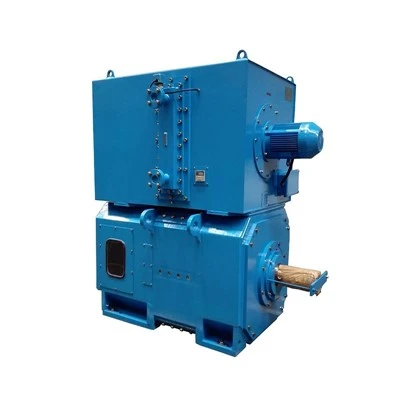
The truth is, retrofitting an old MV motor is often a smarter, more cost-effective alternative. Done right, it can boost efficiency by 5–15%, extend the motor’s service life by another 10+ years, and resolve nagging issues like unplanned downtime or energy waste that are costing you thousands annually. It’s not just about slapping on a new part, either—retrofitting is a structured, science-backed process that accounts for your motor’s age, operating conditions, and your facility’s unique needs. In this post, I’ll break down what a reliable MV motor retrofit entails, the common upgrades that deliver real results, and how to avoid the missteps that turn a good project into a costly mistake.
First, let’s start with why retrofitting beats replacement for most applications. A typical 3kV or 6kV MV motor can run 8,000 hours a year—think 16-hour shifts, five days a week. Over 15 years, that’s 120,000 hours of operation. A new motor might cost 2–3x more than a full retrofit, and the lead time for custom MV motors can be 12–16 weeks, not to mention the labor to remove the old one, install the new, and test it. Retrofitting can often be completed in 1–2 weeks, with far less downtime. Plus, old motors often have a proven track record: they’ve survived extreme temperatures, dusty environments, and heavy load fluctuations that would break down lesser units. We once retrofitted a 15-year-old 450kW motor for a steel mill that had a 20-year history of reliable operation—replacing it would have cost $38,000, while the retrofit came in at $12,000, with efficiency jumping from 89% to 94.2%. That’s a $2,600 annual energy savings, and it’ll pay for itself in just over four years.
But not all retrofits are created equal. The first step, before touching any parts, is a full, detailed assessment of the motor and its operating environment. Too often, teams skip this and just swap out a worn bearing, leading to another failure in six months. A proper assessment should include three key areas: the motor’s current condition, the load profile it’s handling, and the site’s electrical system.
For the motor’s physical condition, start with the winding insulation. This is the most critical component of an MV motor; if insulation fails, the motor stops working. Old insulation, often made of materials like Class F or Class B epoxy, can crack, absorb moisture, or develop thermal hot spots over time. We use polarisation index (PI) testing and dissipation factor (tan δ) testing to measure insulation integrity. A PI ratio below 1 means the insulation is contaminated or degraded, while a tan δ reading above 2% signals that insulation is breaking down. Don’t ignore stator core testing, either—varnish buildup on the core laminations reduces heat transfer, making the motor work harder to run. We once found a 20% loss in core permeability on a 10-year-old motor just from a thick layer of dust and carbon buildup; addressing that alone boosted efficiency by 3%.
Next, map the motor’s load profile. Is it running at full load 24/7, or is it often underloaded? Old motors are often oversized for current operations, leading to low power factor (PF)—another hidden cost. A PF below 0.9 means your facility is paying penalties to your utility company for reactive power. If your motor consistently runs at less than 50% load, a retrofit that includes adjusting the winding design or adding a variable frequency drive (VFD) can fix that. For example, a 250kW motor running at 40% load with a PF of 0.8 will incur ~$1,800 in annual utility penalties; a retrofit that adjusts the stator winding to match the actual load can bring PF up to 0.95, eliminating that penalty right away.
Finally, check your site’s electrical infrastructure. MV motors run on higher voltages, so your switchgear, transformers, and cabling must be compatible with any new components you add. Adding a VFD, for instance, creates voltage harmonics that can damage other equipment if not mitigated. We always coordinate with the site’s electrical engineer during assessments to ensure any retrofit components work with their existing system, avoiding unforeseen compatibility issues.
Once the assessment is done, the actual retrofit upgrades are tailored to the motor’s condition and needs. Let’s break down the most impactful, science-backed upgrades that deliver measurable results:
-
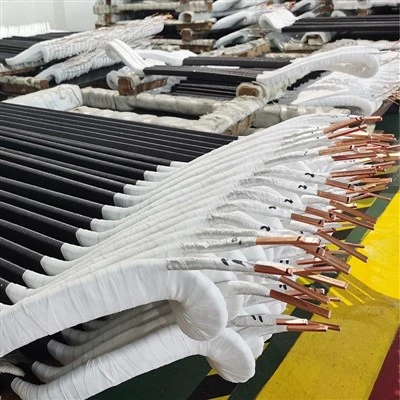
Stator Rewinding with Modern Insulation: This is the single biggest efficiency boost you can get from a retrofit. Old insulation materials (like Class B) have lower thermal resistance, so motors run hotter, wasting energy and shortening life. New insulation systems, like Class H vacuum pressure impregnation (VPI) resin, have better heat resistance, moisture resistance, and thermal conductivity. VPI is especially important for MV motors because it fills all the tiny gaps between winding turns, preventing partial discharge (PD)—a silent killer that erodes insulation over time. When we rewind a motor, we also use precise copper wire gauging to match the actual load, rather than the original design that might be oversized. This reduces copper losses by 5–10%, a major source of energy waste in old motors. For a 500kW motor, rewinding with Class H VPI insulation typically delivers a 6–8% efficiency gain, which translates to $12,000–$15,000 in annual energy savings.
-
Upgraded Bearings and Lubrication: Bearings are responsible for 30–40% of MV motor failures, yet they’re often an afterthought in retrofits. Old roller or ball bearings can develop pitting or wear from years of operation, increasing friction and energy use. Modern premium bearings, like sealed, double-row cylindrical roller bearings, have longer life and better load capacity. We also recommend switching to synthetic lubricants instead of traditional grease: synthetic lubricants operate at higher temperatures, resist contamination, and last 2–3 times longer than mineral-based greases. A side benefit: fewer unplanned shutdowns from bearing failures, which is worth its weight in gold for facilities where downtime can cost $10,000 an hour or more.
-
Cooling System Overhaul: Old cooling systems, like open ventilation (OV) for MV motors, are prone to dust and debris buildup on the cooler fins, blocking airflow and trapping heat. Closed circuit forced ventilation (CCFV) systems with filtered air can reduce heat buildup by 15–20%, allowing the motor to operate at lower temperatures. For motors in dirty or high-humidity environments—like mines, wastewater treatment plants, or chemical processing facilities—this upgrade is non-negotiable. We also use thermally conductive sealants to improve heat transfer from the stator core to the housing, so less energy is wasted on keeping the motor cool.
-
Variable Frequency Drive (VFD) Integration: If your motor runs at varying speeds (like conveyor belts, pumps, or fans), a VFD is one of the most cost-effective retrofits you can install. VFDs adjust the motor’s speed to match the actual load, rather than running it at full speed even when it’s only needed at half capacity. For applications with variable load, a VFD can reduce energy use by 30–50%. That said, VFDs aren’t for every motor—if your motor runs at a constant 100% load 24/7, a VFD won’t deliver any savings, and you’ll need to add harmonic filters to protect other equipment. We always test a motor’s load profile before recommending a VFD, so we don’t waste your budget on an upgrade that won’t pay off.
-
Rotor Bar and End Ring Replacement: For motors that handle high torque or frequent start-stop cycles, worn rotor bars or end rings are a common issue. Old cast aluminum rotor bars can develop cracks from thermal expansion and contraction, increasing slip (the difference between the motor’s synchronous speed and actual speed) and reducing efficiency. Modern copper rotor bars have higher conductivity, cutting rotor losses by 4–6%. We also use friction-welded end rings instead of cast, which are more durable and resistant to breakage during high-load starts. For motors used in cranes, crushers, or other heavy-duty applications, this upgrade can eliminate 2–3% efficiency loss and extend the rotor’s life by 10+ years.
Now, let’s talk about common pitfalls to avoid. I’ve seen too many teams rush into a retrofit without planning, and end up with a motor that’s less reliable than before. The biggest mistakes are:
- Skipping the insulation test: If your motor’s insulation is too degraded, a simple rewinding won’t work—you might need to replace the stator entirely. Cutting corners here leads to another failure within a year.
- Overlooking compatibility: Adding a VFD without harmonic filters can cause voltage distortion that damages nearby control panels or other motors. Always check your site’s electrical limits before adding new components.
- Using low-quality replacement parts: Some shops will use generic copper wire or non-VPI insulation to cut costs, but these parts won’t match the original motor’s performance. Stick to parts that meet NEMA or IEC standards for MV motors.
- Not accounting for downtime: Even a successful retrofit takes time to complete. Coordinate with your maintenance team to schedule the work during a planned shutdown, not when the motor fails unexpectedly. We often work with clients to provide a temporary rental motor during the retrofit, so production doesn’t stop at all—something I wish more facilities took advantage of.
Let’s wrap this up with a real example. Last year, a water treatment plant in the Midwest contacted us about a 20-year-old 6kV 350kW motor that ran their main raw water pump. The motor was failing every 18 months, costing them $15,000 in emergency repairs and $8,000 in lost productivity each time. Our assessment found that the winding insulation was at the end of its life, the rotor bars were cracked, and the cooling system was 40% clogged with sediment. We recommended a full retrofit: Class H VPI rewinding, copper rotor bars, sealed premium bearings, and a closed cooling system. The total cost was $14,500, and the retrofit took 10 days, with a rental motor keeping the pump running the whole time. Six months later, the plant reported the motor was running at 94.1% efficiency (up from 87.2%), no unexpected failures, and their utility bills were $2,100 lower each month. That’s a payback period of just 5.7 months—way faster than replacing the motor, which would have cost $42,000 and taken 14 weeks.
Retrofitting an old MV motor isn’t just a repair—it’s an investment. It lets you keep the proven motor you already rely on, while upgrading its performance to meet today’s energy and reliability demands. Whether your goal is to cut energy costs, reduce unplanned downtime, or extend your motor’s service life, a well-executed retrofit delivers results that full replacement can’t match.
If you’re curious about what a retrofit would do for your old MV motor, or have questions about insulation testing, component upgrades, or scheduling, I’d be happy to walk through your specific situation. We work with facilities of all sizes, from small factories to large power plants, to design retrofits that fit your budget and needs.
DC Motor References
- NEMA MG 1-2020: Motors and Generators, National Electrical Manufacturers Association
- IEC 60034-1: Rotating electrical machines – Part 1: Rating and performance, International Electrotechnical Commission
- "Energy Efficiency Improvements for Medium-Voltage Induction Motors", U.S. Department of Energy, 2019
- "Partial Discharge in MV Motor Windings: Causes, Detection, and Mitigation", IEEE Transactions on Industry Applications, Vol. 55, No. 3, 2019
- "Synthetic Lubrication for Electric Motor Bearings: Performance and Life Benefits", Journal of Mechanical Engineering Research, Vol. 12, No. 4, 2020
Xian Putai Electric Motor Equipment Co., Ltd.
Xian Putai Electric Motor Equipment Co., Ltd. is one of the most professional mv motor manufacturers and suppliers in China, also supports customized service with low price. Welcome to buy advanced mv motor in stock here from our factory. If you have any enquiry about quotation, please feel free to email us.
Address: Haibo Guangchang Fengcheng Nine Road Economical & Technological Development District Xi’an City Shaanxi Province – China
E-mail: sales@putaimotor.com
WebSite: https://www.putaimotor.com/
