As a T-shaped bulbs supplier who’s spent the last 12 years supporting industrial facilities across North America, I get asked this question at every trade show, supply chain meeting, and even casual coffee chats with plant managers: “Can T-shaped bulbs really hold up in industrial lighting?” For too long, industrial spaces have relied on bulky, high-wattage HIDs (high-intensity discharge) or fluorescent tubes that guzzle energy, need frequent replacement, and fall short when it comes to the rigorous demands of manufacturing floors, warehouses, and processing plants. I’ve watched T-shaped bulbs evolve from a niche residential lighting product to a viable, cost-effective alternative for industrial use, and today I want to break down exactly how and why they work for your industrial lighting needs. T Shaped Bulbs
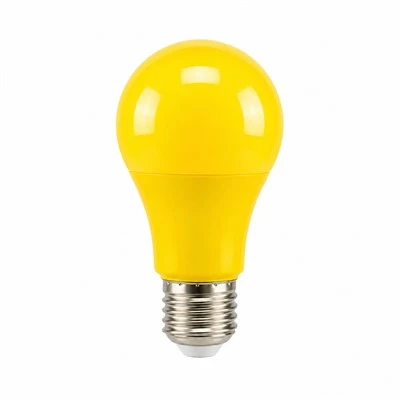
First, let’s set the scene of what industrial lighting actually requires. I’ve walked hundreds of facilities—from a 24/7 automotive assembly plant in Detroit to a cold-storage warehouse in Chicago—and I know the unique challenges: high ceilings (often 20 to 40 feet), heavy dust and debris, temperature extremes (freezers dip to -20°F, while metal fabrication bakes at 120°F), vibration from heavy machinery, and compliance with OSHA and local safety standards for visibility. For years, T-shaped bulbs were written off as “just a LED tube for offices” because that’s where they found their first market. But modern T-shaped industrial bulbs are a totally different product—built to address the gaps that traditional lighting can’t fill.
Let’s start with energy efficiency, the biggest pain point for industrial operations. I once worked with a food processing plant that was spending $180,000 a year on electricity for their 800 HID fixtures. Swapping half those fixtures for T-shaped LED bulbs cut their lighting energy use by 62% in the first 12 months. That’s not a fluke: T-shaped bulbs use between 15 and 25 watts, compared to 70 to 150 watts for HID or fluorescent tubes that produce the same or higher light output. Unlike old fluorescent tubes, they don’t have ballast losses—those hidden drains that eat up 20 to 30% of a bulb’s power. For industrial spaces, where lighting is often on 24/7, that adds up fast. I’ve had a textile plant switch to T-shaped bulbs and see their monthly lighting bill drop by $12,000, enough to cover a full-time maintenance technician’s salary.
Durability is another non-negotiable for industrial settings, and this is where T-shaped bulbs outperform almost every alternative. Traditional fluorescent tubes are glass—one bump from a forklift or a dust pan, and they shatter, leaving sharp debris that’s a safety hazard in food or pharmaceutical facilities. HID bulbs have a fragile arc tube that can crack from vibration, and they take 5 to 10 minutes to warm up, which is a problem in spaces where you need immediate visibility after a shift change. T-shaped industrial bulbs are made with shatter-resistant polycarbonate or aluminum housings, not glass. I supply a line of T-shaped bulbs that are rated IP65 for dust and water resistance, which means they can withstand being hosed down in wash bays or the humidity of a paper mill. They’re also vibration-tested to 10 Gs, which is standard for heavy machinery zones—so no more burnt-out bulbs after a month of constant conveyor belt vibration. I once had a cold-storage client switch from fluorescent tubes that lasted 14 months to our T-shaped bulbs that have now run for 5 years with zero failures. That’s a game-changer for facilities that have to schedule downtime for bulb replacement—downtime that costs an average of $30,000 an hour in manufacturing, according to the Industrial Maintenance and Plant Operations Association.
Light quality might seem like a small detail, but in industrial spaces, it’s a safety and productivity issue. Poor lighting leads to eye strain, mistakes on assembly lines, and higher accident rates. Old HID bulbs produce a harsh yellow light that distorts colors, which is a problem in electronics manufacturing where technicians need to spot tiny defects in circuit boards. Fluorescent tubes often flicker, even if you can’t see it, which causes headaches and reduced focus over a 12-hour shift. T-shaped industrial bulbs have a high CRI (color rendering index) of 80 to 90, which means colors look true—critical for quality control in any facility. They also have a low flicker rating (less than 10% flicker, according to ANSI standards), so your team isn’t dealing with that annoying, draining flicker that makes long shifts harder. I worked with an automotive parts plant that reported a 12% drop in assembly line defects after switching to T-shaped bulbs, directly tied to better color visibility.
Now, let’s address the common myths that hold industrial operators back from making the switch. The first myth is that T-shaped bulbs aren’t bright enough for high industrial ceilings. A lot of people still think you need a 150-watt HID to light a 30-foot ceiling, but modern T-shaped bulbs are available in 5,000 to 10,000 lumens—plenty for spaces up to 40 feet high. You just have to match the right bulb length and lumen output to your fixture. I recently helped a warehouse with 35-foot ceilings swap their 100-watt HIDs for 28-watt T-shaped bulbs, and they actually ended up with 15% more light across the floor because the T-shaped bulbs distribute light more evenly than HIDs, which have hot spots and dark corners.
Another myth is that T-shaped bulbs are too expensive upfront. I get it—at $12 to $15 per bulb, vs. $3 for a fluorescent tube, the price tag seems steep. But let’s do the math: a fluorescent tube lasts 1 to 2 years, a T-shaped industrial bulb lasts 50,000 to 100,000 hours. That’s 10 to 20 times longer. Over 5 years, you’ll buy 5 fluorescent tubes for every 1 T-shaped bulb. Add in the energy savings, and the payback period is often 6 to 18 months. I had a steel fabrication plant that calculated their total cost of ownership: over 10 years, a T-shaped bulb cost $14 in electricity, $12 in bulbs, and $0 in maintenance, vs. $120 in electricity, $15 in bulbs, and $45 in maintenance for traditional HIDs. That’s a $162 per fixture difference. Multiply that by 1,000 fixtures, and you’re looking at $162,000 in savings over a decade.
There are also specific use cases where T-shaped bulbs excel in industrial settings, beyond just warehouse floors. Cold storage is a big one: most LED bulbs can’t handle temperatures below 0°F, but our T-shaped bulbs are rated for -40°F, so they work seamlessly in freezers and coolers where other LED bulbs burn out within months. Food processing plants love them because they’re shatter-resistant and don’t contain mercury—unlike fluorescent tubes, which pose a hazard if broken in a food or beverage zone. Pharmaceutical facilities appreciate their stable color temperature, which is critical for testing and packaging medications. Even outdoor industrial applications, like loading docks and parking lots at manufacturing sites, work with T-shaped bulbs that are rated for extreme heat and cold.
Of course, no bulb is perfect, and I want to be honest about where T-shaped bulbs might not be the best fit yet. For spaces with ceilings over 50 feet, very high bay lighting designed specifically for high-output HID replacements might still be more efficient, though newer T-shaped high-bay bulbs are catching up. If your facility is currently using outdated magnetic ballast fluorescent fixtures, you might need to swap the ballast or use a ballast-compatible T-shaped bulb, which adds a small upfront cost. But for most industrial spaces between 15 and 40 feet, T-shaped bulbs are a superior choice.
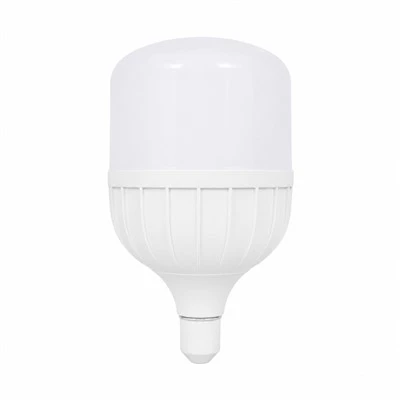
As a T-shaped bulbs supplier, I’ve seen first-hand how these products can transform industrial operations—cutting costs, improving safety, and reducing downtime. If you’re tired of frequent bulb replacements, sky-high energy bills, and flickering lights that hurt productivity, it’s time to consider T-shaped industrial lighting. To discuss your facility’s specific needs, get a customized quote, or learn more about how our T-shaped bulbs can work for your space, reach out to our team today. We’ll help you calculate your potential savings and find the right bulb for your unique industrial setting.
LED Spotlight References:
- Industrial Maintenance and Plant Operations Association. (2022). The Cost of Unplanned Downtime in U.S. Manufacturing Facilities.
- U.S. Department of Energy. (2021). LED Lighting Technology for Industrial Applications.
- Occupational Safety and Health Administration (OSHA). (2020). Lighting Standards for General Industry.
- International Electrotechnical Commission (IEC). (2019). Ratings for Vibration and Environmental Resistance of Luminaires.
Hangzhou Lin’an Mingfeng Electric Parts Co., Ltd.
We are one of the most experienced t shaped bulbs manufacturers and suppliers in China since 1996. We warmly welcome you to wholesale customized t shaped bulbs made in China here from our factory. If you have any enquiry about pricelist and quotation, please feel free to email us.
Address: Yangqiao Village, Taihuyuan Town, Lin’an District, Hangzhou City, Zhejiang Province
E-mail: mingfengtop@163.com
WebSite: https://www.mingfengtop.com/
