If you’ve walked through a modern automotive assembly line, electronics factory, or food processing plant in the last 15 years, you’ve probably seen an industrial robot: tall, articulated arms moving faster and more precisely than any human could, tending to welds, pick and place tiny components, or package pallets at the end of a shift. As an industrial robot supplier, I talk to plant managers and safety leads every week who tell me two things: first, they can’t afford to operate without these robots—they cut production time, reduce defect rates, and eliminate workers from dangerous, repetitive tasks. Second, the biggest question they ask isn’t about speed or payload; it’s about safety. For decades, industrial robots were caged behind steel fences, restricted to isolated areas where human entry was rare, but that outdated model doesn’t work for today’s flexible, collaborative factories where robots work alongside human teams. That’s why modern industrial robots are packed with safety features designed to keep workers safe, improve productivity, and adapt to the way real factories operate. Industrial Robots
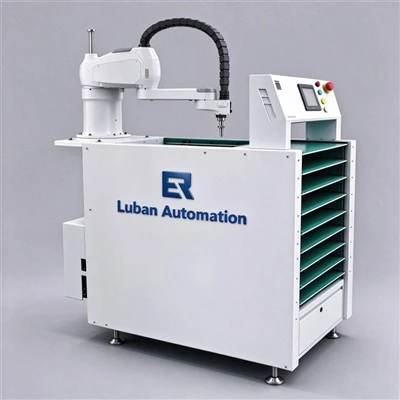
Let’s start with the most visible and fundamental safety feature: speed and force limiting. If you’ve ever stood near a traditional industrial robot, you notice it moves at full speed only when the area is clear. Collaborative robots, or cobots, as we often call them, are built with built-in torque and force sensors that measure every small movement of the robot arm in real time—hundreds of times per second. If the robot arm bumps into an object (or a person), the sensor detects the resistance immediately. In that split second, the robot automatically slows or stops. What’s important here is that these sensors are calibrated to distinguish between a light tap (like a worker brushing up against the arm while adjusting a part) and a hard collision (like a heavy tool slamming into the arm). For example, a cobot welding small electronic circuit boards won’t stop when a worker leans in to check a weld seam, but it will stop instantly if the worker reaches too close to the end effector while the arm is moving at full speed. A few years ago, we installed a line of six collaborative robots at a medical device factory that previously had workers manually assembling insulin pen components. Before the robots, workers had to stand at a station for eight hours a day, hand-placing tiny springs and caps, which led to repetitive stress injuries. After the upgrade, the cobots do the repetitive work, and workers now tend to the line, checking quality and adjusting parts as needed. The force limiting feature was tested during the setup phase—our team tapped the arm with a rolled-up notebook and it stopped on a dime, so the factory’s safety team signed off on the setup without needing to add extra fencing. That’s the kind of win we love: keeping workers safe and keeping production moving.
Next, there’s area monitoring and speed separation. Not every robot is a collaborative cobot. Some of our customers run large, heavy-payload robots that handle 500-pound rolls of steel or whole pallets of concrete blocks—these aren’t suited for close human interaction, so they need safety features that manage the space around them. Light curtains and laser scanners are the workhorses here. Light curtains are rows of invisible infrared lights mounted across the entrance to a robot’s work envelope. If a worker steps through the curtain, breaking one of the light beams, the robot stops immediately. Laser scanners are even more flexible: they create a 3D map of the robot’s surrounding area and adjust the robot’s speed based on how far a worker is from the arm. For example, if a worker is at the edge of the scanner’s range (10 feet away), the robot can move at 100% speed. If the worker moves to 5 feet away, the robot slows to 50% speed, and if they get within 2 feet, it stops entirely. This is a huge upgrade from old fencing, which meant a worker couldn’t enter the area at all—now they can tend to the robot during a production run without needing to hit an emergency stop or shut down the line. Last year, we worked with a logistics company that was using traditional fence-enclosed palletizing robots. They were losing 2 hours of production time every time a worker needed to adjust a pallet, because they had to cut power to the robot, unlock the fence, and reset the system. We installed laser scanners instead, and now workers can adjust pallets while the robot is running, as long as they stay within the safe distance. Production time increased by 12% in the first month, and there were no safety incidents—proof that these features aren’t just about compliance, they’re about making factories more efficient.
Emergency stop systems are another critical feature, but not all emergency stops are created equal. A standard E-stop is a big red button that, when pressed, cuts all power to the robot instantly. That’s essential for unexpected hazards, but cutting power abruptly can cause other problems: for example, if a robot is holding a heavy part mid-air, an immediate power cut could make the part fall, damaging the product or injuring someone. Modern industrial robots have safe stop functions too, which aren’t just a single E-stop. There’s stop category 0, which is the hard cut for emergencies, and stop category 1, which slows the robot down to a controlled stop before cutting power. This is critical for robots handling high-value or heavy parts, because it prevents sudden drops. We always make sure our customers train workers to tell the difference between these stops: a category 0 E-stop is only for immediate danger, like a worker getting caught in the arm, while a category 1 stop is used for minor adjustments or when the robot is done for a short break. It’s also worth noting that E-stops on industrial robots aren’t just physical buttons. They can be mounted on the teach pendants (the devices workers use to program the robot) and on the factory floor, and some even come with wireless E-stops for workers moving around a large facility. We always test E-stop systems during our setup process, pressing every stop multiple times to make sure they activate the robot correctly, without lag or false triggers.
Programmable safety logic is a feature that’s often overlooked, but it’s what ties all these other safety components together. Every industrial robot we sell has a safety controller that works with the robot’s main processor to adjust movements in real time. This logic can be programmed to change the robot’s behavior based on the task. For example, if a robot is welding, the safety logic knows that the arm moves in a specific pattern, so it can adjust the force limits to be higher (since the welding gun is heavier and hotter). If the robot is picking small parts out of a bin, the force limits are lower, because a tap from a light part is less dangerous. We work with each customer to program this logic to match their specific process, because a one-size-fits-all approach to safety doesn’t work. A food processing factory handling raw chicken has different safety needs than an automotive factory handling metal parts, so we tweak the safety logic to match: for the food plant, the robot has additional sensors to detect if a worker is reaching into the bin of chicken, and the force limit is set to be very low to prevent injury and avoid contaminating the product. For the automotive plant, the logic is adjusted to account for heavy metal components, so force limits are higher but still strict enough to prevent serious harm.
There’s also predictive safety, a newer feature that’s becoming more common as factories adopt Industry 4.0 technologies. Modern industrial robots are connected to the factory’s network, so they can collect data about their own performance: how fast their parts wear, how often they stop, when their sensors might be failing. This data is used to predict potential safety issues before they happen. For example, if a torque sensor on the robot arm is showing unusual resistance, the predictive safety system will flag the issue and send an alert to maintenance before the sensor fails, which could cause the robot to move unpredictably. We recently added this feature to all our mid-range robot lines, and one of our packaging customers used it to catch a faulty encoder on a robot arm that would have caused the arm to move off-course, leading to a collision with the packaging line. The alert was sent during a scheduled maintenance check, so we replaced the encoder before it caused any downtime or safety risk. Predictive safety isn’t a replacement for regular maintenance, but it’s another layer of protection that keeps workers safe and prevents costly accidents.
Compliance is another aspect we can’t ignore. All of our industrial robots are certified to meet international safety standards, like ISO 10218, which is the global standard for industrial robot safety. These standards outline all the requirements for safety features: force limits, area monitoring, E-stop systems, and more. We don’t sell robots that aren’t certified, because safety isn’t something we cut corners on. That said, compliance is just the baseline—our customers don’t buy our robots just to meet regulations, they buy them to protect their most valuable asset: their workers. Every week, we hear stories from customers who say a safety feature prevented an injury, even when no one thought an accident was possible. Last year, a customer running a precision electronics line told us that a cobot’s force limit stopped the arm when a worker reached in to adjust a tiny resistor. The worker only had a small bruise, and production didn’t need to be shut down for long, because the robot just stopped and was back in action once the worker moved away. If that had been a traditional caged robot, the worker would have had to cut power, shut down the line, and probably missed a production deadline—plus there would have been a more serious injury.
As an industrial robot supplier, we know that safety isn’t a afterthought—it’s built into every robot we design, build, and install. We don’t just sell a robot arm; we work with our customers to assess their factory layout, their workflow, and their worker needs, then customize the safety features to fit. We talk to their safety teams, their line supervisors, and even the workers who will be around the robots every day, because they’re the ones who know the factory best. Whether a customer needs a large heavy-payload robot with laser scanners and safe stop systems, or a collaborative robot with force limiting for tight workspaces, we make sure the safety features work for their specific operation, not just a generic standard.

If you’re considering adding industrial robots to your facility, safety should be your top priority—don’t make the mistake of choosing a robot that sacrifices safety for speed or cost. Our team has years of experience helping factories upgrade their operations while keeping workers protected, and we can walk you through every safety feature, test them on your production floor, and train your team to use them correctly. To learn more about how our industrial robots can fit your facility’s safety needs and boost your productivity, reach out to our team to schedule a consultation and procurement discussion. We’ll work with you to find the right solution for your budget and your workers’ safety.
AGV & RGV Solutions References
ISO 10218-1:2011, Robots and robotic devices — Safety requirements for industrial robots — Part 1: Robots
ISO 10218-2:2011, Robots and robotic devices — Safety requirements for industrial robots — Part 2: Robot systems and integration
Robotics Industries Association (RIA), Industrial Robot Safety Guidelines, 2020
Zhejiang Luban Automation Technology Co., Ltd.
As one of the most professional industrial robots manufacturers and suppliers in China, we also support customized service with low price. With abundant experience, we warmly welcome you to wholesale high quality industrial robots for sale here from our factory.
Address: No.19-27-2, Zhonggang Avenue, Huaxi Subdistrict, Changxing County, Huzhou City, Zhejiang Province
E-mail: sales@luban-zdh.com
WebSite: https://www.multilayermagazine.com/
