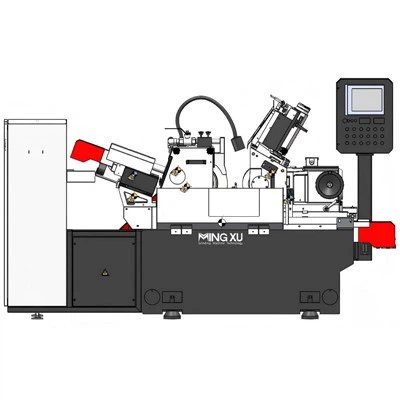
If you’re running a CNC centerless grinder in your shop, I get it—balancing wheel performance, part quality, and downtime feels like juggling fire. One of the most common questions my team gets from new customers and even long-time grinder operators is, “How often do I need to dress the wheel?” The truth is, there’s no one-size-fits-all answer here, but getting it right is the difference between consistent parts and scrapped batches, or even a wheel that wears out way faster than it should. Let’s break this down like we’re chatting over a coffee in the shop—not a stuffy manual. CNC Centerless Grinder
First, let’s make sure we’re on the same page about what dressing even is, because I’ve seen too many new guys mix it up with truing. Dressing is the process of sharpening the grinding wheel’s abrasive grains and clearing away the tiny chips of metal, bond material, and grit that gunk up the wheel’s surface after use. Over time, that gunk (called loading) makes the wheel act like a dull knife—you’ll push too hard on parts, get burn marks, or even have parts spin weird instead of being ground smoothly. Truing, on the other hand, is fixing the wheel’s roundness and aligning it, which you might do less often than dressing. So when we’re talking frequency here, we’re focused on that sharpening and cleaning step.
Now, how often? It’s not a number you can just punch into a machine—It depends on a handful of factors specific to your process, and I’ve watched shops ignore these and either dress way too much (wasting time) or way too little (ruining parts). Let’s walk through the big ones.
First up: the type of parts you’re grinding. If you’re running super soft, sticky metals like aluminum or mild steel, those tiny metal shavings stick to the abrasive grains way easier—loading happens fast. I had a customer last year who ground 10mm aluminum pins for a bicycle parts brand; they were dressing every 500 parts at first, because the wheel would load so bad that the pins had faint burn marks. Once they switched to a slightly coarser grit wheel optimized for soft metals, they stretched that to 1,200 parts, no quality issues. Compare that to grinding hard chrome or carbide—those are tough, sharp edges that don’t load as much. A shop running carbide components might only need to dress their wheel every 3,000 parts, sometimes even more. It’s not just material though—part size matters too. Small, thin parts (like tiny fasteners) have way less surface area to shed chips, so the wheel gets loaded quicker than when you’re grinding large, solid shafts.
Next, your grinding parameters—aka how you’re running the machine. Feed rate is a huge one. If you’re cranking the feed way up to pump out parts fast, each pass digs more metal off, so the wheel’s grains get worn down faster and load up quicker. We always tell customers: if your feed rate’s set to get 10% more parts an hour but you’re having to dress every 200 parts instead of 500, you’re not actually saving time. Another parameter: infeed vs. throughfeed grinding. Throughfeed (where parts roll through the machine in a line) tends to load the wheel more evenly, but infeed (where parts are fed into a fixed spot on the wheel) can cause localized loading if you’re not adjusting the work rest blade right. I once watched a new operator set the work rest too high on an infeed job, so the only part of the wheel touching the work was a small section. That section loaded up in 100 parts, while the rest of the wheel was still good—so they ended up dressing the whole wheel to fix one bad spot, wasting half the wheel’s usable life. Oops. And don’t forget coolant—if your coolant’s old, diluted, or has bad flow, it can’t flush those metal chips and bond grit away, so loading happens way faster. Shops with proper filtration and fresh coolant often see 20-30% longer dressing intervals than those that just top off the coolant once a month.
Then there’s the wheel itself. Not all grinding wheels are created equal, even if they look the same. Bond type is a big factor: vitrified bonds are more porous, so they clear chips easier and can go longer between dressings, while resin bonds are tougher but might load more often for soft metals. Grit size too: finer grit wheels give smoother finishes, but they have smaller gaps between grains, so they load up faster. A shop that switched from 60-grit for a rough grind to 120-grit for finishing had to go from dressing every 1,500 parts to every 800 parts—but their part finish went from a rough 16 microinches to a smooth 4, so that tradeoff was worth it for their customer. Even how the wheel was stored before you mounted it matters: a wheel that sat in a damp corner for six months might have the bond weak, so it wears faster and needs dressing more often.
Okay, so if there’s no set number, how do you know when it’s time to dress? That’s where watching your machine and your parts comes in—no fancy sensor needed (though our CNC centerless grinders do have some tracking, but we’ll get to that). Here are the easy telltales I teach every customer: first, check the part finish. If you’re used to parts coming off with a smooth, consistent shine, and suddenly they have faint streaks or even tiny burn marks, that’s a sign the wheel is loaded and needs dressing. Second, measure part dimensional consistency. If parts are getting slightly bigger or smaller each batch instead of hitting your tolerance, that’s the wheel slipping or loading up, so your grind isn’t holding size. Third, listen to the machine. A healthy grinding wheel makes a steady, high-pitched whine. If it starts sounding rough, like it’s grinding against something instead of cutting, that’s a dead giveaway the wheel’s dull and loaded.
I’ve seen shops mess this up in two bad ways: over-dressing and under-dressing. Over-dressing is when you dress the wheel way more than you need to. Not only does that waste 5-10 minutes per dressing every time, but it also wears away the wheel’s usable surface faster—so you’ll have to replace the wheel sooner, which is a way bigger cost. A customer of mine used to dress their wheel every 500 parts “just to be safe,” but when we looked at their part data, their finish was still perfect at 1,100 parts. We adjusted their dressing schedule, and they saved almost 2 hours a week and one grinding wheel a month. Under-dressing is the other side: if you wait too long, the wheel gets so loaded that you’re forcing it to cut, which causes excessive heat, part burn, or even wheel breakage. We once had a shop that waited until their parts were failing inspection to dress the wheel, and they ended up cracking two work rest blades and ruining a batch of 5,000 parts—cost them more in scrap than any time saved.
Now, if you’re using a CNC centerless grinder (like the ones we build), we’ve got some tools to make this easier. Our machines track wheel wear over time, so you can set a trigger for dressing when the wheel’s removed material hits a certain threshold, instead of just counting parts. For example, if you know your wheel should be dressed after removing 0.5mm of material, the machine can alert you when it hits that mark, so you don’t have to guess. We also offer customizable dressing programs—so if you’re grinding a batch of soft aluminum, you can set a lighter, more frequent dressing pass, and for hard carbide, a heavier, less frequent pass. But even with all that, our go-to advice is still to test your own process. Start with a middle number (say, every 1,000 parts for a general steel job), track part quality, and adjust up or down as needed.
Wait, let’s talk about a common myth I hear all the time: “If I dress too little, the wheel will glaze over, and that’s permanent.” No, not really—glazing is when the abrasive grains get worn down flat, so they can’t cut anymore. You can fix glazing with a dressing tool that’s coarser than your standard dressing tool, or a trick we teach: use a diamond drag tool with a heavier infeed to break off the worn flat grains. But if you catch the problem before it gets that bad, you don’t need to overdo it.
Another quick tip: if you change the type of part or material you’re grinding, reset your dressing schedule. I had a customer who switched from grinding brass to stainless steel, kept the same dressing interval, and had nothing but issues for a month. Once they adjusted—since stainless is harder, so it takes longer to load—they got back to consistent parts immediately.
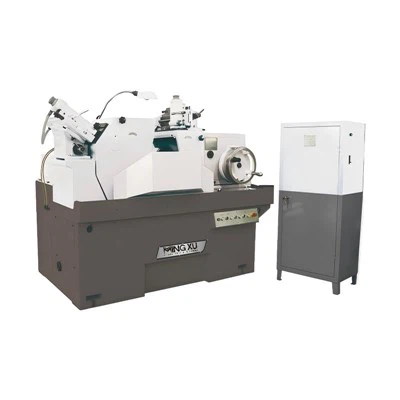
So to wrap this up, there’s no magic number for how often to dress your centerless grinder wheel. It’s a mix of your part material, grinding parameters, wheel type, and even your shop’s coolant quality. The goal is to find a sweet spot where your wheel stays sharp enough to cut clean parts, but you’re not wasting time or money on unnecessary dressings. If you’re struggling to dial in your process, or you’re looking for a CNC centerless grinder that can help make this easier, reach out to our team to chat through your needs. We’ve worked with shops of all sizes—from small job shops to large automotive suppliers—and can help you figure out what works best for your specific setup.
Precision Centerless Grinder References:
- Malzahn, A. (2021). Centerless Grinding: Fundamentals and Modern Practices. Industrial Press.
- Brown, J. (2022). "Optimizing Dressing Cycles for CNC Centerless Grinders." Journal of Manufacturing Processes, 78, 214-222.
- American Society of Mechanical Engineers (ASME). (2020). Standard Guide for Grinding Wheel Dressing and Truing. ASME B7.19-2020.
Wuxi Mingxu Machinery Equipment Co., Ltd.
As one of the most professional cnc centerless grinder manufacturers and suppliers in China, we’re featured by quality products and good price. Please rest assured to buy the best cnc centerless grinder for sale here from our factory. Also, custom service is available.
Address: No. 5-5 Jinke Wealth Plaza, Changjiang North Road, Xinwu District, Wuxi City, Jiangsu Province
E-mail: yingyingmxjd@163.com
WebSite: https://www.mingxu-china.com/
