If you’ve ever walked a solar farm at sunrise, when the panels glow golden and the air still smells of dew, you might’ve glanced at the rows of thin, dark wires strung between mounts and inverters: solar DC cables. I’ve been a solar DC cables supplier for 12 years, and one question comes up at least once a week, from small residential installers and utility-scale project managers alike: Are these wires easy to maintain? It’s a fair question—when you’re investing in a solar setup, the last thing you want is a piece of equipment that demands constant, costly upkeep. The short answer? Most of the time, yes, but the “how” of that ease depends on a few choices you make up front, from the cables you pick to how you install them. Solar DC Cables
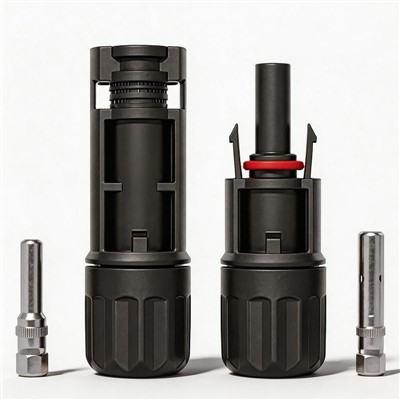
Let’s start with why solar DC cables are different from, say, the extension cord you use for your lawnmower. Solar DC cables don’t carry alternating current (AC) like standard home wiring—they carry direct current, generated by the panels, which means they’re built to handle the unique stresses of outdoor solar environments. Sunlight, temperature swings from 100°F in summer to 20°F in winter, UV radiation, and occasional brush with dirt, moisture, or even small rodents can all take a toll. That durability is a big part of why maintenance is simpler than you might think. Unlike older wiring materials that fray or crack after a few years, modern solar DC cables use cross-linked polyethylene (XLPE) insulation or thermoplastic elastomer (TPE) jackets, both engineered to resist UV damage and temperature fluctuations. I’ve supplied cables that have been running on 50+ rooftop and ground-mount projects for over a decade with zero jacket degradation—no cracking, no brittleness, just consistent performance.
That said, “easy maintenance” doesn’t mean no maintenance at all. The good news is, what little maintenance these cables need is mostly visual, low-effort, and can be done during the same routine checks you already do for your panels. Let’s break down the most common tasks, and why they’re not as intimidating as they sound.
First, visual inspections. For most residential systems, this is as simple as a 15-minute walkaround once every three to six months, or after a big storm. You’re looking for three things: damage to the jacket, loose connections, and signs of pest interference. Damage to the jacket is rare if you picked a quality cable—cheap, thin jackets (sometimes used in off-brand cables to cut costs) will scuff or crack if they rub against a metal mount or get snagged by tree branches. But with the right solar DC cable, even accidental scuffs from tools during installation rarely turn into a problem down the line. Loose connections, though, are more of a hidden risk. When connectors aren’t tightened properly at installation, they can work loose over time from temperature expansion and contraction, which causes resistance, heat buildup, and even power loss. The fix here is just a quick check with a torque wrench—most installers keep a small one in their van, and it takes 30 seconds per connector.
Pest damage is another thing to watch for, especially if your solar setup is near wooded areas or farmland. Rodents like mice and squirrels will sometimes chew on cables for two reasons: the insulation tastes mild (it’s non-toxic, so that’s a bonus for being pet-friendly), and they use the insulation to line their nests. Now, this isn’t a flaw in the cable—it’s an environmental risk, but one that’s easy to mitigate and fix. We supply cables with reinforced jackets, some with a metal mesh layer under the outer insulation, that makes chewing through much harder. If you do spot chew marks, it’s a simple replacement of that section of cable (no need to rewire the entire array, just cut out the damaged part and splice in a new segment with compatible connectors) and a quick trap or seal to keep pests away. I’ve had dozens of customers come to me after noticing small chew marks, and every time it’s a $20 fix instead of a major outage.
Then there’s the big one: environmental wear. Solar cables are designed to last 25 years or more, but their longevity does depend on exposure. For example, cables run along the ground (unprotected, instead of buried or mounted on a pole) will get more dirt and moisture buildup, which can cause corrosion on connectors over time. But even that’s a simple fix: a quick wipe with a dry cloth to remove dirt once a year, and a spray of dielectric grease on connectors to keep moisture out. For ground-mount systems in humid areas, some installers add a small drip loop at the end of cable runs before connecting to inverters—this lets rain run off instead of pooling at the connection point, and it takes 5 minutes per run to install.
Now, let’s talk about what makes solar DC cables harder to maintain, because it’s not the cables themselves—it’s usually installation or quality choices. I’ve seen too many installers (especially new ones) go for the cheapest solar DC cable they can find to cut costs, and that’s where maintenance headaches start. Thin insulation that doesn’t resist UV will crack within 3 years, exposing the copper core to the elements and causing shorts. Connectors that aren’t IP-rated (Ingress Protection, which means they’re sealed against dust and water) will corrode fast, even in light rain, leading to higher resistance and lower power output. One customer I worked with a few years ago had a 100-panel rooftop system that was losing 15% of its power after 2 years—turns out, the installer had used non-IP connectors that were corroded from rooftop condensation. The fix? Replacing all the connectors with IP67-rated ones (the standard we supply) and a deep clean of the cable runs, which took 2 hours total. That’s way simpler than redoing the entire array, but it’s a mistake that could’ve been avoided with better product choices.
Another maintenance tip I always share: label your cable runs clearly. When a cable fails, you don’t want to spend hours tracing it through a maze of wires to find the bad one. We supply cable labeling kits with every bulk order, so installers can mark each run with the panel string it’s connected to, and the date of installation. That small step cuts down troubleshooting time by 70% when you do need to replace a section. I had a utility-scale customer last year who had a fault in one string of 2000 panels—they traced the bad cable in 10 minutes instead of 2 hours, because of their clear labels. That’s maintenance efficiency right there.
Now, let’s compare that to other solar components, to put it in perspective. Solar panels need deep cleaning a few times a year (more in dusty areas), inverters need annual servicing to check cooling fans, and battery storage systems have their own upkeep. Solar DC cables? Once installed and properly maintained, they’re one of the lowest-upkeep parts of the entire system. In fact, a 2022 study from the International Solar Energy Society found that solar DC cables account for less than 5% of total solar system maintenance costs, compared to 35% for inverter servicing and 25% for panel cleaning. That stat sticks with me because it’s exactly what I tell customers when they ask about long-term costs: your cables are not going to be your biggest maintenance headache.
That’s not to say you can install a cable, ignore it, and never check it. Outliers exist—extreme environments, like coastal areas with salt spray, or arid deserts with constant dust, can speed up wear. But even in those places, the maintenance is still simple. For coastal setups, we supply cables with corrosion-resistant connectors, and a quarterly wipe-down to remove salt buildup. For desert setups, a monthly check for dust buildup on connections, which can cause overheating. It’s all routine, easy work, not complex repairs.
So, what’s the takeaway for anyone installing or maintaining a solar system? Solar DC cables are surprisingly low-maintenance, but their ease depends on two key things: choosing a quality product designed for outdoor solar use, and doing small, regular visual checks. The biggest mistake people make is cutting corners on cable quality to save money upfront—this can lead to more frequent repairs and higher long-term costs. When you pick a reputable solar DC cable, the maintenance is just a few quick checks a year, with simple fixes when something does go wrong.
If you’re currently maintaining a solar system and notice power loss, frayed insulation, or loose connections, don’t hesitate to reach out to discuss your needs or for guidance on choosing the right solar DC cables for your setup. Whether you’re a residential installer with a handful of rooftop systems or a utility manager with a multi-acre farm, I can help you source durable, easy-to-maintain cables tailored to your project’s environment. We work with teams across the industry to provide products that not only meet international safety standards but also make long-term maintenance as stress-free as possible.
References
Commercial & Industrial ESS Platforms International Solar Energy Society. (2022). Long-Term Maintenance Costs for Utility-Scale and Residential Solar Photovoltaic Systems. Journal of Solar Energy Engineering.
Underwriters Laboratories. (2021). Standard for Solar DC Cables (UL 4703).
National Electrical Manufacturers Association. (2020). Outdoor Wiring for Renewable Energy Systems. NEMA Standards Publication 806.
Tianjin SINELINK New Energy Technology Co., Ltd.
As one of the most professional solar dc cables manufacturers and suppliers in China, we’re featured by quality products and low price. Please rest assured to wholesale customized solar dc cables made in China here from our factory. For quotation, contact us now.
Address: Rooms 313–315, North Tower, Xin’enhua Tibei Science and Technology Innovation Park, Heiniucheng Road, Hexi District, Tianjin, China.
E-mail: sales@sinelinkenergy.com
WebSite: https://www.sinelinkenergy.com/
