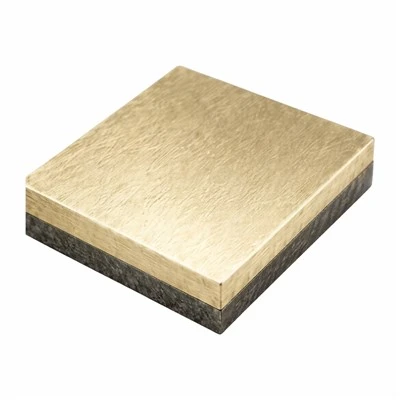
Hey there, if you’ve ever waited 20 minutes for a microwave to heat your leftover pizza instead of 10, or watched a thermostat click on your AC exactly when your house hits 72°F, you’ve encountered a bimetal strip—probably without even knowing it. I’m part of a bimetal strips & sheets supplier, so these little workhorses are basically my jam, and I’m here to break ‘em down like we’re chatting over coffee (no stuffy textbook jargon, promise). Let’s start with the basics because most folks I talk to don’t have a clue what these things actually are. A bimetal strip is two different metals—like steel and brass, or steel and copper—bonded super tight together, not just glued. The trick is that each metal expands when heated, and they do it at totally different rates. So when one wants to stretch more than the other, the whole strip bends. That’s not just a fun party trick—it’s how millions of everyday devices work. I see this all the time when I’m helping clients pick strips for their projects: some use thin, flexible ones for thermostats, others thicker, sturdier ones for heavy-duty stuff like circuit breakers. Let’s be real, bimetal strips don’t get the love they deserve, but they’re the unsung heroes of precision temperature control. Now, where do you actually find these things? Let’s run through the most common spots, because I bet you’ll go “OH that’s what that is” halfway through this. First up, thermostats—residential, commercial, even in old cars. Back in the day, thermostats didn’t have fancy digital sensors; they had a coiled bimetal strip inside. When the temp drops, the coil tightens, and it flips the switch to turn on your furnace. When it warms up, it loosens, cutting the power. I recently had a heating tech reach out asking for replacement strips for old home thermostats—turns out, a lot of vintage houses still run on those, and digital replacements cost way more than a fresh bimetal strip. Next, circuit breakers and overcurrent protection. That’s a big one for industrial and even home electrical panels. If your wiring gets too hot (say, from a frayed cord or overloaded outlet), the bimetal strip in the breaker bends, trips the switch, and stops the flow of electricity. No sparks, no fires—game changer. I supply a lot of parts manufacturers who use these in low-voltage breakers for RVs and portable generators too. Then there’s automotive stuff. Ever replaced a car’s temperature sender? That’s a bimetal strip. It works with the gauge on your dash to tell you if your engine’s overheating. Old fuel gauges too—some used bimetal strips to measure how much gas’s left in the tank (thanks to how fuel’s electrical resistance changes with temp, which the strip converts to a reading). I get a lot of small auto parts shops ordering custom bimetal sheets to machine these senders, especially for classic cars where replacement parts are hard to find. Don’t forget kitchen appliances either. Your toaster’s pop-up function? That’s a bimetal strip. When the bread heats up, the strip bends, trips the lever, and lifts the toast—no more burning it to a crisp (well, usually). Oven thermostats, too—they use bimetal to maintain a steady temp for baking. I once had a customer who makes commercial toasters reach out because their old supplier was delivering strips that bent too fast, leading to stuck toast. We adjusted the alloy mix (brass vs. a different copper blend) and fixed the issue in a week—small change, big impact. Heating elements for hair dryers and space heaters also use these for safety: if the unit gets too hot, the strip trips the power before anything melts. Now, let’s talk about how we make these as a supplier, because that’s part of why they work so reliably. We don’t just stick two metals together and call it a day—we use a cold bonding process called diffusion welding, where the metals are pressed under insane pressure at just the right temp, so their atoms merge at the boundary. That way, they don’t separate even after thousands of heating/cooling cycles, which is key for longevity. We stock tons of standard sizes, but we also cut custom sheets to whatever size or thickness clients need—some need strips as thin as a credit card for tiny medical sensors, others as thick as a dime for heavy-duty industrial controls. A lot of people ask why we don’t just use a single metal instead of two. Because if you use one, it just expands uniformly and never bends—no switch, no trip, no temperature control. The difference in expansion rates is the whole point. For example, brass expands about twice as much as steel when heated, so pairing them gives a really predictable bend. Sometimes we even use three layers if someone needs an even more precise bend, but two is the sweet spot for 90% of applications. I also get asked if bimetal strips are still relevant in a world of digital sensors. Short answer: absolutely. Digital is great for accuracy, but bimetal strips are cheap, durable, and don’t need power to work—they’re passive. That means they’re perfect for backup systems, remote devices where you can’t run power, or low-budget applications where adding a microchip would be overkill. A lot of solar panel manufacturers use bimetal strips in their temperature monitoring backup, just in case their digital sensors fail. I even heard of a group making sustainable outdoor thermometers for community gardens that use bimetal strips—no batteries needed, super easy to read. Now, let’s get real about common misconceptions. Some folks think bimetal strips only work for heating, but no—they work for cooling too. When it gets cold, they contract, bending the other way, which is why they work year-round in thermostats. Another myth: they’re old tech. Sure, the basic concept has been around since the 1800s (fun fact: British engineer John Stringfellow used a bimetal strip in a 1840s steam engine regulator), but we’ve refined the alloys and manufacturing so much now that they’re way more precise and longer-lasting than the early versions. We test every batch we get for linear expansion rates, so clients don’t have to worry about their strips bending at the wrong temp. If you’re in the business of making anything that needs temperature control or safety switches, chances are you’ve worked with these things without even realizing it. And if you’re a DIYer who’s ever fixed a thermostat or a toaster, you might have actually used a bimetal strip already. For me, that’s the cool part—working with a component that’s so ubiquitous but still feels like a hidden gem. Now, if you’re a manufacturer looking for a reliable bimetal strips & sheets supplier, or you’re just curious about custom sizes for a project, feel free to reach out. Whether you need standard thin strips for a new line of smart thermostats, thick sheets for industrial circuit breakers, or something custom to solve a weird temperature-related problem, we can help. No sales fluff, no hidden fees, just solid parts that work when you need them. Before I wrap this up, let’s do a quick recap so you don’t forget everything: bimetal strips are two bonded metals with different expansion rates, they bend with temp changes, they’re used in everything from thermostats to toasters to breakers, and they’re still totally relevant even with all the fancy digital stuff. Next time your AC kicks on at the perfect temp or your toast pops up exactly when it’s done, tip your hat to the tiny bimetal strip doing all the work. Bimetal Strips & Sheets
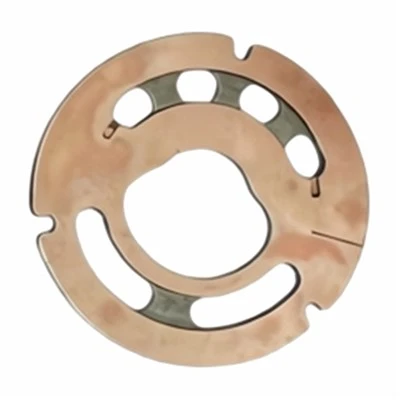
Hydraulic Pump Parts References:
- Engineering Toolbox. (n.d.). Bimetal Strip – Properties and Applications. Retrieved from industry engineering resource database
- The American Society of Mechanical Engineers (ASME). (2019). Bimetallic Elements for Temperature Control Systems. ASME International Manufacturing Conference Proceedings
- Automotive Parts Manufacturers Association. (2021). Standard Components for Classic Vehicle Restoration. APMA Technical Bulletin Series
- U.S. Consumer Product Safety Commission (CPSC). (2020). Safety Components for Small Household Appliances. CPSC National Safety Library
Qingzhou Baiyun Anti-friction Products Co., Ltd.
With abundant experience, we are one of the most professional bimetal strips & sheets manufacturers and suppliers in China. Please rest assured to wholesale customized bimetal strips & sheets at competitive price from our factory. Welcome to contact us for quotation.
Address: Linglongshan North Road (south of the railway bridge), Economic Development Zone, Qingzhou City, Weifang City, Shandong Province
E-mail: byantifriction@gmail.com
WebSite: https://www.baiyunbimetal.com/
