Hey there, let’s cut to the chase if you’re anyone who’s relied on a measuring system cable for industrial monitoring, lab testing, or even that custom agricultural sensor setup—you’ve probably asked this one question at some point: how long is this thing actually gonna last? And as someone who’s been in the measuring system cable game for over a decade (side note: I run the cable side of a small, tight-knit supplier team that doesn’t cut corners), I’ve fielded this question a hundred times from plant managers, lab techs, and even backyard inventors. The short answer isn’t as straightforward as “5 years” or “15 years” though—way too many variables swing that number. Let’s break this down like we’re troubleshooting a bad connection, no stuffy engineering jargon (I’ll save that for the spec sheets you can find on my team’s docs, don’t worry). Measuring System Cable
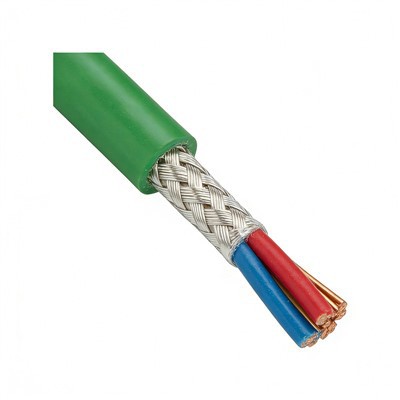
First off, let’s clarify: we’re not talking about any old cable here. A measuring system cable isn’t the thick, rough stuff that runs to your garage door opener; it’s the delicate (but tough) line that carries tiny, critical signals—like a temperature sensor reading a reactor’s internal temp, a load cell weighing 100k lbs of grain, or a pH probe tracking water quality at a treatment plant. That signal is so small, even a tiny crack in the insulation or a loose conductor can turn a “good” cable into a useless hunk of plastic, fast.
So what really determines lifespan? Let’s start with the big one: application environment. I’ve seen the same exact cable model last 12 years in a climate-controlled food processing lab where it’s just hanging in a cabinet, and die in 18 months in a outdoor mining haul truck that’s dustier than a construction site and swings 40°F temp swings overnight. Wait, let’s get specific: exposure to chemicals is a silent killer. If your cable’s jacket is made of basic PVC, it’s toast if you’re hosing it down with harsh acids or lubricants every shift. PVC breaks down in direct sunlight too—you’ll notice it getting brittle, turning yellow, and splitting within 2-3 years left outside with no UV protection. But if you spec a polyurethane (PUR) jacket instead? That same cable lasts 10+ years in outdoor, chemical-heavy setups. Another environment factor: mechanical stress. Cables that get tugged, bent around sharp edges, or run over by equipment? Those are the ones that fray first. I had a customer last year whose lab setup had a cable looped around a metal frame that got rubbed every time a door opened—their old cable failed in 9 months, switched to our extra-tensile braided cable, and it’s still going strong 3 years later.
Next up, cable construction quality. Here’s where a lot of cheap cables cut corners, and I’ve seen it get my team more frustrated than a bad solder joint. Let’s talk conductors: copper is the standard, but stranded vs solid? Solid copper is cheaper, but it snaps easy if the cable gets flexed. Stranded copper (19-strand is our go-to for measuring systems) bends hundreds of times without breaking, so that’s non-negotiable for any cable that moves. Then there’s insulation thickness—skimp on that, and a tiny nick from a tool during installation or a stray spark from a nearby motor will fry your signal. Shielding matters too. Measuring system signals are tiny, so interference from nearby power lines or radio gear is a real issue. If your cable has no shielding, you’ll get signal drift, dropped readings, and eventually, a cable that “dies” not because it’s broken, but because it’s too noisy to use. That’s a big one most people don’t think about until their sensor starts giving wonky numbers at 2 a.m.
Then there’s maintenance. Wait, maintenance for a cable? Yeah, most people forget cables are part of their system’s upkeep, not just a throwaway part. A quick visual check every 6 months—no need for a $10k tech, just a walkaround—can catch fraying jackets or loose connectors before they turn into a full failure. I’ve seen customers with 15-year-old cables that just got yearly checks and wiped down with a mild detergent, versus another customer who ignored their cables, let dust build up so thick it trapped moisture, and had to replace them every 2 years. Also, proper installation is huge. Don’t staple a cable to a sharp metal beam without a rubber grommet— that cuts the jacket in half. Don’t pull a cable too tight when running it through conduit—straining the conductors from day one will lead to failure a year early.
Now, let’s get to real numbers, not just theory. For our standard off-the-shelf measuring system cables, here’s what we see in the field: if it’s in a controlled indoor environment, with light mechanical stress, no harsh chemicals, and installed right? 10-15 years, easy. If it’s in a moderate outdoor setup (occasional sun, mild dust, no heavy chemicals)? 7-10 years. If it’s in a harsh industrial setup (mining, chemical processing, heavy flexing, constant chemical exposure)? 3-7 years. But wait, we’ve had custom cables go even longer—one customer uses a 16-strand PUR-shielded cable in a remote weather station that’s been out there for 18 years, and it still pulls accurate temperature readings. Why? They spec’d the right materials, installed it with a protective conduit, and check it once a year when they do a site visit.
Now, the mistake people make: they wait until the cable fails to replace it. Measuring system failure isn’t like a broken lightbulb—you can’t just swap it out in 5 minutes. If a load cell cable fails mid-weighing during a harvest, you’re not just out a cable; you’re stopping production, losing product, maybe even messing up regulatory reporting for a food safety audit. A lot of our repeat customers swap their cables every 5-7 years as proactive maintenance, not reactive. It costs them a lot less than downtime.
Wait, let’s address the “why some cables last way longer than others” thing. We had a customer who switched to our premium gold-plated conductor cables for their lab’s pH measurement system, and their old cables (cheaper tin-plated) lasted 4 years, the new ones have been going 8. Gold resists corrosion way better than tin, especially in high-humidity lab environments. That’s a tiny detail that makes a huge difference.
Also, don’t sleep on storage. If you buy spools of cable and let them sit in a hot, damp warehouse for a year before installing, that’s going to shorten their lifespan. Insulation breaks down over time even unused—UV light, heat, and moisture can do that. We always tell customers to install their cables within 6 months of delivery, and store them in a cool, dry place if they have to keep them longer.
Now, let’s tie this back to what my team does. We don’t sell one-size-fits-all measuring system cables. That’s why we spend time asking customers: where is this cable going? What’s it connected to? What kind of chemicals is it around? Do you need it to flex a lot? Because that’s how we spec a cable that will last as long as possible for their exact use case. I’ve had customers come to me with a cable that failed in 2 years, and half the time it’s because they bought a generic TV cable from a hardware store instead of a measuring system-specific one. TV cables are fine for your home entertainment, but they don’t have the shielding or conductor quality for sensitive industrial or lab signals.
Wait, let’s make one thing crystal clear: there’s no magic lifespan. It’s all about matching the cable to the environment, installing it right, and doing basic upkeep. If you’re trying to squeeze 20 years out of a cable that’s running through a saltwater pipeline with no protection? That’s unrealistic. But if you take the time to get the right cable, install it properly, and check it once a year? You’ll get way more value than buying the cheapest option that dies in 18 months.
Now, if you’re sitting here with a measuring system cable that’s acting weird—dropped readings, frayed jackets, random signal drift—or you’re planning a new setup and want to pick a cable that won’t cause you downtime, don’t guess. My team works with all kinds of clients, from small labs to big manufacturing plants, to spec the right cable, no fluff, no overpaying for stuff you don’t need. Just reach out, tell us about your setup, and we’ll walk you through what will last for your needs. No hard sell, just straight talk (that’s how we’ve stayed in this game for so long).
Bus Cable References
- National Electrical Manufacturers Association (NEMA). “Performance Standards for Insulated Cables for Industrial Applications.” 2021.
- International Electrotechnical Commission (IEC). “Shielding Performance for Low-Voltage Signal Cables.” IEC 60227, 2019.
- American Society for Testing and Materials (ASTM). “Standard Test Methods for Polyurethane Insulation Resistance and Mechanical Strength.” ASTM D2671, 2020.
- Industrial Measurement Society. “Proactive Maintenance Guidelines for Signal Cables in Process Control Systems.” 2022.
Cixi Davos Wire & Cable Co., Ltd.
As one of the most professional measuring system cable manufacturers and suppliers in China, we also support customized service. Please feel free to buy bulk high quality measuring system cable in stock here from our factory. For price consultation, contact us.
Address: No.3, Lane 91, Ruan Ding Road, Linxi Village, Xiaolin Town, Cixi City
E-mail: roy798@163.com
WebSite: https://www.cj-supplychain.com/
